
Why Your North Linden Home Feels Stuffy and How to Fix the Airflow
If your North Linden home feels stuffy and uncomfortable the problem is almost always poor airflow. Many homes in the 43224 and 43211 zip codes especially the mid-century ranch and Cape Cod style houses built between the 1940s and 1970s were designed with undersized ductwork that struggles to keep up with modern HVAC systems. Add Ohio’s high humidity summers and clay soil basements that trap moisture and you have the perfect recipe for stagnant air.
The good news is that most airflow problems can be diagnosed and fixed without replacing your entire system. This guide will walk you through the most common causes of stuffy air in North Linden homes and show you exactly what to check before calling a professional. The Honest Guide to Replacing Your Upper Arlington Furnace This Winter.
Common Signs of Poor Airflow in Your Home
Before we dive into solutions it helps to confirm you actually have an airflow issue. Here are the most common symptoms:. Read more about How Much Dust is Actually Normal in a Well Maintained Mifflin Township Home.
- Rooms that are hot in summer and cold in winter even when the thermostat is set correctly
- Weak airflow from vents even when the system is running
- Whistling sounds coming from registers or ductwork
- Higher than normal energy bills from your AEP Ohio service
- Dust buildup on furniture and vents
- Musty odors that linger even after cleaning
If you notice two or more of these signs your home likely has restricted airflow that needs attention. Why Your Westerville AC Needs a Tune Up Before the Humidity Hits.
The Top 5 Causes of Stuffy Air in North Linden Homes
Understanding what’s causing your stuffy air is the first step to fixing it. Here are the most common culprits in North Linden:
1. Dirty or Clogged Air Filters
Air filters trap dust pollen and other particles but when they get too dirty they restrict airflow. In older North Linden homes with original ductwork a clogged filter can cut airflow by 30% or more. Check your filter monthly and replace it every 60-90 days or more often if you have pets or allergies.
2. Blocked or Closed Supply Vents
It’s tempting to close vents in unused rooms to save energy but this actually creates pressure imbalances that reduce overall airflow. Make sure all supply vents are open and not blocked by furniture rugs or curtains. Each vent needs at least 12 inches of clearance to function properly.
3. Leaky or Undersized Ductwork
Many North Linden homes have original ductwork that’s now 40-70 years old. Over time ducts develop leaks at joints and connections. The Ohio Mechanical Code requires duct sealing to prevent energy loss but many older homes never had this done. Leaky ducts can waste 20-30% of your conditioned air before it ever reaches your rooms.
4. Failing Blower Motor
Your furnace or air handler’s blower motor is what actually moves air through your home. When the motor starts to fail it can’t maintain proper airflow. Signs of a failing blower include weak airflow at all vents unusual noises or the system running constantly without reaching temperature.
5. Evaporator Coil Freezing
When airflow is restricted over the indoor coil the refrigerant temperature drops too low and the coil freezes. You’ll notice reduced cooling and possibly ice buildup on the refrigerant lines. This is often caused by dirty filters or blocked return air paths.. Read more about Why Your New Build in Jerome Village Needs an Energy Recovery Ventilator.
Why North Linden Homes Specifically Struggle with Airflow
North Linden’s housing stock presents unique challenges. The area developed rapidly after World War II with many homes built quickly to accommodate returning veterans and growing families. These homes typically feature:
- Narrow rectangular ductwork that was adequate for the smaller furnaces of the 1950s but can’t handle today’s high-efficiency systems
- Limited return air pathways with often just one central return for the entire house
- Basements with clay soil foundations that create high humidity levels affecting indoor air quality
- Attic ductwork that runs through unconditioned spaces losing significant energy
The Franklin County building records show that over 60% of North Linden homes still have their original ductwork. This means thousands of homes are operating with systems that were never designed for modern comfort expectations.
DIY Airflow Troubleshooting Checklist
Before calling a professional try these simple checks to improve your home’s airflow:
- Check and Replace Air Filters
Remove your air filter and hold it up to a light. If you can’t see light through it replace it with a new MERV 8-11 filter. This simple step can improve airflow by 15-20%.
- Inspect Supply Vents
Walk through your home and make sure all supply vents are fully open and not blocked. Move any furniture rugs or curtains that might be obstructing airflow.
- Check Return Air Grilles
Locate your return air grilles often found in hallways or near the thermostat. Make sure they’re not blocked by furniture or clogged with dust. Vacuum them thoroughly.
- Test Vent Airflow
Turn your system fan to “on” mode and hold a tissue or piece of paper near each supply vent. You should feel steady airflow. Weak airflow at multiple vents indicates a system-wide problem.
- Listen for Unusual Noises
Turn your system on and listen near the air handler. Rattling or squealing sounds often indicate motor or belt problems that need professional attention.
Professional Airflow Solutions for North Linden Homes
If your DIY checks don’t solve the problem it’s time to call a professional. Here’s what a thorough airflow diagnostic should include:
Static Pressure Testing
This test measures the resistance to airflow in your system. Using a manometer we can determine if your ductwork is properly sized for your HVAC equipment. The Ohio Mechanical Code specifies maximum static pressure ratings for different system types.
Duct Leakage Testing
We use specialized equipment to pressurize your duct system and measure leakage. The International Energy Conservation Code requires duct leakage testing for new installations but many older homes have never been tested.
Thermal Imaging
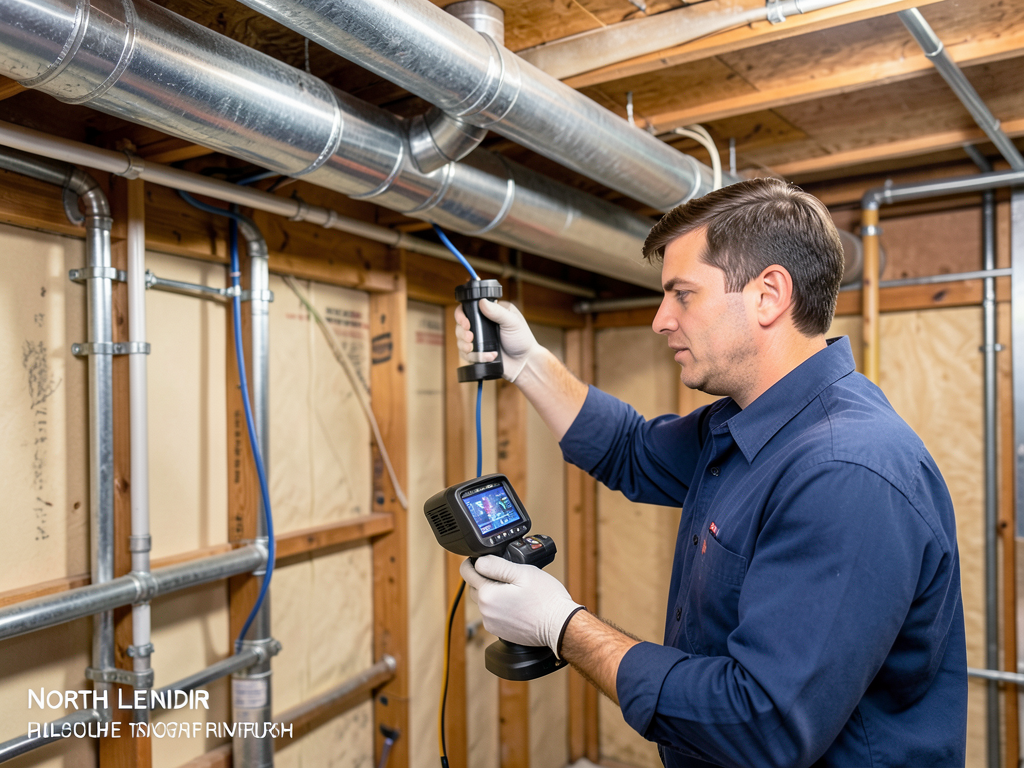
Infrared cameras can show us exactly where conditioned air is escaping from your ducts or where cold spots indicate frozen coils. This non-invasive testing helps pinpoint problems without tearing into walls.
Blower Performance Testing
We measure the actual CFM (cubic feet per minute) output of your blower motor and compare it to manufacturer specifications. A motor that’s lost 20% of its capacity needs replacement to restore proper airflow.
Duct Renovation Options
Depending on your home’s layout we might recommend duct sealing duct resizing or even a ductless mini-split system for problem areas. Many North Linden homes benefit from zoning systems that allow different temperature control in different areas. Ductless Mini-Split Systems.
When to Call for Emergency HVAC Service
Some airflow problems require immediate attention to prevent system damage or health issues. Call (380) 253-3188 right away if you experience: Troubleshooting AC Issues.
- No airflow from any vents even though the system is running
- Ice buildup on refrigerant lines or the outdoor unit
- Burning smells coming from vents or the air handler
- System cycling on and off rapidly (short cycling)
- Water pooling around your indoor unit
These symptoms often indicate serious problems that can lead to complete system failure if not addressed quickly.
Comparing Airflow Solutions for Older Homes
| Solution | Cost Range | Effectiveness | Best For |
|---|---|---|---|
| Professional duct cleaning | $300-$600 | Moderate | Homes with visible dust buildup |
| Duct sealing and insulation | $1,500-$3,500 | High | Homes with leaky ductwork |
| Blower motor replacement | $400-$900 | High | Systems with weak airflow |
| Complete duct renovation | $5,000-$12,000 | Very High | Homes with undersized ducts |
| Ductless mini-split installation | $3,500-$8,000 per zone | Very High | Problem rooms or additions |
Preventing Future Airflow Problems
Once you’ve solved your immediate airflow issues take these steps to prevent future problems:
- Schedule annual HVAC maintenance to catch issues early
- Replace filters on schedule even if they don’t look dirty
- Keep vents and returns clear year-round
- Consider a whole-house air quality assessment if you have allergy sufferers
- Upgrade to a smart thermostat that can alert you to system problems
Regular maintenance can extend your system’s life by 5-10 years and prevent the costly emergency repairs that often occur during Ohio’s extreme weather. EPA Indoor Air Quality.
Frequently Asked Questions
How often should I replace my air filter in an older North Linden home?
Replace your air filter every 60-90 days minimum. If you have pets allergies or live near Cleveland Avenue where traffic dust is higher replace it every 30-45 days. A dirty filter is the #1 cause of restricted airflow in older homes.
Can closing vents in unused rooms save energy?
No. Closing vents creates pressure imbalances that actually reduce system efficiency and can damage your HVAC equipment. The system is designed to move a specific amount of air. Restricting it causes the blower to work harder and can lead to frozen coils or compressor failure.
How do I know if my ductwork needs replacement vs. repair?
If your home is over 40 years old and you’re experiencing multiple airflow issues the ductwork likely needs at least partial replacement. Signs include visible rust crushed ducts or sections that feel very hot or cold to the touch. A professional duct inspection can determine if repair or replacement is more cost-effective.
Take Control of Your Home’s Comfort Today
Don’t let stuffy air make your North Linden home uncomfortable another day. Most airflow problems can be diagnosed and fixed in a single visit. Our technicians understand the unique challenges of older Columbus homes and can recommend solutions that fit your budget and comfort needs.
Call (380) 253-3188 today to schedule your professional airflow assessment. We’ll test your system identify the exact cause of your stuffy air and provide a clear plan to fix it. Our service areas include all of North Linden plus surrounding Columbus neighborhoods.
Don’t wait until your system fails during the next heat wave or cold snap. Pick up the phone and call (380) 253-3188 now to breathe easier in your home.
Need emergency help now? Click here for 24/7 service For more information, visit ASHRAE Technical Resources.
You may also find this helpful. The Honest Truth About Using Window AC Units vs Central Air in Old Oaks.
You may also find this helpful. Why the Second Floor of Your Lincoln Village Ranch is Always Ten Degrees Hotter.
You may also find this helpful. The Real Reason Your University District Rental is So Hard to Keep Cool in the Summer.
{
“@context”: “https://schema.org”,
“@type”: “BlogPosting”,
“headline”: “Why Your North Linden Home Feels Stuffy and How to Fix the Airflow”,
“description”: “Is your North Linden home feeling stuffy? Learn the common airflow problems in older Columbus homes and how to fix them fast. Call (380) 253-3188 for expert help.”,
“wordCount”: 1661,
“datePublished”: “2026-03-24T08:21:00.000Z”,
“dateModified”: “2026-03-24T08:21:00.000Z”,
“inLanguage”: “en-US”,
“mainEntityOfPage”: {
“@type”: “WebPage”,
“@id”: “https://grandhvaccolumbus.com”
},
“publisher”: {
“@type”: “LocalBusiness”,
“name”: “Grand HVAC Columbus”,
“url”: “https://grandhvaccolumbus.com”
},
“author”: {
“@type”: “Organization”,
“name”: “Grand HVAC Columbus”,
“url”: “https://grandhvaccolumbus.com”
},
“image”: {
“@type”: “ImageObject”,
“url”: “https://grandhvaccolumbus.com/wp-content/uploads/2026/03/why-your-north-linden-home-feels-stuffy-and-how-to-1.png”
}
}
{
“@context”: “https://schema.org”,
“@type”: “HVACBusiness”,
“name”: “Grand HVAC Columbus”,
“url”: “https://grandhvaccolumbus.com”,
“address”: {
“@type”: “PostalAddress”,
“addressLocality”: “Columbus”
},
“areaServed”: {
“@type”: “City”,
“name”: “Columbus”
}
}
{
“@context”: “https://schema.org”,
“@type”: “FAQPage”,
“mainEntity”: [
{
“@type”: “Question”,
“name”: “How often should I replace my air filter in an older North Linden home?”,
“acceptedAnswer”: {
“@type”: “Answer”,
“text”: “Replace your air filter every 60-90 days minimum. If you have pets allergies or live near Cleveland Avenue where traffic dust is higher replace it every 30-45 days. A dirty filter is the #1 cause of restricted airflow in older homes.”
}
},
{
“@type”: “Question”,
“name”: “Can closing vents in unused rooms save energy?”,
“acceptedAnswer”: {
“@type”: “Answer”,
“text”: “No. Closing vents creates pressure imbalances that actually reduce system efficiency and can damage your HVAC equipment. The system is designed to move a specific amount of air. Restricting it causes the blower to work harder and can lead to frozen coils or compressor failure.”
}
},
{
“@type”: “Question”,
“name”: “How do I know if my ductwork needs replacement vs. repair?”,
“acceptedAnswer”: {
“@type”: “Answer”,
“text”: “If your home is over 40 years old and you’re experiencing multiple airflow issues the ductwork likely needs at least partial replacement. Signs include visible rust crushed ducts or sections that feel very hot or cold to the touch. A professional duct inspection can determine if repair or replacement is more cost-effective.”
}
}
]
}
{
“@context”: “https://schema.org”,
“@type”: “HowTo”,
“name”: “DIY Airflow Troubleshooting”,
“step”: [
{
“@type”: “HowToStep”,
“position”: 1,
“name”: “Check and Replace Air Filters”,
“text”: “Remove your air filter and hold it up to a light. If you can’t see light through it replace it with a new MERV 8-11 filter. This simple step can improve airflow by 15-20%.”
},
{
“@type”: “HowToStep”,
“position”: 2,
“name”: “Inspect Supply Vents”,
“text”: “Walk through your home and make sure all supply vents are fully open and not blocked. Move any furniture rugs or curtains that might be obstructing airflow.”
},
{
“@type”: “HowToStep”,
“position”: 3,
“name”: “Check Return Air Grilles”,
“text”: “Locate your return air grilles often found in hallways or near the thermostat. Make sure they’re not blocked by furniture or clogged with dust. Vacuum them thoroughly.”
},
{
“@type”: “HowToStep”,
“position”: 4,
“name”: “Test Vent Airflow”,
“text”: “Turn your system fan to \”on\” mode and hold a tissue or piece of paper near each supply vent. You should feel steady airflow. Weak airflow at multiple vents indicates a system-wide problem.”
},
{
“@type”: “HowToStep”,
“position”: 5,
“name”: “Listen for Unusual Noises”,
“text”: “Turn your system on and listen near the air handler. Rattling or squealing sounds often indicate motor or belt problems that need professional attention.”
}
],
“image”: “https://grandhvaccolumbus.com/wp-content/uploads/2026/03/why-your-north-linden-home-feels-stuffy-and-how-to-1.png”
}
{
“@context”: “https://schema.org”,
“@type”: “BreadcrumbList”,
“itemListElement”: [
{
“@type”: “ListItem”,
“position”: 1,
“name”: “Home”,
“item”: “https://grandhvaccolumbus.com”
},
{
“@type”: “ListItem”,
“position”: 2,
“name”: “Blog”,
“item”: “https://grandhvaccolumbus.com/blog”
},
{
“@type”: “ListItem”,
“position”: 3,
“name”: “Why Your North Linden Home Feels Stuffy and How to Fix the Airflow”
}
]
}
{
“@context”: “https://schema.org”,
“@type”: “Service”,
“serviceType”: “HVAC”,
“provider”: {
“@type”: “LocalBusiness”,
“name”: “Grand HVAC Columbus”,
“url”: “https://grandhvaccolumbus.com”
},
“areaServed”: {
“@type”: “City”,
“name”: “Columbus”
},
“description”: “Is your North Linden home feeling stuffy? Learn the common airflow problems in older Columbus homes and how to fix them fast. Call (380) 253-3188 for expert help.”
}