





Menu

Importance of Air Filter Changes in Columbus – Protect Your System from Midwest Humidity and Pollen Overload

Regular air filter replacement prevents system breakdowns caused by Columbus's heavy seasonal pollen, high humidity, and temperature swings that clog filters faster than in drier climates.

Slider Image 1
Slider Image 2
Slider Image 3
Slider Image 4
Slider Image 5
Slider Image 7
Slider Image 8
Slider Image 9
Slider Image 10
Slider Image 11

Why Columbus Air Filters Work Harder Than Anywhere Else

Columbus sits in a humidity belt that challenges every HVAC system. Spring brings waves of oak and maple pollen. Summer pushes humidity above 70 percent most days. Fall adds ragweed and mold spores. Winter forces your heating system to cycle constantly through freeze-thaw patterns. Your air filter captures all of it.

The benefits of changing air filters become obvious when you understand what Columbus air carries. Pollen from the Scioto River corridor. Dust from construction in the Short North. Mold spores from basement moisture in German Village. Every particle that enters your return duct hits your filter first.

A clogged filter forces your system to work harder. Airflow drops. Energy consumption rises. Components overheat. The reasons for changing ac filters go beyond comfort. A dirty filter in Columbus conditions can shorten compressor life by years. It reduces cooling capacity when you need it most during July heat waves. It allows contaminants to bypass filtration and coat your evaporator coil.

The impact of dirty air filters shows up fast here. What takes three months to clog in Arizona happens in six weeks in Columbus. Your furnace pulls harder against restriction. Your air conditioner struggles to move tonnage. Both waste energy and move toward failure.

Why replace hvac filters on schedule? Because Columbus weather does not give your system a break. High humidity loads your filter with moisture and biological growth. Temperature swings force constant cycling. Seasonal pollen dumps overwhelm standard filtration. Your filter is the first line of defense for a system working in challenging conditions.

Why Columbus Air Filters Work Harder Than Anywhere Else
How Regular Filter Changes Extend System Life and Cut Energy Waste

How Regular Filter Changes Extend System Life and Cut Energy Waste

The significance of air filter replacement lies in what happens inside your ductwork. Air moves through your return grille at roughly 400 cubic feet per minute in a standard residential system. That air carries particulates measured in microns. Your filter media captures particles down to its MERV rating threshold. A MERV 8 filter stops pollen and dust mites. A MERV 11 stops pet dander and mold spores. A MERV 13 approaches HEPA-level filtration.

As the filter loads with debris, static pressure increases across the media. Your blower motor compensates by drawing more amperage. Energy consumption climbs. Airflow across your evaporator coil or heat exchanger decreases. Temperature differential between supply and return drops. Your system runs longer cycles to meet thermostat setpoint.

In Columbus, this degradation accelerates during pollen season and high humidity months. A filter that should last 90 days may load completely in 45 days. The difference shows up in your utility bill before you notice comfort loss. A system pulling 15 amps instead of 12 amps wastes roughly 240 watts continuously during operation. Over a cooling season, that waste adds up.

We measure static pressure drop across the filter during maintenance visits. A clean filter shows 0.1 to 0.15 inches of water column. A loaded filter pushes past 0.5 inches. At that point, your blower cannot move rated CFM. Cooling capacity drops. Heating efficiency falls. Component stress increases.

Regular replacement maintains design airflow. Your evaporator coil stays clean. Your heat exchanger operates at proper temperature. Your blower motor runs at rated amperage. The system delivers the efficiency it was engineered to provide.

What Happens During a Filter Assessment and Replacement

Importance of Air Filter Changes in Columbus – Protect Your System from Midwest Humidity and Pollen Overload
01

System Access and Measurement

We locate your filter slot, whether it sits in a return grille, furnace cabinet, or dedicated filter rack. We measure the existing filter to confirm size accuracy. Many homeowners use incorrect dimensions, allowing bypass airflow. We check for light leaks around the filter frame that indicate poor seating. We measure static pressure across the filter housing to establish baseline restriction.
02

Filter Evaluation and Selection

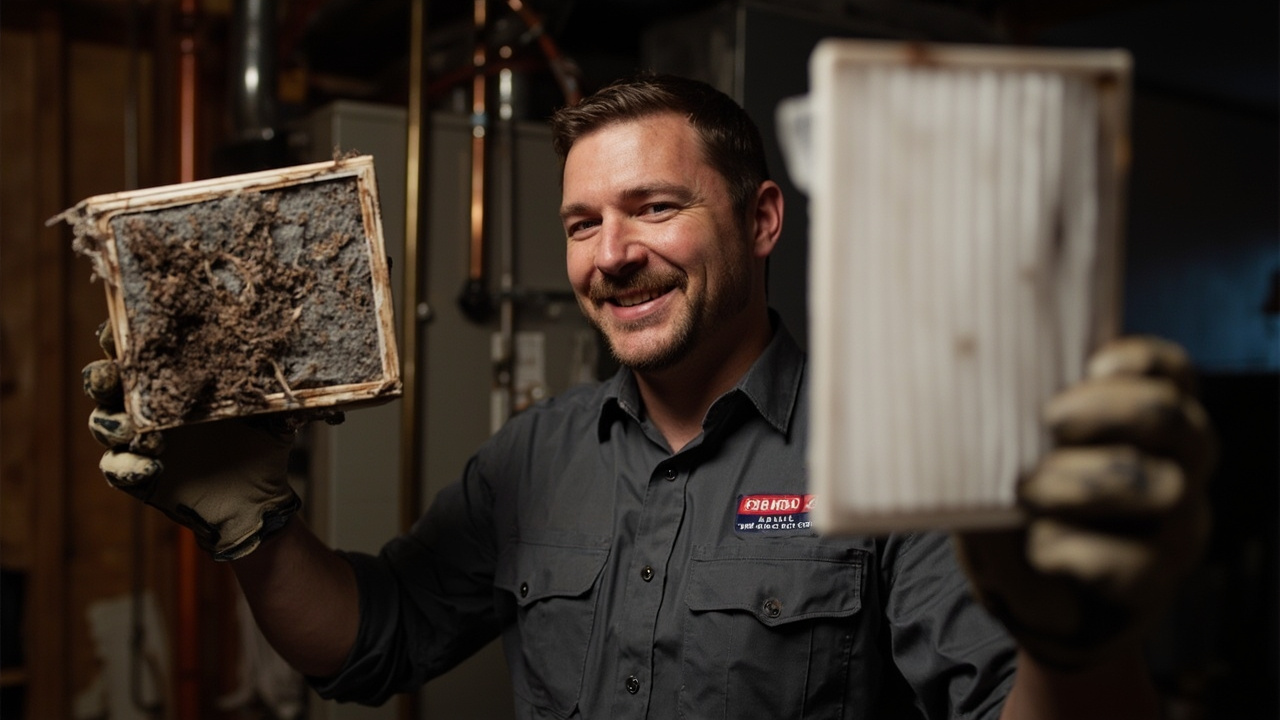
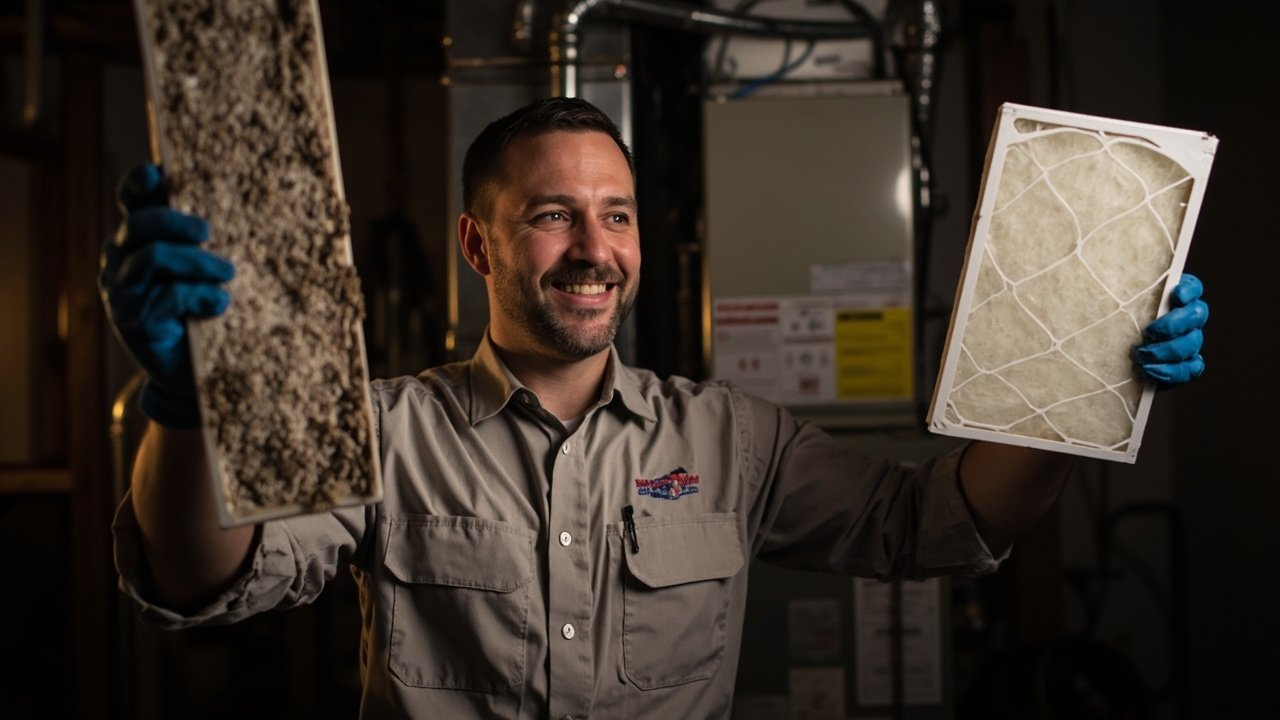
We examine the used filter for loading pattern. Even distribution indicates proper airflow. Heavy loading on one side signals duct leakage or return imbalance. We check for biological growth or moisture damage. We recommend the correct MERV rating based on your system capacity, duct design, and Columbus air quality needs. Undersized blowers cannot handle high MERV filters without modification.
03

Installation and Verification

We install the new filter with airflow direction correct. Arrow marks on the frame must point toward the blower. We verify tight fit against the filter rack. We seal gaps with foam tape if necessary. We measure post-installation static pressure to confirm acceptable restriction. We mark the filter with installation date and recommended change interval based on Columbus seasonal conditions.

Why Columbus Homeowners Trust Local HVAC Experts for Filter Guidance

Columbus HVAC systems face conditions that national chains and online guides do not account for. Spring pollen from the thousands of trees along the Olentangy Trail. Summer humidity that keeps dew points in the 60s and 70s. Ragweed in fall that blankets the entire metro. These local factors change how you should approach filtration.

A company familiar with Columbus neighborhoods knows that homes near Whetstone Park deal with heavier pollen loads. Homes in Brewery District face urban dust and construction particulates. Homes near the airport handle jet fuel particulates and industrial emissions. Each location demands adjusted filter strategy.

We work in Columbus year-round. We see what clogs filters in March versus August. We know which MERV ratings cause airflow problems in older ductwork common to Clintonville bungalows. We understand that German Village basements need filtration that addresses mold spores from stone foundation moisture. This local knowledge prevents the mistakes that come from generic advice.

Filter replacement seems simple until you account for system-specific factors. A heat pump requires different filtration strategy than a gas furnace. A variable-speed blower handles higher MERV ratings than a single-stage PSC motor. Undersized ductwork cannot support the same filter resistance as properly designed systems. We match filter specifications to your actual equipment and home conditions.

Columbus building stock ranges from 1920s Victorians to 2020s new construction. Each era has different duct design, different return air paths, different filtration access points. We have worked in all of them. We know where builders hide filter racks. We know which systems need retrofit filter grilles. We solve the access and sizing problems that stop homeowners from maintaining proper filtration.

What to Expect When You Schedule Filter Service

Fast Scheduling and Service Windows

Filter evaluation and replacement takes 15 to 30 minutes depending on system accessibility. We offer same-day service for filter-related airflow problems. If your system is struggling to heat or cool, a clogged filter may be the cause. We can diagnose and resolve the issue in one visit. For routine replacement, we schedule within your preferred window. We stock common sizes on every truck. For non-standard dimensions, we source the correct size within 24 hours. You do not wait days for a simple filter change.

Complete System Airflow Assessment

We do not just swap filters. We measure airflow performance before and after replacement. We check supply register output. We verify return air balance. We listen for whistling or rattling that indicates air leaks around the filter frame. We inspect ductwork near the filter for disconnection or damage. Many airflow problems stem from issues beyond the filter itself. A cracked return plenum or disconnected supply run will not fix itself with a new filter. We identify the real problem and explain your options clearly.

Proper Filtration for Your Specific System

You get a filter matched to your blower capacity and duct design. We do not install MERV 13 filters on systems that cannot handle the restriction. We do not put cheap fiberglass filters in homes with allergy concerns. We explain the tradeoff between filtration efficiency and airflow resistance. We show you how to check filter condition between service visits. You leave knowing exactly when to call for replacement based on Columbus seasonal patterns, not arbitrary 90-day intervals that do not match local conditions.

Seasonal Reminders and Maintenance Plans

We offer filter delivery and installation on a schedule that matches Columbus pollen and humidity cycles. March and April require more frequent changes due to tree pollen. July and August demand attention due to humidity and constant system runtime. October brings ragweed. We send reminders before your filter reaches critical loading. Maintenance plan members receive priority scheduling and discounted filter pricing. You never forget a filter change. Your system never suffers from neglect. Energy waste stops before it starts.

Frequently Asked Questions

You Have Questions,
We Have Answers

How important is it to change your air filter? +

Changing your air filter is critical for HVAC performance and indoor air quality. A clean filter traps dust, pollen, and mold spores common in Columbus's humid summers and protects your system's blower motor and evaporator coils. Clogged filters force your unit to work harder, spiking energy bills by up to 15 percent and shortening equipment lifespan. In Columbus, where seasonal humidity and Ohio Valley allergens stress systems year-round, regular filter changes prevent breakdowns and maintain consistent airflow. Replace standard filters every 30 to 90 days depending on household size, pets, and local pollen counts.

Will a new air filter improve performance? +

Yes. A new air filter restores proper airflow, which directly improves HVAC efficiency and cooling capacity. When filters clog with dust and debris, your blower motor strains to push air through ductwork, reducing system performance and increasing runtime. Columbus homes face high pollen counts in spring and fall, which accelerate filter saturation. A fresh filter lowers energy consumption, improves temperature consistency room to room, and reduces wear on mechanical components. You will notice faster cooling cycles and lower utility bills within the first billing period after replacement, especially during peak summer months.

What can happen if you don't change your air filter? +

Neglecting air filter changes leads to system failure and poor indoor air quality. Clogged filters restrict airflow, causing your evaporator coils to freeze and your blower motor to overheat. This creates costly repairs and premature system replacement. In Columbus, where humidity promotes mold growth, dirty filters circulate allergens and spores throughout your home, triggering respiratory issues. Restricted airflow also forces your furnace or AC to run longer, spiking energy bills and stressing ductwork. Worst case, a completely blocked filter causes compressor failure, which can cost thousands to replace and often totals older HVAC units.

Will I notice a difference with a new air filter? +

Yes. Most homeowners notice immediate improvements in airflow and comfort. You will feel stronger air movement from vents, more consistent temperatures between rooms, and quieter system operation. Columbus residents often report reduced allergy symptoms and less dust accumulation on furniture after installing a fresh filter. Your thermostat will cycle less frequently because the system cools or heats efficiently. Energy bills typically drop within one month as your HVAC stops overworking. If you have pets or live near high-traffic roads in Columbus, the difference becomes even more noticeable as filters trap dander and particulates.

What is the $5000 AC rule? +

The five thousand dollar AC rule suggests that if your air conditioner repair cost multiplied by the system age in years exceeds five thousand dollars, you should replace the unit instead of repairing it. For example, a fifteen year old AC needing a four hundred dollar repair equals six thousand dollars, signaling replacement. This guideline helps Columbus homeowners avoid throwing money at aging equipment prone to repeat failures. However, factor in refrigerant type, energy efficiency gains, and local utility rates. Newer systems use R-410A refrigerant and deliver better humidity control during Columbus's sticky summers, offsetting replacement costs.

Can I just clean my air filter instead of replacing it? +

Standard disposable filters are designed for single use and should be replaced, not cleaned. Washing or vacuuming these filters damages the pleated media and reduces filtration efficiency, allowing dust and allergens to circulate. However, washable electrostatic filters and permanent metal mesh filters can be cleaned and reused. Rinse them with water, allow complete drying before reinstalling, and inspect for tears or frame damage. In Columbus, where pollen and humidity challenge HVAC systems, reusable filters need monthly cleaning during peak seasons. Most homes perform better with disposable MERV 8 to 11 filters replaced every 60 to 90 days.

Will my AC work better if I clean the filter? +

Yes, but only if you clean it properly and the filter type allows cleaning. Removing dust buildup from a washable filter restores airflow and improves cooling efficiency. Your AC will cool faster, run shorter cycles, and consume less energy. However, standard disposable filters lose structural integrity when cleaned and should be replaced. In Columbus's humid climate, dirty filters restrict airflow and force your evaporator coils to work harder, reducing dehumidification and comfort. Clean or replace filters before cooling season starts in May and check monthly during summer to maintain optimal AC performance and prevent frozen coils.

Can a dirty air filter cause sluggish acceleration? +

In vehicles, yes. A clogged engine air filter restricts airflow to the combustion chamber, reducing horsepower and throttle response. Your car's computer compensates by adjusting fuel mixture, which causes sluggish acceleration and reduced fuel economy. However, home HVAC air filters do not affect acceleration. They impact indoor air quality and system efficiency. Columbus drivers should replace cabin and engine air filters according to manufacturer schedules, typically every 12,000 to 15,000 miles. Ohio's road salt, pollen, and agricultural dust accelerate filter saturation, especially during spring planting season and winter road treatments.

How to tell if an air filter needs changing? +

Visible dust coating, reduced airflow from vents, and longer system runtimes signal a clogged filter. Hold the filter up to light. If you cannot see through it, replace it immediately. Check for grey or brown discoloration across the pleated surface. In Columbus homes, filters near return vents show heavy dust accumulation within 30 to 60 days during high pollen seasons. Listen for whistling sounds at vents, which indicate restricted airflow. Monitor your thermostat. If your HVAC runs constantly but struggles to reach set temperature, inspect the filter first before calling for service.

What are signs of a bad filter? +

A bad filter causes weak airflow, increased energy bills, excessive dust on surfaces, and worsening allergies. You may notice uneven temperatures between rooms or your system running nonstop without reaching thermostat settings. Frozen evaporator coils and warm air from AC vents indicate severe restriction. In Columbus, mold odors from vents signal moisture buildup on saturated filters, common during humid summer months. Your blower motor may make labored sounds or trip breakers from overheating. Check filters monthly. If you see visible debris clogging pleats or the frame shows warping, replace immediately to prevent compressor damage.

How Columbus Humidity and Pollen Seasons Destroy Filters Faster

Columbus averages 39 inches of precipitation annually with relative humidity above 70 percent most summer mornings. This moisture loads air filters with biological growth. Mold spores thrive in damp filter media. Dust mites multiply in humid conditions. The Scioto and Olentangy river corridors add localized humidity spikes. Spring pollen from oak, maple, and sycamore trees coats filters in yellow dust visible to the naked eye. Fall ragweed season creates a second wave of filter loading. Filters rated for 90 days in dry climates clog in 45 to 60 days here.

Columbus homes built before 1980 often lack proper filter access or use non-standard sizes. German Village row houses and Clintonville bungalows frequently hide filter racks in awkward basement locations. Newer construction in Dublin and New Albany uses modern filter grilles but sometimes specs undersized ductwork that cannot handle high MERV filters. Local HVAC professionals understand these building patterns. We know which neighborhoods have restrictive duct designs. We know which home styles require custom filter solutions. This local expertise prevents the trial-and-error waste that comes from generic online advice.

HVAC Services in The Columbus Area

Grand HVAC Columbus is proud to serve the entire Columbus area and surrounding communities. We are committed to being a local, dependable resource for all your heating and cooling needs. Our convenient location ensures that we can respond quickly and efficiently to service calls, whether you're a residential or commercial client. We invite you to view our service area on the map to see how we can bring our expert HVAC solutions right to your doorstep.

Address:
Grand HVAC Columbus, 420 E 5th Ave, Columbus, OH, 43201

Additional Services We Offer

Our news updates

Latest Articles & News from The Blogs

Moving Your Air Vents During a Major Kitchen Renovation in Upper Arlington Planning to move walls and reconfigure your kitchen…

Moving Your Air Vents During a Major Kitchen Renovation in Upper Arlington

Moving Your Air Vents During a Major Kitchen Renovation in Upper Arlington Planning to move walls and reconfigure your kitchen…

The Landlord Guide to Low Maintenance HVAC in the University District

The Landlord Guide to Low Maintenance HVAC in the University District \n\n Managing rental properties in Columbus’s University District comes…

Why Westerville Homeowners are Looking into Solar Ready HVAC Systems

Why Westerville Homeowners are Looking into Solar Ready HVAC Systems Westerville homeowners are increasingly exploring solar-ready HVAC systems as energy…

Contact Us

Call (380) 253-3188 now for same-day filter evaluation and replacement. Grand HVAC Columbus will match the right filter to your system and Columbus air quality conditions. Stop guessing. Get it done right.