




Menu

Rapid Response Cooling in Columbus – When Your AC Fails, We're Already on the Way

United HVAC Kansas City provides immediate emergency AC repair across Columbus with rapid response cooling teams dispatched within minutes, not hours, because Ohio heat doesn't wait and neither should you.

Slider Image 1
Slider Image 2
Slider Image 3
Slider Image 4
Slider Image 5
Slider Image 7
Slider Image 8
Slider Image 9
Slider Image 10
Slider Image 11

Why Columbus AC Failures Demand Immediate Action

Columbus summers hit hard. When humidity climbs past 70 percent and temperatures push into the low 90s, your air conditioner becomes life support, not luxury. A failed compressor or refrigerant leak at 2 PM means indoor temps can spike to 95 degrees by dinner. Families with young children, elderly relatives, or pets face real health risks within hours.

Columbus's clay-heavy soil shifts with temperature swings, which can stress HVAC pad mounts and disconnect refrigerant lines. The Scioto River corridor traps moisture, creating microclimates where condensate drains clog faster. These local factors amplify emergency AC repair needs across neighborhoods from German Village to Clintonville.

You cannot wait until Monday morning when your system quits on a Saturday afternoon. Heat exhaustion sets in fast. Medications lose potency. Electronics overheat. Emergency air conditioning service exists because the clock matters.

United HVAC Kansas City treats every call as urgent air conditioning service, not routine maintenance. Our 24/7 cooling repair teams understand Columbus-specific failure patterns. We stock refrigerant for older R-22 systems still common in Bexley bungalows and high-efficiency inverter parts for newer Short North condos. When you call for immediate AC service, you get a technician who knows your neighborhood and arrives equipped to fix the problem now, not schedule a follow-up.

Columbus heat is relentless. Your cooling system should be too. When it fails, rapid response is not a marketing phrase. It is a necessity.

Why Columbus AC Failures Demand Immediate Action
How Rapid Response Cooling Actually Works

How Rapid Response Cooling Actually Works

Most HVAC companies dispatch from a queue. You call, they log your request, a coordinator assigns a tech when someone becomes available. That model fails during peak heat events when every unit in Columbus is maxed out.

United HVAC Kansas City runs a dedicated emergency HVAC cooling protocol. Our dispatch system prioritizes by indoor temperature and household vulnerability, not call order. When you report a complete system failure with elderly residents, we pull the nearest available tech immediately, even if that means interrupting a routine tune-up.

Our techs carry diagnostic multimeters, refrigerant manifold gauges, and thermal imaging cameras in every truck. We do not arrive, assess, then leave to get parts. We stock capacitors from 5 to 80 microfarads, contactor relays, and TXV valves for both split systems and package units. If your evaporator coil froze due to low airflow, we check the blower motor, clean the coil, verify duct static pressure, and restore cooling in one visit.

We also understand Columbus-specific code requirements. Franklin County enforces strict refrigerant handling protocols. We document every ounce recovered and recharged, ensuring your repair meets EPA Section 608 compliance. This matters if you file an insurance claim or sell your home.

Rapid response means arriving fast, diagnosing accurately, and fixing completely. We use nitrogen pressure tests to verify leak repairs before adding refrigerant. We check voltage to the condenser under load, not just at startup. We replace corroded disconnect boxes that pose fire risks. Emergency service is not a Band-Aid. It is a full repair executed under time pressure.

What Happens When You Call for Emergency Cooling

Rapid Response Cooling in Columbus – When Your AC Fails, We're Already on the Way
01

Immediate Dispatch and ETA

You call (380) 253-3188 and reach a live dispatcher, not a voicemail system. We log your address, confirm indoor temperature, and ask about vulnerable household members. You receive a text with your technician's name, photo, and GPS-tracked arrival time within two minutes. Our average response time across Columbus is under 90 minutes, even during peak heat events when demand surges.
02

On-Site Diagnosis and Repair

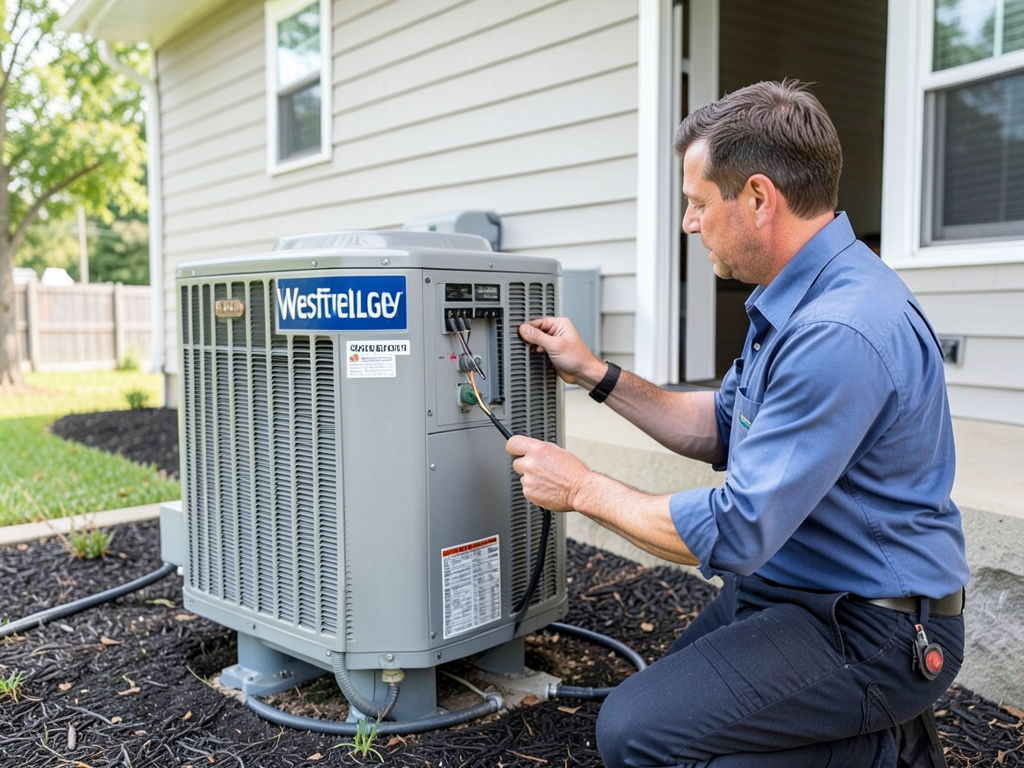
The technician verifies your thermostat settings, checks breaker panels, then moves to the outdoor condensing unit. They measure suction and discharge pressures, check amp draw on the compressor, and inspect electrical connections. If your system lost refrigerant, they locate the leak using electronic detectors or UV dye. Most repairs finish within two hours. You get cooling restored and a written report explaining what failed and why.
03

System Verification and Prevention

After repairs, we run a full system cycle to verify proper operation. We check temperature split across the evaporator coil, confirm correct superheat and subcooling, and test the condensate drain. You receive recommendations to prevent future failures, like installing a surge protector or upgrading an aging disconnect box. We also schedule a follow-up check within 48 hours to ensure stable performance once the crisis passes.

Why Columbus Trusts United HVAC for Emergency Cooling

Emergency HVAC repair attracts opportunists who charge triple rates and perform sloppy work. You need a company that treats your crisis with competence, not as a profit opportunity.

United HVAC Kansas City operates under flat-rate emergency pricing. You know the cost before work begins, even at 2 AM on a Sunday. No surprise invoicing. No mileage fees. No after-hours surcharges that double the bill.

We also understand Columbus building stock. German Village homes often have undersized ductwork that stresses blower motors. Clintonville's mid-century ranches use original electrical panels that cannot handle modern high-efficiency compressors. Victorian Village's older homes may still have knob-and-tube wiring affecting condenser circuits. We diagnose these issues because we work in these neighborhoods daily, not because we pulled up your address on Google.

Franklin County enforces mechanical codes that some out-of-area contractors ignore. We pull permits for major repairs like condenser replacements or refrigerant line reroutes. We use approved disconnect boxes, proper gauge wire, and rated fuses. Your repair will pass inspection if you sell the property or file an insurance claim.

Our technicians also receive ongoing training on newer refrigerants like R-32 and R-454B as the industry phases out R-410A. If you own a newer Carrier or Trane system, we have the tools and knowledge to service it correctly. Emergency repairs on advanced inverter-driven compressors require specialized diagnostics. We invest in that equipment because we commit to comprehensive service, not shortcuts.

Columbus residents deserve emergency HVAC cooling from professionals who respect your home, explain the problem clearly, and repair it right the first time. That is how we operate.

What to Expect During Emergency AC Service

Response Time and Availability

United HVAC Kansas City operates 24 hours a day, 365 days a year. We dispatch technicians across Columbus from multiple staging points to minimize drive time. Most residential calls receive service within 90 minutes. Commercial properties with multi-zone failures get priority dispatch. You receive real-time GPS tracking once your technician is en route. We do not operate on call windows. We give you a specific ETA and hit it. If something delays arrival, you get a courtesy call explaining the holdup. Emergency cooling means we show up when you need us, not when it fits our schedule.

Comprehensive System Diagnosis

Our technicians arrive with diagnostic tools, not guesswork. We use digital manifold gauges to measure refrigerant pressures, multimeters to check voltage and amperage, and thermal cameras to detect airflow restrictions. We test capacitors under load, not just at rest, because weak capacitors fail when the compressor runs. We inspect ductwork for disconnected plenums or crushed flex runs that kill airflow. You receive a written diagnosis explaining what failed, why it failed, and what repair restores cooling. We do not upsell unnecessary replacements. If your system needs a contactor relay, we replace the contactor relay, not the entire condensing unit.

Quality of Repair Work

Emergency repairs meet the same quality standards as scheduled service. We use OEM or equivalent-grade parts, not bargain bin components. Refrigerant line repairs get brazed with nitrogen purge to prevent internal oxidation. Electrical connections get torqued to manufacturer specs, not hand-tight guesses. We pressure-test refrigerant circuits before recharging to verify leak repairs hold. Blower motor replacements include checking duct static pressure to ensure the new motor does not overheat. You get a repair that lasts, not a temporary fix that fails next week. United HVAC Kansas City stands behind emergency work the same way we back scheduled installations.

Follow-Up and Ongoing Support

We schedule a courtesy follow-up within 48 hours to verify your system runs correctly after the emergency repair. This check includes measuring airflow, confirming thermostat accuracy, and inspecting the condensate drain. If any issue arises from the repair, we return at no additional charge. We also provide written recommendations for preventing future failures, like annual maintenance, surge protection installation, or ductwork sealing. Many emergency failures are preventable with proper upkeep. We help you avoid the next crisis by explaining what maintenance your system actually needs, not what generates the highest service ticket.

Frequently Asked Questions

You Have Questions,
We Have Answers

What does rapid cooling mean? +

Rapid cooling refers to quickly bringing down indoor temperatures during extreme heat or after an AC failure. In Columbus, where summer temps spike above 90 degrees with high humidity, rapid cooling restores comfort fast. This process involves maximizing airflow, sealing hot air leaks, and deploying high-capacity cooling equipment. When your AC fails on a sweltering July afternoon, you need rapid response to prevent heat stress and protect vulnerable family members. Professional HVAC techs arrive equipped to diagnose failures quickly and restore cool air within hours, not days. Speed matters when the heat index climbs.

What is the $5000 AC rule? +

The $5000 AC rule is a replacement versus repair guideline. Multiply the repair cost by your system's age in years. If the total exceeds $5000, replace the unit instead of repairing it. For example, a $400 repair on a 10-year-old system equals $4000, so repair makes sense. A $600 repair on a 12-year-old unit equals $7200, so replacement is smarter. Columbus homeowners face humid summers that stress aging AC units. This rule helps you avoid throwing money at a dying system when a new, efficient unit delivers better long-term value and reliability.

What is the 3 minute rule for AC? +

The 3 minute rule protects your AC compressor from damage. After your system shuts off, wait at least 3 minutes before restarting it. This allows refrigerant pressure to equalize inside the system. Restarting too quickly forces the compressor to work against high pressure, causing strain and potential failure. In Columbus, where AC units cycle frequently during humid summer months, respecting this rule extends equipment life. If your thermostat keeps short-cycling your system, you have a bigger problem. Call an HVAC tech immediately to diagnose the issue before compressor damage costs you thousands in repairs.

What is the average price for an HVAC service call? +

HVAC service calls in Columbus typically range from $75 to $200 for the diagnostic visit, depending on timing and complexity. Emergency calls outside business hours cost more. This fee covers the technician's time, vehicle costs, and initial diagnosis. Repairs beyond the diagnostic are additional. During Columbus summer heat waves, demand spikes and wait times increase. The service call fee usually applies toward repair costs if you proceed with the work. Avoid companies offering free service calls, they often inflate repair prices to compensate. Transparent pricing signals a reputable contractor who values your time and trust.

At what temperature do you stop rapid cooling? +

Stop rapid cooling when indoor temperature reaches 78 degrees or your target comfort level. Pushing your AC below 72 degrees wastes energy and strains the system without meaningful comfort gains. In Columbus, where outdoor temps hit 95 degrees with 70 percent humidity, your AC works hard to maintain any indoor temperature. Lowering your thermostat to 65 degrees does not cool your home faster, it just runs the system longer and drives up electric bills. Set a reasonable target, let the system work steadily, and avoid constantly adjusting the thermostat. Patience saves money and prevents equipment stress.

When should you not use evaporative cooling? +

Avoid evaporative cooling when humidity exceeds 50 percent. Columbus summers bring high humidity that makes evaporative coolers ineffective and uncomfortable. Evaporative systems work by adding moisture to air, which cools it through evaporation. In humid climates, the air already holds moisture, so the process fails. You end up with a muggy, sticky indoor environment instead of cool relief. Columbus homeowners need traditional refrigerant-based AC systems that remove humidity while cooling. Evaporative cooling works in dry western climates like Arizona, but it is the wrong solution for Ohio's climate. Stick with conventional AC for reliable comfort.

Can I write off my new AC unit on my taxes? +

You may qualify for federal tax credits when installing a high-efficiency AC unit. The Inflation Reduction Act offers credits up to $2000 for qualifying Energy Star systems with specific SEER2 ratings. You can also deduct 30 percent of installation costs for certain upgrades. Columbus homeowners should consult a tax professional to verify eligibility based on your specific equipment and situation. Keep all receipts and manufacturer certifications. Medical necessity deductions may apply if a doctor prescribes AC for health conditions, but documentation requirements are strict. Tax laws change frequently, so verify current rules before filing. Energy-efficient upgrades often pay for themselves through lower utility bills.

Does keeping the AC at 72 save money? +

Keeping your AC at 72 degrees does not save money compared to slightly warmer settings. Every degree above 72 reduces cooling costs by about 3 percent. Setting your thermostat to 76 or 78 degrees cuts energy use noticeably without sacrificing comfort for most people. In Columbus, where summer electric bills spike from AC use, raising your thermostat saves real money. Use ceiling fans to circulate air and make higher temps feel comfortable. Program your thermostat higher when you are away. Small adjustments add up over a full cooling season. Comfort is personal, but 72 degrees costs more than necessary.

Is it better to oversize or undersize an AC unit? +

Proper sizing beats both oversizing and undersizing. An oversized AC cools quickly but short-cycles, failing to remove humidity. Columbus homeowners end up with cold, clammy indoor air. An undersized unit runs constantly, struggling to reach target temps during peak heat and driving up electric bills. Professional load calculations account for your home's square footage, insulation, window placement, and ductwork. Avoid contractors who size units by square footage alone. Correct sizing delivers efficient cooling, proper humidity control, and longer equipment life. Invest in a Manual J load calculation before replacing your AC. Guessing equipment size wastes money and comfort.

How cool should my house be if it's 100 outside? +

Your AC should maintain indoor temps around 75 to 78 degrees when outdoor temps hit 100 degrees. Columbus rarely reaches 100, but extreme heat waves do occur. Most residential AC units can cool about 20 degrees below outdoor temperature efficiently. Expecting 68 degrees indoors when it is 100 outside overworks your system and may cause failure. Close blinds to block solar heat gain, run ceiling fans, and stay hydrated. If your home cannot stay below 80 degrees during extreme heat, your AC may be undersized, low on refrigerant, or failing. Call an HVAC tech to diagnose the problem before heat exhaustion becomes a risk.

Why Columbus Humidity and Heat Stress HVAC Systems Faster

Columbus sits in a humid continental climate zone where summer dewpoints regularly hit 70 degrees. High humidity forces air conditioners to work harder removing moisture, which stresses compressors and evaporator coils. The Scioto and Olentangy Rivers create localized moisture pockets where condensate drains clog faster from algae growth. Clay soil shifts with seasonal moisture changes, which can stress condenser pad mounts and cause refrigerant line vibration failures. German Village's tree canopy blocks airflow to outdoor units, forcing condenser fans to run longer. These Columbus-specific conditions accelerate wear and increase emergency AC repair frequency compared to drier climates.

Franklin County enforces mechanical codes that require proper refrigerant handling, electrical disconnects rated for outdoor use, and condensate overflow shutoffs on newer systems. United HVAC Kansas City operates under these standards daily. We understand local inspection requirements and ensure emergency repairs meet code. Our technicians recognize Columbus home construction patterns, from the brick bungalows in Clintonville to the modern builds in New Albany. We stock parts for both older R-22 systems still common in established neighborhoods and newer high-efficiency units in recent developments. Local expertise matters when your cooling system fails and you need immediate AC service from someone who knows Columbus homes inside and out.

HVAC Services in The Columbus Area

Grand HVAC Columbus is proud to serve the entire Columbus area and surrounding communities. We are committed to being a local, dependable resource for all your heating and cooling needs. Our convenient location ensures that we can respond quickly and efficiently to service calls, whether you're a residential or commercial client. We invite you to view our service area on the map to see how we can bring our expert HVAC solutions right to your doorstep.

Address:
Grand HVAC Columbus, 420 E 5th Ave, Columbus, OH, 43201

Additional Services We Offer

Our news updates

Latest Articles & News from The Blogs

Five HVAC Maintenance Tasks You Can Safely Do Yourself (And Three You Definitely Should Not) Central Ohio homeowners face unique…

Five HVAC Maintenance Tasks You Can Safely Do Yourself (And Three You Definitely Should Not)

Five HVAC Maintenance Tasks You Can Safely Do Yourself (And Three You Definitely Should Not) Central Ohio homeowners face unique…

How to Heat Your Outdoor Kitchen or Patio for Year-Round Use in New Albany

How to Heat Your Outdoor Kitchen or Patio for Year-Round Use in New Albany Columbus winters can make your beautiful…

Keeping Your Spare Room Comfortable as a Permanent Home Office in Blacklick

Keeping Your Spare Room Comfortable as a Permanent Home Office in Blacklick Your home office needs to feel like a…

Contact Us

Your AC just failed and indoor temps are climbing. Call United HVAC Kansas City at (380) 253-3188 right now. Our dispatcher answers immediately, and a technician heads your way within minutes. We arrive equipped to fix the problem, not schedule a follow-up. Stop sweating and start cooling.