




Menu

Holiday Heating Repair in Columbus – 24/7 Emergency Furnace Service When You Need It Most

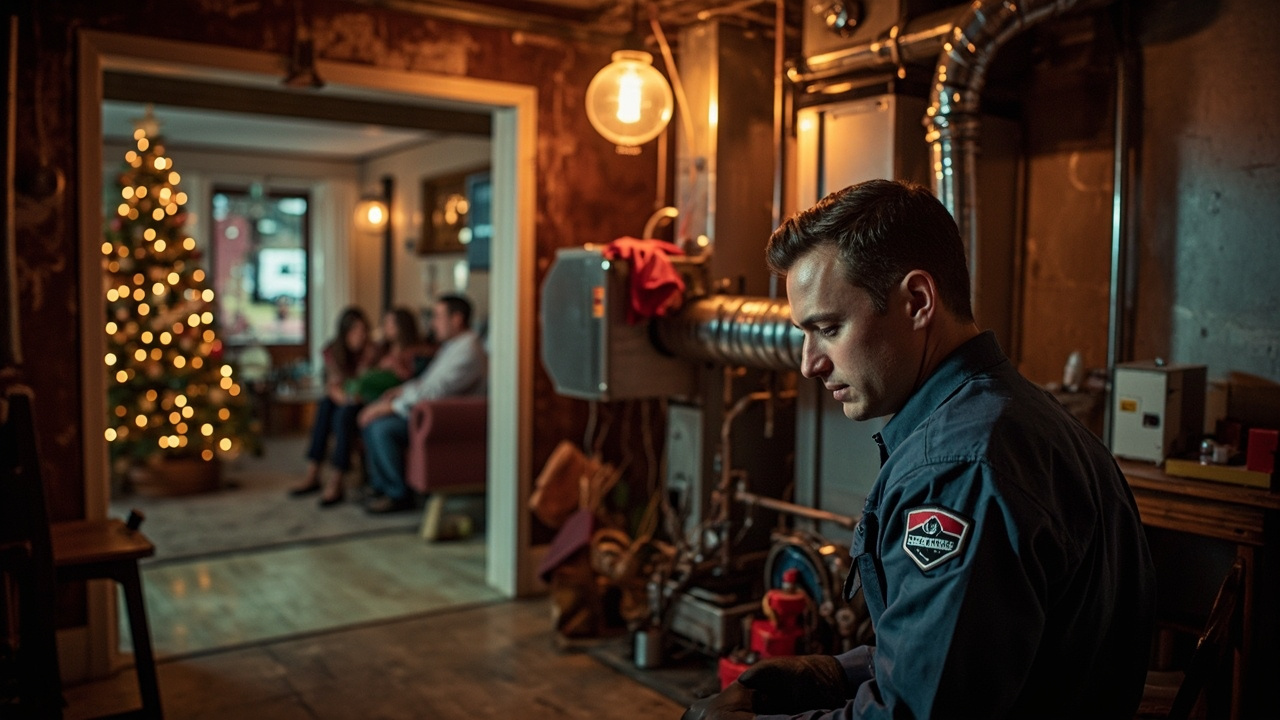
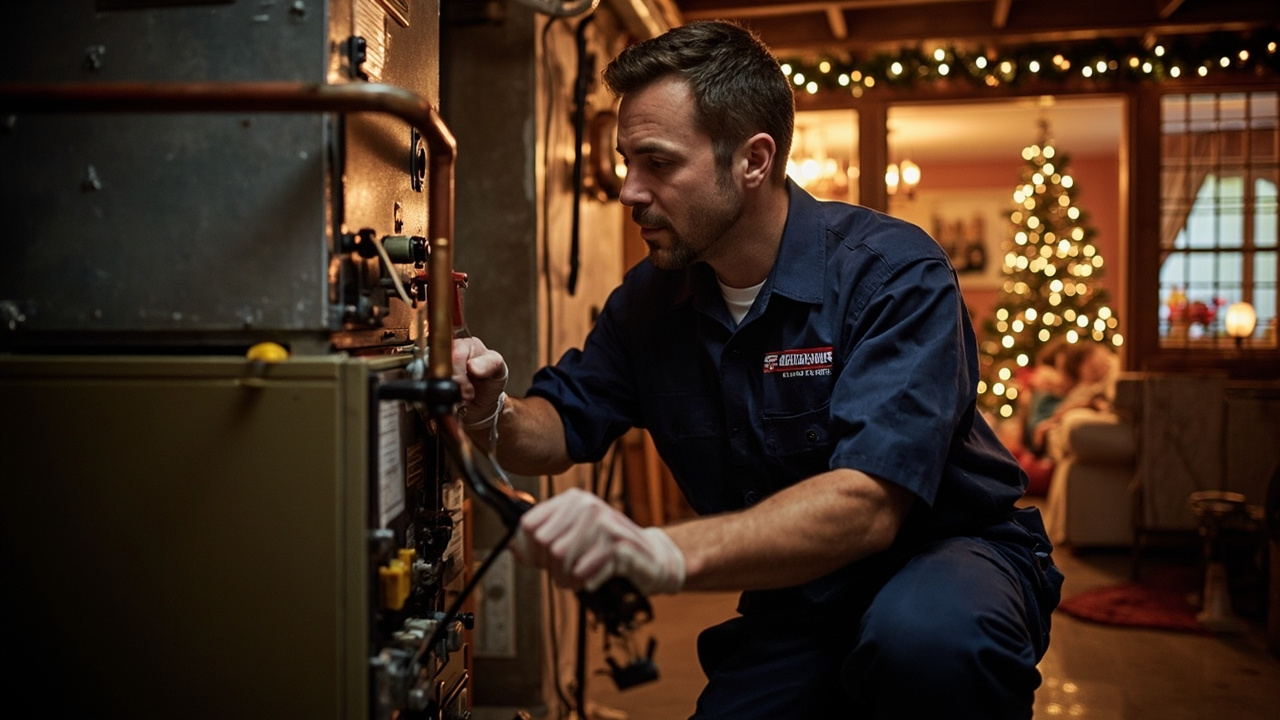
Your furnace doesn't care that it's Christmas or Thanksgiving. When your heating system fails on a holiday in Columbus, our emergency technicians respond fast with fully stocked trucks, expert diagnostics, and same-day repairs to restore warmth and safety to your home.

Slider Image 1
Slider Image 2
Slider Image 3
Slider Image 4
Slider Image 5
Slider Image 7
Slider Image 8
Slider Image 9
Slider Image 10
Slider Image 11

When Your Furnace Quits on Thanksgiving Morning

You wake up to a cold house on Christmas morning. The kids are asking why it's freezing. Your guests arrive in three hours for holiday dinner. Your furnace stopped working overnight, and every HVAC company you call is closed or not answering.

Columbus winters hit hard between November and February, with overnight lows regularly dropping into the teens. When temperatures plunge and your heating system fails during Thanksgiving, Christmas, or New Year's, you face more than discomfort. Frozen pipes can burst within hours when indoor temperatures fall below 32 degrees. Your family's safety becomes the priority, especially if you have young children or elderly relatives in the home.

Holiday heating emergencies spike during peak usage periods. Your furnace works overtime when Columbus weather turns brutal, and aging heat exchangers, failing igniters, and clogged filters choose the worst possible moments to give out. You need after hours furnace repair from technicians who stock the right parts and know how to diagnose problems fast.

Most HVAC companies shut down completely on major holidays. Their answering services take messages. You wait until Monday while your home stays dangerously cold. Emergency heating repair service means live dispatch, immediate response, and technicians who arrive within the hour, not the week. When you call for 24 hour heating repair on Christmas Day, you should reach a real person who sends a real technician with a real solution. Not everyone in Columbus offers emergency holiday furnace repair, but the cold doesn't wait for business hours.

When Your Furnace Quits on Thanksgiving Morning
How Emergency Holiday Furnace Repair Actually Works

How Emergency Holiday Furnace Repair Actually Works

Emergency heating repair service starts with rapid diagnostics. Our technicians carry full diagnostic equipment, including combustion analyzers, manometers for pressure testing, and infrared thermometers to identify heat exchanger cracks. We don't guess. We test gas pressure at the manifold, measure voltage at the control board, and check airflow across the evaporator coil.

Most holiday breakdowns stem from predictable failure points. Igniter assemblies crack after 50,000 cycles. Flame sensors accumulate carbon deposits and fail to sense ignition. Pressure switches stick when condensate drains freeze. Blower motors seize when capacitors weaken. Limit switches trip when filters clog and airflow drops below minimum CFM requirements. Each symptom points to a specific component, and experienced technicians identify the root cause within 20 minutes of arrival.

We stock common failure parts on every truck. Hot surface igniters for Carrier, Trane, Lennox, and Bryant systems. Flame sensors, pressure switches, and capacitors in multiple ratings. Blower motors in fractional and full horsepower sizes. When your furnace quits on a holiday, you need the part now, not ordered for next week delivery. Our inventory turns emergency calls into same-visit repairs.

After hours furnace repair also means protecting your home while we work. We contain work areas, vacuum metal shavings, and test system operation through multiple heating cycles before we leave. We verify gas pressure, check for carbon monoxide leaks with calibrated detectors, and confirm your thermostat cycles the system properly. Holiday or not, the repair meets the same standards as any Tuesday afternoon service call. Your heat comes back on, and it stays on.

What Happens When You Call for Holiday Heating Repair

Holiday Heating Repair in Columbus – 24/7 Emergency Furnace Service When You Need It Most
01

Immediate Dispatch and Arrival

You call our emergency line and reach a live dispatcher, not a voicemail. We collect your address, symptom description, and system age, then immediately assign the nearest available technician. Our GPS dispatch system routes the closest truck to your Columbus home. You receive a text with technician name, photo, and estimated arrival time. Most emergency holiday furnace repair calls get a technician on site within 60 to 90 minutes, even on Christmas Day.
02

Diagnostic Testing and Repair

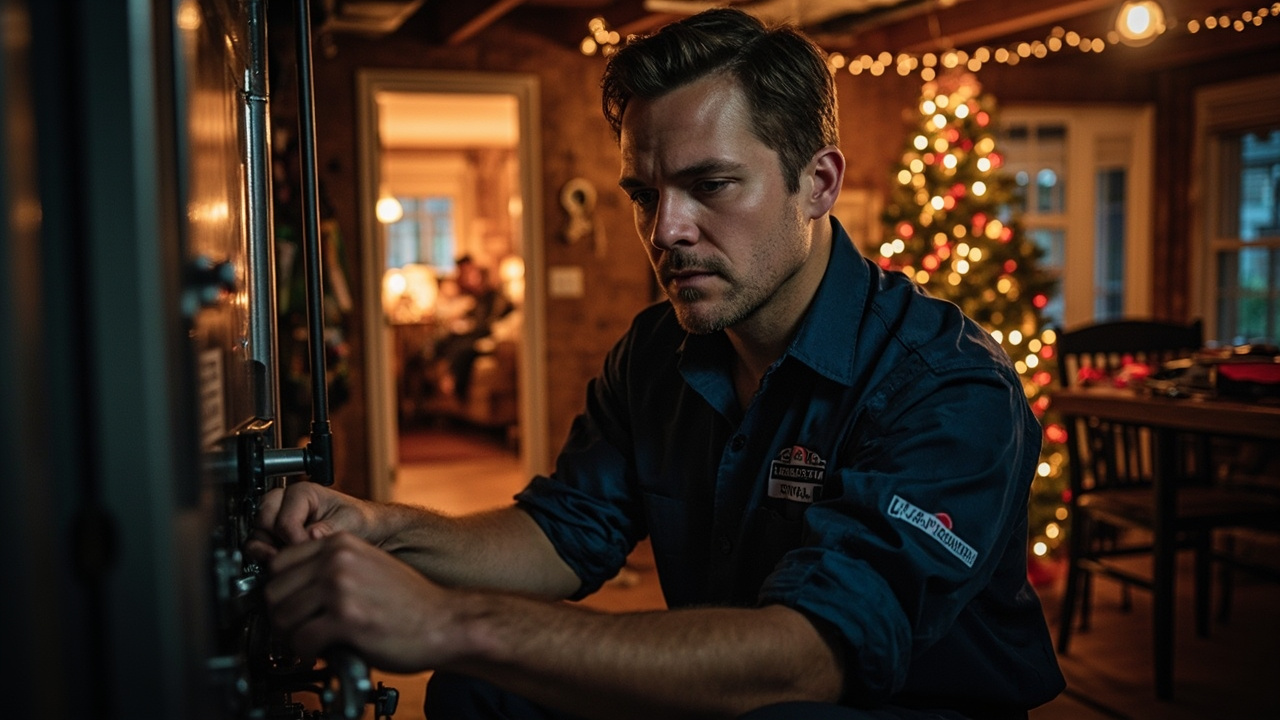
The technician arrives with a fully stocked truck and diagnostic equipment. We test ignition sequence, gas valve operation, blower motor amperage, and safety controls. We identify the failed component, explain the problem in plain language, and provide upfront pricing before starting repairs. If we need to replace an igniter, pressure switch, or blower capacitor, we pull the part from inventory and complete the repair on the spot. Your furnace restarts and begins heating your home while we're still on site.
03

System Verification and Testing

After completing repairs, we test the full heating cycle from thermostat call through burner ignition, flame establishment, and blower operation. We measure supply air temperature, verify proper gas pressure, and check for carbon monoxide leaks. We run the system through three complete cycles to confirm stable operation. Before leaving, we review what failed, why it failed, and what you can do to prevent future breakdowns. Your home warms back up, and your holiday continues safely.

Why Columbus Families Call Us on Holidays

Most HVAC companies in Columbus close completely on major holidays. Their office staff goes home. Their technicians take the day off. You get an answering service that takes a message and promises a callback on the next business day. That doesn't help when your house hits 45 degrees on Thanksgiving morning.

We staff emergency technicians every single holiday. Christmas Day, New Year's Eve, Thanksgiving, Memorial Day, Labor Day, and Fourth of July. Someone answers our emergency line. Someone dispatches a truck. Someone shows up at your door with tools, parts, and the training to fix your furnace. Heating repair open on holidays isn't a marketing claim. It's how we operate every single year.

Columbus homes built before 2000 run aging furnaces that average 18 to 25 years old. These systems use older control boards, standing pilot lights, and belt-driven blowers. Parts fail without warning. When a pressure switch sticks or a thermocouple wears out on a holiday weekend, you need a technician who knows these older systems inside out. We've repaired thousands of furnaces across German Village, Clintonville, Upper Arlington, and Hilliard. We know the common failure points in older Carrier and Bryant models. We stock the parts that Columbus homes actually need.

Our trucks carry more than basic components. We stock igniter assemblies for at least 12 different furnace brands. We carry blower motors, capacitors in eight different microfarad ratings, gas valves, and flame sensors. When you need 24 hour heating repair, you need the part available now. Our inventory eliminates the wait. We fix your furnace during the same visit, not three days later when the part finally arrives.

What to Expect During Emergency Holiday Service

Response Time and Availability

Emergency holiday furnace repair means immediate response. You call, we answer, and we dispatch a technician to your Columbus home within 60 to 90 minutes. Our emergency line operates 24 hours a day, every single day of the year. You never reach voicemail. You never wait until Monday. Our technicians work in shifts throughout Thanksgiving, Christmas, New Year's, and every major holiday. When you need after hours furnace repair at 2:00 AM on New Year's Day, we send someone. Your frozen home becomes a working heating system before sunrise. We stock trucks overnight and keep them fueled and ready. Response time matters when temperatures drop and pipes start freezing.

Diagnostic Process and Problem Identification

Our technicians arrive with combustion analyzers, multimeters, and manometers to test every component in your heating system. We check gas pressure at the manifold, measure voltage at the control board, and test flame sensor microamp readings. We inspect heat exchangers for cracks using flashlights and mirrors. We verify airflow by measuring static pressure across the blower assembly. Most furnace failures trace back to five common components. Igniters crack and stop glowing. Flame sensors accumulate carbon and fail to detect ignition. Blower capacitors weaken and motors refuse to start. Pressure switches stick when drain lines freeze. Limit switches trip when filters clog. We identify the exact failure point within 20 minutes, explain what broke and why, then show you the failed part before installing the replacement.

Repair Quality and System Performance

Emergency heating repair service doesn't mean rushed or temporary fixes. We install OEM parts that match your furnace manufacturer specifications. We replace cracked igniters with factory-rated assemblies. We install capacitors with the correct microfarad rating for your blower motor. We torque gas line fittings to manufacturer specs and leak-test every connection with soap solution. After repairs, we test the full heating cycle three times to confirm stable ignition, proper flame pattern, and correct supply air temperature. We measure carbon monoxide levels at the flue and inside your living space. Holiday or weekday, the repair meets the same quality standards. Your furnace operates safely and efficiently after we leave.

Follow-Up and Preventive Recommendations

After completing emergency repairs, we explain what caused the failure and how to prevent future breakdowns. If a clogged filter caused the limit switch to trip, we show you the dirty filter and recommend changing it monthly during heating season. If a cracked igniter failed after 12 years of service, we explain that igniters typically last 8 to 12 years and suggest replacing the flame sensor at the same time since both components age together. We don't upsell unnecessary services. We identify legitimate maintenance needs based on system age and component condition. Many customers schedule a full system tune-up after the holidays to address minor issues before they become emergency failures. We follow up within 48 hours to confirm your furnace continues running properly.

Frequently Asked Questions

You Have Questions,
We Have Answers

What are common holiday heating problems? +

Clogged or dirty air filters top the list. Guests and extra cooking create more airborne particles, forcing your furnace to work harder. Thermostat malfunctions happen when someone accidentally bumps settings or batteries die. Pilot light failures and ignition problems spike during Columbus cold snaps when furnaces cycle constantly. Blower motor issues emerge from overuse. Ductwork leaks worsen with temperature swings common in Ohio winters. Frozen or cracked heat exchangers pose carbon monoxide risks. Tripped breakers happen when you plug in decorations and space heaters simultaneously. These problems do not wait for business hours. Get emergency service immediately if you smell gas or detect carbon monoxide.

What is the $5000 rule for HVAC? +

The $5000 rule helps you decide between repair and replacement. Add your furnace age to the repair cost in hundreds. If the total exceeds 5000, replace the unit. Example: a 12-year-old furnace needs an $800 repair. That equals 1200. You should repair. But a 20-year-old furnace needing a $3000 heat exchanger equals 5000. Replace it. This rule accounts for efficiency losses and future repair likelihood. Columbus homeowners should factor in energy savings from modern systems. Older furnaces waste money on utility bills. Emergency holiday breakdowns often involve major component failures. Get a second opinion before committing to expensive repairs on aging equipment.

Who to call when heat stops working? +

Call a licensed HVAC technician immediately if your heat stops working. Do not wait until morning if temperatures drop below freezing in Columbus. Frozen pipes can burst within hours, causing thousands in water damage. Check your thermostat batteries and circuit breaker first. If those work, you need professional diagnostics. Emergency HVAC services operate 24/7 during holidays because heating failures do not follow business hours. Technicians diagnose failed igniters, cracked heat exchangers, blower motors, and gas valve issues. Do not attempt DIY furnace repairs. You risk carbon monoxide exposure, gas leaks, or voiding warranties. Keep your HVAC company's emergency number saved in your phone before problems start.

How much does it cost to fix a heating problem? +

Emergency holiday heating repairs typically range from diagnostic fees to several thousand dollars depending on the failed component. Simple fixes like thermostat replacement or filter changes cost less. Igniter replacement runs in the low hundreds. Blower motor or control board failures cost more. Heat exchanger replacement approaches new furnace costs, making replacement smarter financially. Columbus service calls during holidays may include emergency fees. Get a detailed written estimate before authorizing work. Ask about financing options if the repair exceeds your budget. Technicians should explain what failed, why it failed, and whether other components risk failing soon. Insurance may cover sudden mechanical breakdowns.

Why does my house feel cold at 73? +

Your thermostat reads 73 but you feel cold because of humidity levels, drafts, or poor insulation common in older Columbus homes. Ohio winter air holds less moisture, making 73 degrees feel cooler than summer temperatures. Cold spots near windows indicate air leaks or single-pane glass. Uneven heating means ductwork problems or undersized furnaces. Your furnace may short cycle, never reaching true comfort. Dirty filters restrict airflow, reducing heat distribution. High ceilings in historic Columbus neighborhoods stratify heat near the ceiling. Check for drafts around doors and windows. Run a humidifier to add moisture. Seal ductwork leaks. Consider a zoned heating system for multi-story homes.

What is the most expensive part to fix on a furnace? +

The heat exchanger costs the most to replace, often approaching new furnace prices. This metal chamber transfers heat from combustion gases to air circulating through your home. Cracks develop from thermal stress and corrosion over 15 to 20 years. Cracked heat exchangers leak carbon monoxide into your living space. Replacement requires complete furnace disassembly and reassembly. Labor costs add significantly. Most Columbus HVAC professionals recommend full system replacement instead because other components near failure at that age. Control boards and variable-speed blower motors also carry high price tags. Preventive maintenance catches heat exchanger cracks early through annual inspections. Never ignore carbon monoxide detector alarms.

What is the life expectancy of a heating system? +

Furnaces last 15 to 20 years with proper maintenance. Gas furnaces in Columbus homes typically outlast electric models. Furnace lifespan depends on installation quality, usage patterns, and maintenance frequency. Units oversized for your home short cycle, reducing lifespan. Undersized units run constantly, wearing components faster. Annual professional tune-ups extend life by catching small problems before they cascade. Change filters monthly during heating season. Ohio humidity and temperature swings stress components more than moderate climates. High-efficiency models may have shorter lifespans due to complex electronic controls. Plan replacement around year 15 to avoid emergency failures during holidays or cold snaps. Budget for replacement before breakdowns force rushed decisions.

Is a new HVAC system tax deductible in 2025? +

Yes, new HVAC systems may qualify for federal energy efficiency tax credits in 2025 under the Inflation Reduction Act. Systems meeting ENERGY STAR requirements can earn up to $2000 in tax credits. You must install qualified equipment and file IRS Form 5695 with your tax return. Rebates differ from credits. Columbus homeowners should verify current credit amounts and efficiency requirements before purchasing. Credits apply to primary residences only. Keep manufacturer certifications and installation receipts. State and local utility rebates may stack with federal credits. Consult your tax advisor about eligibility. These incentives offset the higher upfront cost of high-efficiency systems, reducing long-term payback periods through energy savings.

What is the 3 minute rule for air conditioners? +

The 3-minute rule prevents compressor damage in air conditioning systems. After your AC shuts off, wait three full minutes before restarting. This delay lets refrigerant pressures equalize between the high and low sides of the system. Immediate restarts force the compressor to start against high pressure, causing electrical strain and mechanical wear. Short cycling wears out compressors prematurely. This rule applies when you adjust thermostats or after power outages. Many modern thermostats have built-in delay circuits. Columbus power fluctuations during summer storms make this protection critical. Frequent short cycling indicates underlying problems like refrigerant leaks, dirty coils, or oversized equipment. Professional diagnostics identify root causes.

What is the average cost to service a furnace? +

Annual furnace maintenance in Columbus typically costs between diagnostic visits and comprehensive tune-ups. Service includes filter replacement, burner cleaning, blower inspection, thermostat calibration, and safety checks. Technicians measure carbon monoxide levels, test igniters, inspect heat exchangers for cracks, and verify proper airflow. Service agreements often reduce per-visit costs and include priority emergency service. Fall tune-ups before heating season prevent holiday breakdowns. Skipping maintenance voids some manufacturer warranties. Regular service extends equipment life, improves efficiency by up to 20 percent, and catches small problems before they become expensive failures. Schedule service before Columbus cold weather arrives. Emergency repairs cost significantly more than preventive maintenance.

Why Columbus Winter Weather Creates Holiday Heating Emergencies

Columbus sits in the transition zone between humid continental and humid subtropical climates, which creates wild temperature swings during winter months. December through February brings overnight lows into the teens and single digits, followed by afternoon highs in the 30s and 40s. Your furnace cycles constantly during these temperature fluctuations, creating wear on igniters, blower motors, and control boards. When holiday gatherings coincide with the coldest weeks of the year, furnaces that already ran 80,000 cycles finally give out. The freeze-thaw pattern also affects condensate drainage in high-efficiency furnaces. Drain lines freeze when temperatures plunge overnight, causing pressure switches to trip and burners to lock out. Emergency holiday furnace repair in Columbus often involves thawing frozen drain lines and replacing pressure switches damaged by ice blockages.

Columbus homeowners face unique challenges with heating systems in older neighborhoods like German Village, Clintonville, and Victorian Village. Many homes still run original furnaces installed in the 1980s and 1990s, systems that predate modern diagnostic controls and safety features. These older furnaces use standing pilot lights, mechanical thermostats, and belt-driven blowers that require hands-on troubleshooting skills most younger technicians never learned. When you need 24 hour heating repair on a holiday in an older Columbus home, you need a technician who understands legacy systems and stocks parts that match outdated specifications. Local expertise matters because every neighborhood in Columbus has distinct housing stock with different HVAC equipment. Technicians who work these areas daily recognize common failure patterns and carry the right inventory to fix problems during the first visit.

HVAC Services in The Columbus Area

Grand HVAC Columbus is proud to serve the entire Columbus area and surrounding communities. We are committed to being a local, dependable resource for all your heating and cooling needs. Our convenient location ensures that we can respond quickly and efficiently to service calls, whether you're a residential or commercial client. We invite you to view our service area on the map to see how we can bring our expert HVAC solutions right to your doorstep.

Address:
Grand HVAC Columbus, 420 E 5th Ave, Columbus, OH, 43201

Additional Services We Offer

Our news updates

Latest Articles & News from The Blogs

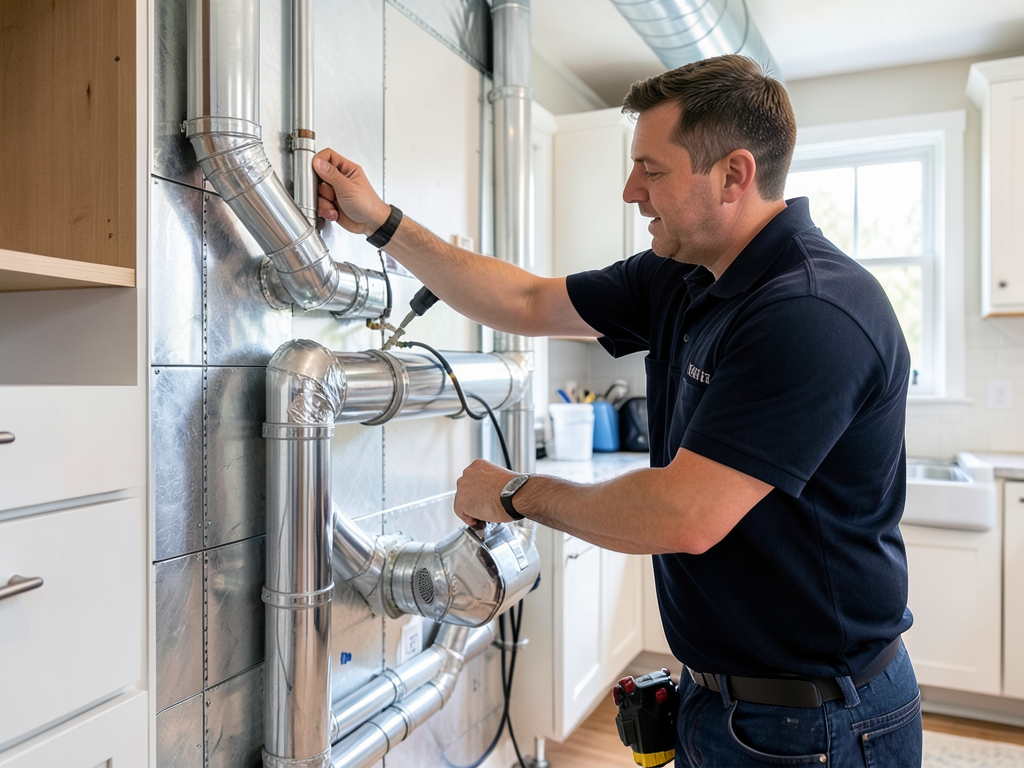
Moving Your Air Vents During a Major Kitchen Renovation in Upper Arlington Planning to move walls and reconfigure your kitchen…

Moving Your Air Vents During a Major Kitchen Renovation in Upper Arlington

Moving Your Air Vents During a Major Kitchen Renovation in Upper Arlington Planning to move walls and reconfigure your kitchen…

The Landlord Guide to Low Maintenance HVAC in the University District

The Landlord Guide to Low Maintenance HVAC in the University District \n\n Managing rental properties in Columbus’s University District comes…

Why Westerville Homeowners are Looking into Solar Ready HVAC Systems

Why Westerville Homeowners are Looking into Solar Ready HVAC Systems Westerville homeowners are increasingly exploring solar-ready HVAC systems as energy…

Contact Us

Your furnace doesn't care that it's a holiday. When your heating system fails, call United HVAC Kansas City at (380) 253-3188. We answer the phone, dispatch immediately, and arrive ready to fix your furnace today. Real technicians. Real parts. Real repairs.