
What to Do When Your Heat Pump Starts Growing Ice in Plain City
Your heat pump is supposed to keep your Plain City home warm through Ohio’s brutal winters. But when you see a thick layer of ice covering the outdoor unit, it’s more than just a cold problem—it’s a system failure that could leave your family without heat.
Heat pumps in Central Ohio face unique challenges. The combination of freezing temperatures, high humidity from the Scioto River valley, and sudden temperature swings can push your system beyond its limits. A little frost on the coils is normal during the defrost cycle, but when ice builds up and stays there, you’ve got a serious issue that needs immediate attention. Why Your Westerville AC Needs a Tune Up Before the Humidity Hits.
Before you grab a hammer to chip away at the ice (which will only damage your expensive equipment), understand what’s happening and what steps you can take to protect your home.
Normal Frost vs. Dangerous Ice: What’s Happening Outside?
During winter operation, your heat pump extracts heat from outdoor air and transfers it inside. This process causes the outdoor coil to run colder than the surrounding air. When moisture in the air contacts these cold coils, frost forms.. Read more about Why Your Heat Pump is Blowing Cold Air During a Cold Snap in Orient.
Your system handles this automatically through a defrost cycle that runs every 30-90 minutes depending on conditions. The reversing valve switches the unit to air conditioning mode briefly, sending hot refrigerant to melt the frost. You might hear a whooshing sound or see steam rising—that’s normal.
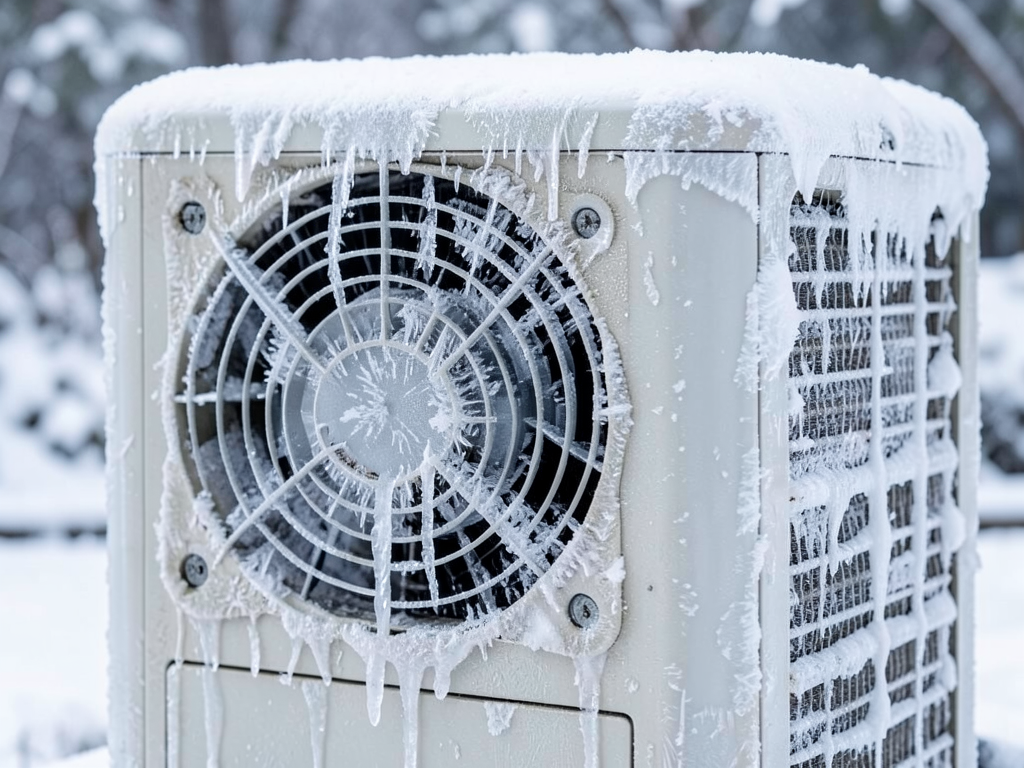
Dangerous ice buildup looks different. Instead of a light frost coating, you’ll see thick ice sheets, ice hanging from the bottom of the unit, or the entire coil encased in ice. The fan may be completely frozen in place. This indicates the defrost cycle isn’t working properly.
Plain City’s location in Madison County exposes heat pumps to specific conditions. The area’s slightly higher elevation compared to Columbus means colder temperatures, while the surrounding farmland allows cold winds to sweep across exposed units. Homes near Big Darby Creek often experience higher humidity levels, accelerating frost formation.

Diagram showing normal frost pattern versus dangerous ice accumulation on heat pump coils
Common Causes for Heat Pumps Freezing in Central Ohio
Understanding why your heat pump is icing up helps you identify the problem quickly. Here are the most frequent culprits we see in Plain City homes.
Restricted Airflow is the most common cause. When air can’t flow freely across the coils, the refrigerant gets too cold and moisture freezes. Check your air filter first—if it’s clogged with dust, your system can’t breathe. Central Ohio’s pollen seasons in spring and fall can accelerate filter clogging.
Outdoor Debris around the unit creates similar problems. Leaves, grass clippings, and snow buildup block airflow. After heavy snowfall, drifts can pile against the unit, suffocating it. The flat terrain around Plain City means snow often drifts from open fields directly onto heat pump units.
Refrigerant Issues prevent proper heat transfer. Low refrigerant levels from small leaks force the system to work harder, dropping coil temperatures below freezing. The EPA mandates that refrigerant handling must be performed by certified technicians due to environmental concerns and system safety.
Defrost Cycle Failure occurs when sensors, timers, or the reversing valve malfunction. The defrost board might not trigger the cycle, or the reversing valve might stick. Without regular defrosting, ice accumulates until the system shuts down completely.
Outdoor Fan Motor Problems prevent air circulation even if everything else works. A failing motor might run slowly or not at all, creating the same airflow restriction as a dirty filter.
According to the EPA’s Section 608 regulations, only certified technicians can service refrigeration equipment. Attempting DIY refrigerant repairs isn’t just ineffective—it’s illegal and can result in substantial fines.
5 Troubleshooting Steps for Plain City Homeowners
Before calling for emergency service, take these steps to identify the problem and potentially solve it yourself. Where to Find 24 Hour Emergency HVAC Help Anywhere in Columbus.
- Check the Thermostat Settings
Ensure the system is set to “Heat” mode and the fan is on “Auto.” Sometimes a simple setting change can resolve the issue. Plain City homes often use programmable thermostats that may have incorrect schedules for winter operation.
- Inspect and Replace the Air Filter
A dirty filter is the easiest fix. Remove the filter and hold it to a light. If you can’t see light through it, replace it. Central Ohio’s high pollen counts mean filters often need changing every 30-60 days during peak seasons.
- Clear Debris from Around the Unit
Remove leaves, snow, and any objects within two feet of the heat pump. Ensure the top and sides have clear airflow. After snow events, check that snow hasn’t drifted from nearby structures onto the unit.
- Check for Visible Damage or Obstructions
Look for bent fins on the coil, which restrict airflow. Check that the outdoor fan spins freely when the system runs. If you hear grinding or clicking sounds, the fan motor may be failing.
- Verify the Defrost Cycle is Running
Listen for the reversing valve switching during normal operation. You might hear a slight click followed by a change in sound as the system goes into defrost mode. If you never hear this cycle, the defrost controls may need repair.
If these steps don’t resolve the issue within 30 minutes, it’s time to call a professional. Continuing to run a frozen heat pump can damage the compressor—a repair that often costs more than replacing the entire outdoor unit.
Technician using a digital manifold gauge to check refrigerant pressures on a frozen heat pump
The Danger of ‘Ice Boxing’: Why You Shouldn’t Pick at the Ice
When you see your heat pump covered in ice, the instinct is to break it off. This is one of the worst things you can do.
Heat pump coils are made of thin aluminum fins attached to copper tubing. These components are fragile and easily damaged. Using tools to chip ice can puncture refrigerant lines, bend fins, or crack the coil housing. A single puncture can release refrigerant and create an expensive repair situation.
Ice acts as an insulator. Breaking off the outer layer often reveals more ice underneath that’s still attached to the system. You’re not solving the problem—you’re just creating damage.
Hot water might seem like a solution, but it can cause thermal shock to the metal components. The rapid temperature change can crack the coil or damage the compressor. Never pour hot water on a frozen heat pump.
Instead, switch your thermostat to emergency heat (if available) to provide backup warmth while the system thaws naturally. This prevents your home from cooling while you wait for professional service.
According to the Ohio Mechanical Code, heat pump installations must maintain proper clearances and protect against freezing conditions. Professional technicians follow these codes when diagnosing and repairing frozen units.
Professional Heat Pump Repair in Plain City
When DIY troubleshooting fails, professional diagnosis becomes necessary. Here’s what to expect from quality heat pump repair service in Plain City. Improving the Air Quality in Your Older Clintonville Home.
Emergency Response Times matter when your home is without heat. Grand HVAC offers 24/7 emergency service throughout Madison County, with average response times under two hours for Plain City residents. Our technicians arrive fully equipped to diagnose and repair most issues on the first visit.
Diagnostic Process includes checking refrigerant levels with digital manifold gauges, testing defrost controls, inspecting electrical components, and measuring temperature splits across the coil. We use thermal imaging cameras to identify airflow restrictions that aren’t visible to the naked eye.
Common Repairs we perform include replacing faulty defrost sensors, repairing or replacing reversing valves, sealing refrigerant leaks and recharging systems, cleaning and straightening coil fins, and replacing failed fan motors. Each repair comes with a warranty on parts and labor.
Plain City’s mix of newer developments and established neighborhoods means we see different failure patterns. Homes in Glacier Ridge or Glacier Pointe often have heat pumps that are 5-10 years old and experiencing defrost control issues. Older homes near Pastime Park might have systems with refrigerant leaks due to age. Troubleshooting AC Issues.
Our technicians understand the specific challenges of Plain City’s climate. We know that homes near open farmland experience more wind exposure, while properties with mature trees might have more debris accumulation. This local knowledge helps us diagnose problems faster.
Regular maintenance prevents most freezing issues. Our preventative maintenance plans include twice-yearly inspections, coil cleaning, refrigerant level checks, and performance testing. Customers with maintenance agreements get priority scheduling and reduced emergency rates.
Call (380) 253-3188 today to schedule your inspection before the next cold snap hits. Don’t wait until your heat pump fails completely—preventive maintenance costs far less than emergency repairs.
Heat pump technician performing preventative maintenance on a residential unit in Plain City
Frequently Asked Questions
How do I know if my heat pump is frozen or just in defrost mode?
During normal defrost, you’ll see steam rising from the unit and might hear a whooshing sound for 5-10 minutes. The process repeats every 60-90 minutes in cold weather. Dangerous ice buildup looks like solid ice sheets that don’t melt within the normal defrost cycle timeframe.
Can I use my heat pump if it’s covered in ice?
No. Running a frozen heat pump can damage the compressor and other components. Switch to emergency heat if your system has it, and call for professional service immediately. Continuing to run the system while frozen can turn a simple repair into a major replacement.
How much does it cost to repair a frozen heat pump in Plain City?
Repair costs vary based on the problem. Simple issues like dirty filters or debris removal might cost $75-150. More complex repairs like replacing a defrost board or reversing valve typically range from $300-800. Major repairs like compressor replacement can exceed $2,000.
How can I prevent my heat pump from freezing in the future?
Regular maintenance is key. Change filters every 30-60 days, keep the area around the unit clear of debris and snow, and schedule professional maintenance twice yearly. Consider installing a cover during extreme weather, but never block airflow to the unit.
Should I turn off my heat pump if I see ice forming?
If the ice is minimal and your system is still running, it might be in normal defrost mode—leave it on. If you see thick ice buildup or the system has stopped running, switch to emergency heat and call for service. Don’t attempt to run a heavily iced unit.
Don’t let a frozen heat pump leave your Plain City home in the cold. The combination of Ohio’s harsh winters and your system’s complexity means professional diagnosis is often necessary. While simple troubleshooting can resolve minor issues, persistent ice buildup indicates problems that require specialized tools and expertise.
Remember that heat pumps are precision machines with refrigerant pressures measured in pounds per square inch, electrical components operating at high voltage, and delicate coil assemblies. DIY repairs beyond basic maintenance can be dangerous and may void your manufacturer’s warranty.
Plain City residents trust Grand HVAC for reliable, professional service backed by years of experience serving Madison County. Our technicians understand the local climate challenges and can quickly diagnose problems specific to this area.
Call (380) 253-3188 now for emergency heat pump repair. Our 24/7 service means you’ll never be left without heat when Ohio’s temperatures plummet. Don’t wait until your home is freezing—pick up the phone and call (380) 253-3188 before the next storm hits.
You may also find this helpful. Why Your Energy Bills in Briggsdale Spike Every Time the Temperature Drops Below Freezing.
{
“@context”: “https://schema.org”,
“@type”: “BlogPosting”,
“headline”: “What to Do When Your Heat Pump Starts Growing Ice in Plain City”,
“description”: “Is your Plain City heat pump covered in ice? Learn the causes, DIY fixes, and when to call Grand HVAC for emergency repair. Call (380) 253-3188 now.”,
“wordCount”: 1927,
“datePublished”: “2026-04-01T06:31:00.000Z”,
“dateModified”: “2026-04-01T06:31:00.000Z”,
“inLanguage”: “en-US”,
“mainEntityOfPage”: {
“@type”: “WebPage”,
“@id”: “https://grandhvaccolumbus.com”
},
“publisher”: {
“@type”: “LocalBusiness”,
“name”: “Grand HVAC Columbus”,
“url”: “https://grandhvaccolumbus.com”
},
“author”: {
“@type”: “Organization”,
“name”: “Grand HVAC Columbus”,
“url”: “https://grandhvaccolumbus.com”
},
“image”: {
“@type”: “ImageObject”,
“url”: “https://grandhvaccolumbus.com/wp-content/uploads/2026/03/what-to-do-when-your-heat-pump-starts-growing-ice-1.png”
}
}
{
“@context”: “https://schema.org”,
“@type”: “HVACBusiness”,
“name”: “Grand HVAC Columbus”,
“url”: “https://grandhvaccolumbus.com”,
“address”: {
“@type”: “PostalAddress”,
“addressLocality”: “Columbus”
},
“areaServed”: {
“@type”: “City”,
“name”: “Columbus”
}
}
{
“@context”: “https://schema.org”,
“@type”: “FAQPage”,
“mainEntity”: [
{
“@type”: “Question”,
“name”: “Normal Frost vs. Dangerous Ice: What’s Happening Outside?”,
“acceptedAnswer”: {
“@type”: “Answer”,
“text”: “During winter operation, your heat pump extracts heat from outdoor air and transfers it inside. This process causes the outdoor coil to run colder than the surrounding air. When moisture in the air contacts these cold coils, frost forms.”
}
},
{
“@type”: “Question”,
“name”: “How do I know if my heat pump is frozen or just in defrost mode?”,
“acceptedAnswer”: {
“@type”: “Answer”,
“text”: “During normal defrost, you’ll see steam rising from the unit and might hear a whooshing sound for 5-10 minutes. The process repeats every 60-90 minutes in cold weather. Dangerous ice buildup looks like solid ice sheets that don’t melt within the normal defrost cycle timeframe.”
}
},
{
“@type”: “Question”,
“name”: “Can I use my heat pump if it’s covered in ice?”,
“acceptedAnswer”: {
“@type”: “Answer”,
“text”: “No. Running a frozen heat pump can damage the compressor and other components. Switch to emergency heat if your system has it, and call for professional service immediately. Continuing to run the system while frozen can turn a simple repair into a major replacement.”
}
},
{
“@type”: “Question”,
“name”: “How much does it cost to repair a frozen heat pump in Plain City?”,
“acceptedAnswer”: {
“@type”: “Answer”,
“text”: “Repair costs vary based on the problem. Simple issues like dirty filters or debris removal might cost $75-150. More complex repairs like replacing a defrost board or reversing valve typically range from $300-800. Major repairs like compressor replacement can exceed $2,000.”
}
},
{
“@type”: “Question”,
“name”: “How can I prevent my heat pump from freezing in the future?”,
“acceptedAnswer”: {
“@type”: “Answer”,
“text”: “Regular maintenance is key. Change filters every 30-60 days, keep the area around the unit clear of debris and snow, and schedule professional maintenance twice yearly. Consider installing a cover during extreme weather, but never block airflow to the unit.”
}
},
{
“@type”: “Question”,
“name”: “Should I turn off my heat pump if I see ice forming?”,
“acceptedAnswer”: {
“@type”: “Answer”,
“text”: “If the ice is minimal and your system is still running, it might be in normal defrost mode—leave it on. If you see thick ice buildup or the system has stopped running, switch to emergency heat and call for service. Don’t attempt to run a heavily iced unit.”
}
}
]
}
{
“@context”: “https://schema.org”,
“@type”: “HowTo”,
“name”: “Troubleshooting Frozen Heat Pump”,
“step”: [
{
“@type”: “HowToStep”,
“position”: 1,
“name”: “Check the Thermostat Settings”,
“text”: “Ensure the system is set to \”Heat\” mode and the fan is on \”Auto.\” Sometimes a simple setting change can resolve the issue. Plain City homes often use programmable thermostats that may have incorrect schedules for winter operation.”
},
{
“@type”: “HowToStep”,
“position”: 2,
“name”: “Inspect and Replace the Air Filter”,
“text”: “A dirty filter is the easiest fix. Remove the filter and hold it to a light. If you can’t see light through it, replace it. Central Ohio’s high pollen counts mean filters often need changing every 30-60 days during peak seasons.”
},
{
“@type”: “HowToStep”,
“position”: 3,
“name”: “Clear Debris from Around the Unit”,
“text”: “Remove leaves, snow, and any objects within two feet of the heat pump. Ensure the top and sides have clear airflow. After snow events, check that snow hasn’t drifted from nearby structures onto the unit.”
},
{
“@type”: “HowToStep”,
“position”: 4,
“name”: “Check for Visible Damage or Obstructions”,
“text”: “Look for bent fins on the coil, which restrict airflow. Check that the outdoor fan spins freely when the system runs. If you hear grinding or clicking sounds, the fan motor may be failing.”
},
{
“@type”: “HowToStep”,
“position”: 5,
“name”: “Verify the Defrost Cycle is Running”,
“text”: “Listen for the reversing valve switching during normal operation. You might hear a slight click followed by a change in sound as the system goes into defrost mode. If you never hear this cycle, the defrost controls may need repair.”
}
],
“image”: “https://grandhvaccolumbus.com/wp-content/uploads/2026/03/what-to-do-when-your-heat-pump-starts-growing-ice-1.png”
}
{
“@context”: “https://schema.org”,
“@type”: “BreadcrumbList”,
“itemListElement”: [
{
“@type”: “ListItem”,
“position”: 1,
“name”: “Home”,
“item”: “https://grandhvaccolumbus.com”
},
{
“@type”: “ListItem”,
“position”: 2,
“name”: “Blog”,
“item”: “https://grandhvaccolumbus.com/blog”
},
{
“@type”: “ListItem”,
“position”: 3,
“name”: “What to Do When Your Heat Pump Starts Growing Ice in Plain City”
}
]
}
{
“@context”: “https://schema.org”,
“@type”: “Service”,
“serviceType”: “HVAC”,
“provider”: {
“@type”: “LocalBusiness”,
“name”: “Grand HVAC Columbus”,
“url”: “https://grandhvaccolumbus.com”
},
“areaServed”: {
“@type”: “City”,
“name”: “Columbus”
},
“description”: “Is your Plain City heat pump covered in ice? Learn the causes, DIY fixes, and when to call Grand HVAC for emergency repair. Call (380) 253-3188 now.”
}