
The Best Way to Add AC to a Finished Basement in Your Newark Home
Adding air conditioning to a finished basement in Newark requires understanding Ohio’s high humidity and the unique airflow challenges below-grade spaces present. Most finished basements struggle with stagnant air and moisture buildup because they lack proper return air pathways. The most effective solution combines a dedicated cooling system with integrated dehumidification to maintain comfort and prevent mold growth.
Central Ohio basements face specific challenges. The region’s clay soil retains moisture and can increase basement humidity levels by 10-15% compared to above-ground spaces. Newark’s location in Licking County means basements often sit on soil with high water retention, making moisture control critical for any HVAC installation. Licking County Building Department.
The best approach starts with a professional Manual J load calculation to determine the exact cooling capacity needed. Finished basements typically require 400-500 BTU per square foot, but this varies based on insulation quality and window placement. A zoned system or ductless mini-split allows independent temperature control from the main floor, addressing the basement’s tendency to feel cooler than upstairs living spaces. Improving the Air Quality in Your Older Clintonville Home.
Before installation, check Newark Building Department requirements for mechanical permits. Licking County follows the Ohio Mechanical Code, which mandates proper ventilation rates and condensate disposal for below-grade installations. Most basement AC projects require a permit costing between $75-150 depending on system size. EPA Refrigerant Regulations.
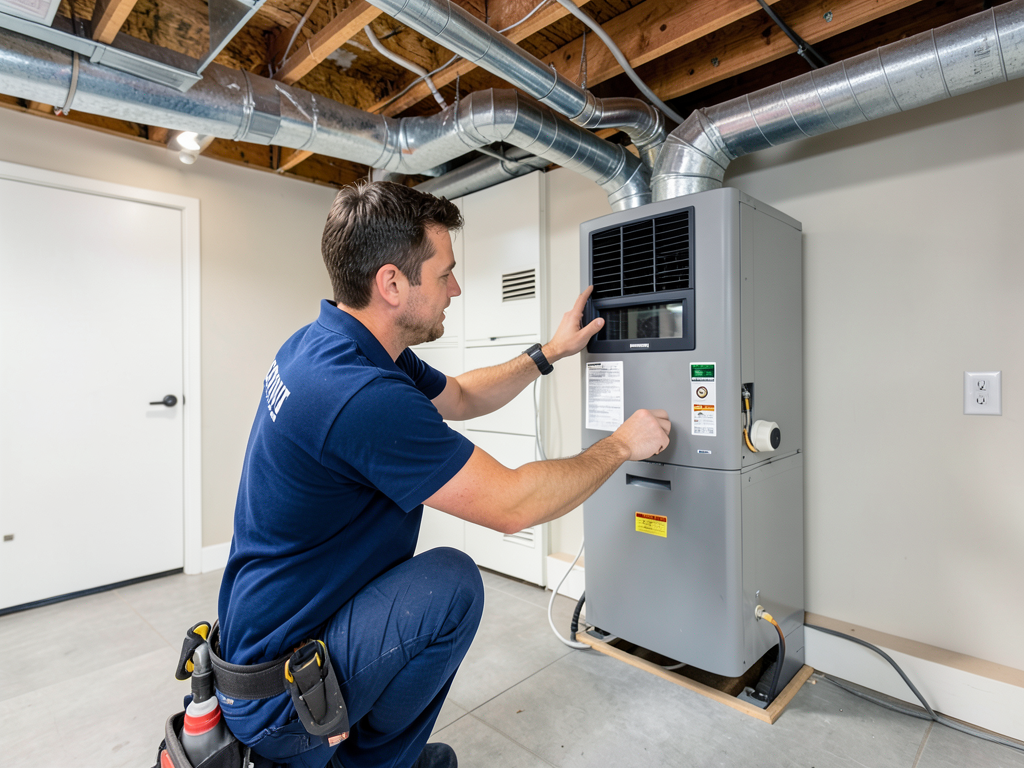
Installation options include extending existing ductwork with dedicated basement supply and return vents, installing a ductless mini-split system, or adding a basement-specific heat pump. Ductless mini-splits offer the highest efficiency for retrofit applications since they eliminate the need for extensive ductwork modifications. These systems achieve SEER2 ratings of 18-22, significantly higher than traditional central AC units. Ductless Mini-Split Systems.
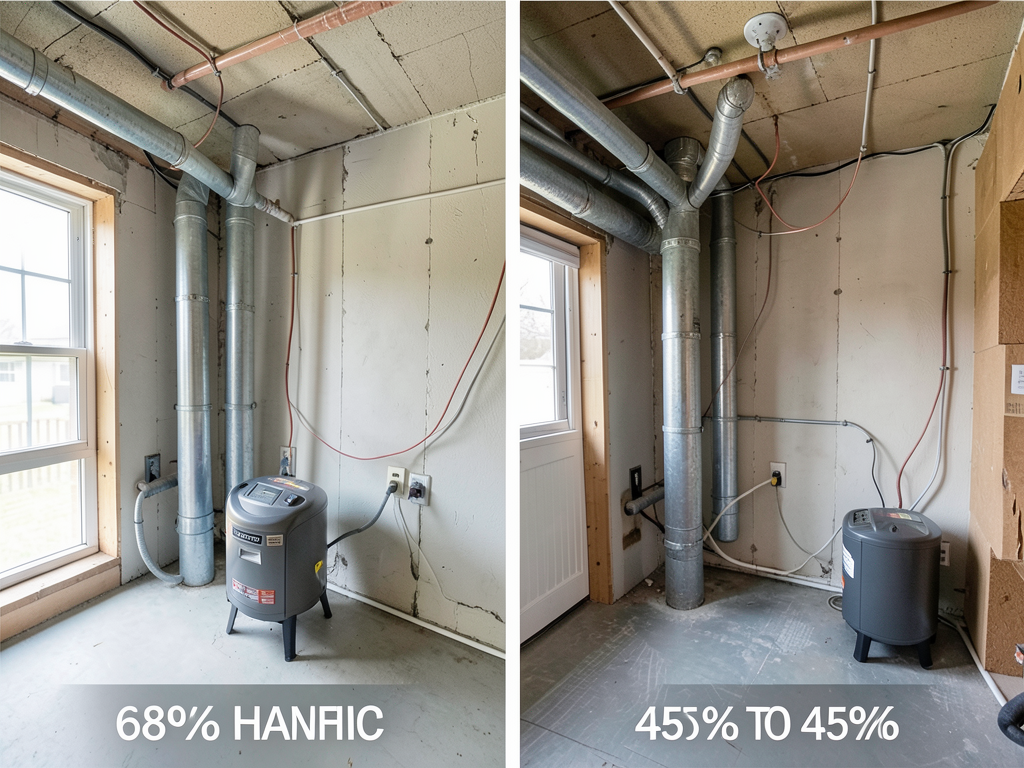
Moisture management remains the critical success factor. Every basement AC installation should include a condensate pump if gravity drainage isn’t available and consider a whole-house dehumidifier integrated with the system. Without proper moisture control, even the best cooling system will struggle with musty odors and potential mold growth.
Energy efficiency improves when basement cooling systems include smart thermostats with humidity sensors. These devices automatically adjust cooling output based on both temperature and moisture levels, reducing energy consumption by 15-20% compared to basic thermostat-only controls. Upgrading to a Smart Thermostat in Grandview Heights to Lower Your Electric Bill.
The installation timeline typically spans 1-3 days depending on complexity. Simple ductless mini-split installations complete in one day, while extensive ductwork modifications may require two to three days including permit inspections and final testing.
Cost considerations include equipment selection, installation complexity, and permit fees. Ductless mini-split systems range from $3,500-6,000 for complete installation, while extending existing ductwork typically costs $2,500-4,500 but may require additional return air modifications.
Proper return air placement proves essential for basement comfort. Without adequate return pathways, cooled air becomes trapped, creating pressure imbalances that reduce system efficiency by up to 30%. Installing return air grilles near the basement ceiling allows proper air circulation and prevents cold spots near supply vents.
Local soil conditions in Newark affect system performance. The area’s heavy clay soil can transmit ground moisture through foundation walls, requiring additional vapor barriers or insulation in some installations. Homes near the Licking River or Raccoon Creek may experience higher baseline humidity requiring more robust dehumidification.
Smart zoning technology allows basement cooling systems to operate independently from upstairs HVAC. This prevents overcooling upstairs spaces while maintaining comfortable temperatures below grade. Modern zoning controllers use occupancy sensors to adjust airflow based on actual basement usage patterns.
Noise considerations matter for finished basements used as living spaces or home theaters. Ductless mini-split indoor units operate at 19-25 decibels, quieter than a whisper, while traditional ductwork can transmit noise from air handlers located in attics or mechanical rooms.
Maintenance requirements differ for basement systems. The below-grade environment means filters may need replacement every 30-45 days instead of the standard 60-90 days. Condensate drain lines require annual cleaning to prevent algae growth that can cause system shutdowns.
Energy savings accumulate over time with proper basement cooling. Homes that previously relied on portable AC units or window units typically see 25-40% reduction in cooling costs after installing dedicated basement HVAC systems with proper sizing and controls.
Air quality improvements represent an often-overlooked benefit. Dedicated basement cooling systems include advanced filtration that captures dust, pollen, and other allergens that tend to accumulate in below-grade spaces. HEPA filtration options can remove up to 99.97% of airborne particles.
System longevity depends on proper installation and maintenance. Basement environments can accelerate wear on HVAC components due to higher humidity levels. Quality installations include corrosion-resistant components and proper drainage to extend system life beyond the standard 15-20 year expectancy.
Backup cooling options provide peace of mind during power outages. Some homeowners install battery backup systems or generators specifically sized to power basement cooling during summer storms when humidity levels spike.
Integration with existing home automation systems allows centralized control of basement cooling. Smart home platforms can coordinate basement HVAC operation with whole-house systems, optimizing energy use while maintaining comfort throughout the home.
Local building codes in Newark require specific clearances around HVAC equipment. Mechanical rooms must maintain 30-inch front clearance and 24-inch side clearance for service access. Condensate lines must terminate at least 6 feet from foundation walls to prevent moisture damage.
Noise transmission through floors requires attention during installation. Proper vibration isolation mounts and flexible duct connectors prevent equipment noise from traveling to upstairs living spaces, particularly important for bedrooms located directly above basement installations.
Future expansion capabilities should influence initial system design. Installing slightly oversized electrical circuits and leaving space for additional equipment can save significant costs if basement finishing plans expand in the future.
Humidity control remains the primary differentiator between successful and problematic basement cooling. Systems that focus solely on temperature control without addressing moisture often create uncomfortable, clammy environments despite achieving target temperatures.
Professional installation ensures compliance with all local requirements. Licensed HVAC contractors in Licking County must hold Ohio Construction Industry Licensing Board certification and carry proper insurance coverage for mechanical work in finished spaces.
The investment in proper basement cooling typically pays for itself through improved comfort, reduced energy costs, and protection of finished basement investments from moisture damage. Homes with properly cooled basements often see increased resale value and marketability.
Call (380) 253-3188 today to schedule your basement cooling consultation and discover the most efficient solution for your Newark home.
Comparing Basement Cooling Options
| System Type | Installation Cost | Efficiency (SEER2) | Best For |
|---|---|---|---|
| Ductless Mini-Split | $3,500-6,000 | 18-22 | Retrofit, noise-sensitive spaces |
| Extended Ductwork | $2,500-4,500 | 14-16 | Existing duct systems |
| Basement Heat Pump | $4,000-7,000 | 16-20 | Year-round climate control |
Installation Process Overview
- Initial Assessment
Site evaluation includes measuring basement dimensions, assessing existing HVAC infrastructure, and testing moisture levels using calibrated hygrometers to establish baseline humidity readings.
- Load Calculation
Manual J calculations determine exact cooling requirements based on square footage, insulation values, window areas, and local climate data specific to Newark’s humidity patterns.
- System Design
Engineers create detailed plans showing equipment placement, ductwork routing if needed, condensate drainage paths, and electrical requirements for permit submission.
- Permit Acquisition
Submit plans to Newark Building Department with applicable fees. Most permits process within 3-5 business days for residential HVAC work.
- Installation
Mount indoor units, run refrigerant lines and electrical connections, install condensate pumps if needed, and integrate with existing home systems or install new zoning controls.
- Testing & Commissioning
Verify system operation, check refrigerant charge, test all safety controls, and demonstrate proper operation to homeowner including thermostat programming.
- Final Inspection
Schedule building department inspection to verify code compliance before system activation. Most inspections complete within 24-48 hours of request.
Frequently Asked Questions
How long does basement AC installation take?
Most installations complete in 1-3 days depending on system complexity. Simple ductless mini-splits install in one day while extensive ductwork modifications may require two to three days including permit inspections.
Do I need a permit for basement HVAC work in Newark?
Yes, Licking County requires permits for all mechanical system modifications. The process typically takes 3-5 business days and costs $75-150 depending on system size and complexity.
Can I use my existing HVAC system for basement cooling?
Existing systems can often be extended with proper modifications, but may struggle with basement humidity. A dedicated system or zoning controls typically provide better comfort and efficiency for below-grade spaces.
What’s the most energy-efficient option for basement cooling?
Ductless mini-split systems offer the highest efficiency with SEER2 ratings of 18-22. They eliminate duct losses and provide independent temperature control, reducing energy consumption by 15-20% compared to traditional systems.
How do I control humidity in my finished basement?
Integrated dehumidification is essential for Ohio basements. Look for systems with humidity sensors that automatically adjust cooling output based on moisture levels, or consider a dedicated whole-house dehumidifier for optimal control.
[IMAGE_PLACEHOLDER_3>
Ready to transform your basement into a comfortable living space?
Don’t let humidity and poor airflow ruin your finished basement investment. Our Newark-based HVAC experts understand the unique challenges of Ohio basements and can design the perfect cooling solution for your home.
Call (380) 253-3188 today to schedule your free consultation. We’ll evaluate your basement’s specific needs and provide a detailed quote with no hidden fees. Why Your Westerville AC Needs a Tune Up Before the Humidity Hits.
Don’t wait until summer humidity makes your basement uncomfortable. Pick up the phone and call (380) 253-3188 before the next heat wave hits.
You may also find this helpful. Why Your King-Lincoln Bronzeville Renovation Needs a Low Profile Ductwork Solution.
{
“@context”: “https://schema.org”,
“@type”: “BlogPosting”,
“headline”: “The Best Way to Add AC to a Finished Basement in Your Newark Home”,
“description”: “Expert HVAC solutions for finished Newark basements. Learn about ductless mini-splits, zoned systems, and local code compliance for comfortable, efficient cooling.”,
“wordCount”: 1580,
“datePublished”: “2026-04-15T06:29:00.000Z”,
“dateModified”: “2026-04-15T06:29:00.000Z”,
“inLanguage”: “en-US”,
“mainEntityOfPage”: {
“@type”: “WebPage”,
“@id”: “https://grandhvaccolumbus.com”
},
“publisher”: {
“@type”: “LocalBusiness”,
“name”: “Grand HVAC Columbus”,
“url”: “https://grandhvaccolumbus.com”
},
“author”: {
“@type”: “Organization”,
“name”: “Grand HVAC Columbus”,
“url”: “https://grandhvaccolumbus.com”
},
“image”: {
“@type”: “ImageObject”,
“url”: “https://grandhvaccolumbus.com/wp-content/uploads/2026/03/the-best-way-to-add-ac-to-a-finished-basement-in-y-1.png”
}
}
{
“@context”: “https://schema.org”,
“@type”: “HVACBusiness”,
“name”: “Grand HVAC Columbus”,
“url”: “https://grandhvaccolumbus.com”,
“address”: {
“@type”: “PostalAddress”,
“addressLocality”: “Columbus”
},
“areaServed”: {
“@type”: “City”,
“name”: “Columbus”
}
}
{
“@context”: “https://schema.org”,
“@type”: “FAQPage”,
“mainEntity”: [
{
“@type”: “Question”,
“name”: “How long does basement AC installation take?”,
“acceptedAnswer”: {
“@type”: “Answer”,
“text”: “Most installations complete in 1-3 days depending on system complexity. Simple ductless mini-splits install in one day while extensive ductwork modifications may require two to three days including permit inspections.”
}
},
{
“@type”: “Question”,
“name”: “Do I need a permit for basement HVAC work in Newark?”,
“acceptedAnswer”: {
“@type”: “Answer”,
“text”: “Yes, Licking County requires permits for all mechanical system modifications. The process typically takes 3-5 business days and costs $75-150 depending on system size and complexity.”
}
},
{
“@type”: “Question”,
“name”: “Can I use my existing HVAC system for basement cooling?”,
“acceptedAnswer”: {
“@type”: “Answer”,
“text”: “Existing systems can often be extended with proper modifications, but may struggle with basement humidity. A dedicated system or zoning controls typically provide better comfort and efficiency for below-grade spaces.”
}
},
{
“@type”: “Question”,
“name”: “What’s the most energy-efficient option for basement cooling?”,
“acceptedAnswer”: {
“@type”: “Answer”,
“text”: “Ductless mini-split systems offer the highest efficiency with SEER2 ratings of 18-22. They eliminate duct losses and provide independent temperature control, reducing energy consumption by 15-20% compared to traditional systems.”
}
},
{
“@type”: “Question”,
“name”: “How do I control humidity in my finished basement?”,
“acceptedAnswer”: {
“@type”: “Answer”,
“text”: “Integrated dehumidification is essential for Ohio basements. Look for systems with humidity sensors that automatically adjust cooling output based on moisture levels, or consider a dedicated whole-house dehumidifier for optimal control.”
}
},
{
“@type”: “Question”,
“name”: “Ready to transform your basement into a comfortable living space?”,
“acceptedAnswer”: {
“@type”: “Answer”,
“text”: “Don’t let humidity and poor airflow ruin your finished basement investment. Our Newark-based HVAC experts understand the unique challenges of Ohio basements and can design the perfect cooling solution for your home.”
}
}
]
}
{
“@context”: “https://schema.org”,
“@type”: “HowTo”,
“name”: “Basement AC Installation”,
“step”: [
{
“@type”: “HowToStep”,
“position”: 1,
“name”: “Initial Assessment”,
“text”: “Site evaluation includes measuring basement dimensions, assessing existing HVAC infrastructure, and testing moisture levels using calibrated hygrometers to establish baseline humidity readings.”
},
{
“@type”: “HowToStep”,
“position”: 2,
“name”: “Load Calculation”,
“text”: “Manual J calculations determine exact cooling requirements based on square footage, insulation values, window areas, and local climate data specific to Newark’s humidity patterns.”
},
{
“@type”: “HowToStep”,
“position”: 3,
“name”: “System Design”,
“text”: “Engineers create detailed plans showing equipment placement, ductwork routing if needed, condensate drainage paths, and electrical requirements for permit submission.”
},
{
“@type”: “HowToStep”,
“position”: 4,
“name”: “Permit Acquisition”,
“text”: “Submit plans to Newark Building Department with applicable fees. Most permits process within 3-5 business days for residential HVAC work.”
},
{
“@type”: “HowToStep”,
“position”: 5,
“name”: “Installation”,
“text”: “Mount indoor units, run refrigerant lines and electrical connections, install condensate pumps if needed, and integrate with existing home systems or install new zoning controls.”
},
{
“@type”: “HowToStep”,
“position”: 6,
“name”: “Testing & Commissioning”,
“text”: “Verify system operation, check refrigerant charge, test all safety controls, and demonstrate proper operation to homeowner including thermostat programming.”
},
{
“@type”: “HowToStep”,
“position”: 7,
“name”: “Final Inspection”,
“text”: “Schedule building department inspection to verify code compliance before system activation. Most inspections complete within 24-48 hours of request.”
}
],
“image”: “https://grandhvaccolumbus.com/wp-content/uploads/2026/03/the-best-way-to-add-ac-to-a-finished-basement-in-y-1.png”
}
{
“@context”: “https://schema.org”,
“@type”: “BreadcrumbList”,
“itemListElement”: [
{
“@type”: “ListItem”,
“position”: 1,
“name”: “Home”,
“item”: “https://grandhvaccolumbus.com”
},
{
“@type”: “ListItem”,
“position”: 2,
“name”: “Blog”,
“item”: “https://grandhvaccolumbus.com/blog”
},
{
“@type”: “ListItem”,
“position”: 3,
“name”: “The Best Way to Add AC to a Finished Basement in Your Newark Home”
}
]
}
{
“@context”: “https://schema.org”,
“@type”: “Service”,
“serviceType”: “HVAC”,
“provider”: {
“@type”: “LocalBusiness”,
“name”: “Grand HVAC Columbus”,
“url”: “https://grandhvaccolumbus.com”
},
“areaServed”: {
“@type”: “City”,
“name”: “Columbus”
},
“description”: “Expert HVAC solutions for finished Newark basements. Learn about ductless mini-splits, zoned systems, and local code compliance for comfortable, efficient cooling.”
}