A First Time Homeowner Guide to the Furnace Room in North Linden
Moving into your first home in North Linden means you now own the furnace that keeps your family warm through Ohio’s brutal winters. The basement unit humming away might seem intimidating, but understanding its basic components and warning signs can save you thousands in emergency repairs. This guide walks you through what every new North Linden homeowner needs to know about their furnace room before the first frost hits. Ohio Mechanical Code Section 4101:7-9-01.
Understanding Your North Linden Furnace Type
Most homes in North Linden built between 1960 and 1990 use natural gas forced-air furnaces with AFUE ratings between 70 and 80 percent. These units typically sit on a concrete pad in the basement corner near the main gas line entry point. You will see a metal vent pipe extending through the ceiling to the roof, and possibly a small white PVC pipe for high-efficiency models that appeared after 2000.
Electric furnaces are less common here but appear in some ranch-style homes near Maize Road. These units have no gas connections and run entirely on 240-volt power. Heat pumps became popular in newer North Linden developments around 2010, combining heating and cooling in one outdoor unit.
Finding the Emergency Shutoff Valve
Before anything else, locate your emergency gas shutoff valve. In most North Linden homes, this brass valve sits within six feet of the furnace on the black steel gas pipe. The handle should be parallel to the pipe when gas flows and perpendicular when closed. Test it by turning it a quarter turn clockwise. If you smell gas or hear hissing, evacuate immediately and call Columbia Gas of Ohio at 1-800-344-4077 from outside your home. Columbia Gas of Ohio.
Electric furnace owners should find the dedicated 240-volt disconnect switch near the unit, often mounted on the basement wall. This looks like a regular light switch but controls all power to the furnace. Label it clearly with a marker so anyone can find it during an emergency. Where to Find 24 Hour Emergency HVAC Help Anywhere in Columbus.
The 30-Day New Homeowner HVAC Checklist
Month one in your North Linden home should include these five critical checks. First, examine the furnace filter. If it appears dark gray or you cannot see light through it, replace it immediately with a MERV 8 pleated filter. North Linden’s high pollen counts mean filters clog faster than in other Ohio cities.
Second, test all carbon monoxide detectors. Ohio law requires CO detectors within 20 feet of every bedroom and on each floor. Press the test button until you hear the alarm. Replace batteries if the unit chirps or replace the entire detector if it is over seven years old.
Third, inspect the flue pipe for rust holes or gaps where combustion gases could leak into your basement. Any visible corrosion means you need professional service before using the furnace. Fourth, check the condensate drain line if you have a high-efficiency model. This white PVC pipe should drip water when the AC runs in summer. If it is dry or has standing water, you have a blockage that causes system failure.
Fifth, examine the blower compartment door. It should close firmly with no gaps. A loose door triggers the safety switch and prevents the furnace from starting. If the door does not latch, order a replacement from the manufacturer using your model number.
Understanding MERV Ratings and Filter Replacement
MERV stands for Minimum Efficiency Reporting Value and rates filters from 1 to 16. North Linden homeowners should use MERV 8 for most situations. This captures pollen, dust mites, and pet dander without restricting airflow too much. MERV 11 works for allergy sufferers but may strain older systems. Never use MERV 13 or higher unless your furnace manual specifically allows it.
Replace filters every 90 days in most homes but check them monthly during your first year. North Linden’s combination of agricultural dust from nearby fields and seasonal pollen means you might need replacements every 60 days. Write the installation date on the filter frame with a permanent marker so you know exactly when it was last changed.
Reading Your Furnace’s Warning Signs
Learn to recognize these five danger signals that mean your furnace needs immediate attention. First, any yellow or flickering burner flame indicates incomplete combustion and potential carbon monoxide production. The flame should burn steady and blue. Second, if your furnace cycles on and off every few minutes rather than running for 10-15 minute stretches, your thermostat might be failing or your system could be overheating. Why Your Westerville AC Needs a Tune Up Before the Humidity Hits.
Third, water pooling around the base of a high-efficiency furnace means the condensate drain is blocked. This causes system shutdown and potential water damage to your basement floor. Fourth, loud banging or popping sounds when the furnace starts often indicate expanding and contracting ductwork or a delayed gas ignition that can crack your heat exchanger.
Fifth, if your home feels drafty even when the furnace runs constantly, your ductwork might have leaks. Hold a tissue near supply vents when the system runs. If the tissue does not stick to the vent, you are losing heated air before it reaches your rooms.
Heat Exchanger Safety and Ohio Code Requirements
Your furnace’s heat exchanger separates the combustion chamber from your breathing air. A cracked heat exchanger can leak carbon monoxide into your home, making it a serious safety hazard. Ohio Mechanical Code Section 4101:7-9-01 requires carbon monoxide detectors in all residential units with fuel-burning appliances.
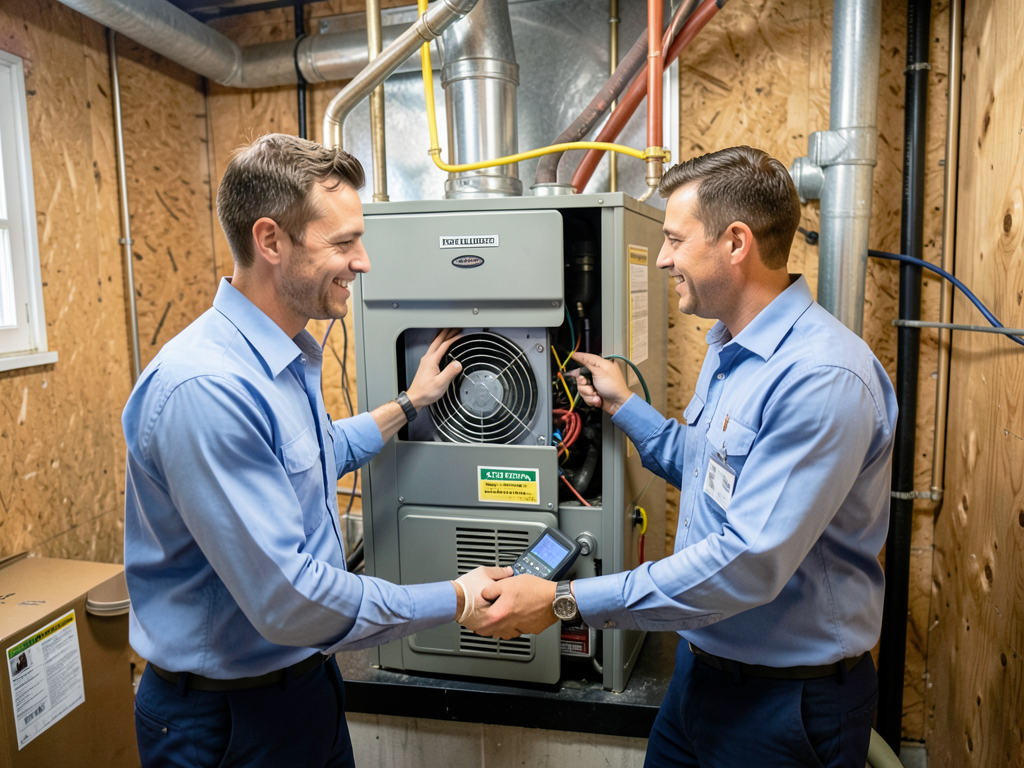
Professional technicians use a combustion analyzer to test heat exchanger integrity, measuring oxygen levels and carbon monoxide in the flue gases. If readings show elevated CO or unusual oxygen levels, the heat exchanger likely has cracks. Never attempt to repair a cracked heat exchanger. Replacement is the only safe option.
Programming Your Thermostat for Ohio Seasons
North Linden’s climate demands different thermostat settings throughout the year. During winter, set your thermostat to 68 degrees when home and awake, dropping to 62 degrees at night or when away for more than four hours. Each degree you lower your thermostat for eight hours saves about three percent on your heating bill.
For programmable thermostats, create a schedule that matches your family’s routine. Set the temperature to rise 30 minutes before your alarm and drop 30 minutes after everyone leaves for work or school. Smart thermostats like the Nest or Ecobee learn your patterns automatically and can be controlled from your phone. Upgrading to a Smart Thermostat in Grandview Heights to Lower Your Electric Bill.
During spring and fall shoulder seasons, you might not need heating or cooling at all. Open windows on mild days to save energy and improve indoor air quality. When overnight temperatures drop below 40 degrees, close windows and let your furnace handle the chill. Improving the Air Quality in Your Older Clintonville Home.
Annual Professional Tune-Up Checklist
Schedule professional maintenance every fall before heating season begins. A thorough tune-up includes cleaning the burner assembly, checking gas pressure, testing the ignition system, and inspecting the heat exchanger for cracks. The technician should also lubricate the blower motor bearings, check belt tension, and test all safety controls.
Columbia Gas of Ohio offers energy audits that include furnace efficiency testing. These audits can identify problems you might miss and qualify you for rebates on high-efficiency replacements. Call (800) 344-4077 to schedule an audit or visit their website for current rebate programs.
During the tune-up, ask the technician to show you the model number and manufacturing date of your furnace. Units over 15 years old often cost more to repair than to replace with a new high-efficiency model that can cut your gas bills by 30 percent.
Emergency Procedures for North Linden Winters
Columbus winters can bring sudden temperature drops and heavy snow. Keep these emergency supplies ready: extra furnace filters, a battery-powered carbon monoxide detector, and the phone number of a 24/7 HVAC service provider. Write down your furnace model number and any recent repair history to give technicians when they arrive.
If your furnace stops working during a cold snap, check the circuit breaker first. Many furnace problems start with a tripped breaker. If the breaker stays on but the furnace does not start, check the thermostat batteries and settings. Sometimes a simple programming error prevents the system from turning on.
Never use your oven for emergency heating. Gas ovens produce carbon monoxide and can cause fires. Instead, use electric space heaters safely by keeping them three feet from flammable materials and never leaving them unattended. Close doors to unused rooms to conserve heat in occupied areas.
Understanding Your Utility Bills
Your monthly gas bill from Columbia Gas of Ohio shows your furnace’s energy consumption. Look for the “therms used” section to track seasonal changes. A typical North Linden home uses 80-120 therms per month during winter, depending on home size and insulation quality.
Compare your bills year over year to spot efficiency problems. If your usage jumps 20 percent without a corresponding weather change, your furnace might need servicing. Also check your electric bill for increased blower motor usage, which can indicate ductwork leaks or dirty filters forcing the system to work harder.
When to Call a Professional
Some furnace problems require immediate professional attention. Call for service if you smell gas, hear unusual noises like grinding or screeching, or if your carbon monoxide detector sounds. Also call if your furnace cycles on and off rapidly, fails to maintain temperature, or if you notice water leaking around the unit.
DIY repairs on gas appliances can be dangerous and often void warranties. Licensed HVAC technicians carry insurance and follow Ohio safety codes. They also have specialized tools like combustion analyzers and refrigerant leak detectors that homeowners cannot rent or purchase easily.
Ask potential contractors about their NATE certification, which indicates advanced training in HVAC systems. Also verify they carry liability insurance and offer written estimates before starting work. A reputable company will explain problems clearly and provide options ranging from simple repairs to full system replacement.
Preparing for the Next Polar Vortex
Columbus experienced record cold during the 2014 and 2019 polar vortex events, with temperatures dropping to -15 degrees. These extreme conditions can overwhelm even well-maintained furnaces. Before the next cold snap, check your furnace’s age and efficiency. Units over 15 years old struggle most during extended cold periods.
Consider installing a whole-house humidifier if your home feels dry and static electricity is a problem. Proper humidity levels between 30 and 50 percent make your home feel warmer at lower temperatures, reducing furnace runtime. Clean humidifiers monthly during heating season to prevent mold growth.
Keep your furnace room clear of clutter. Never store paint, gasoline, or other flammable materials near your furnace or water heater. These items can ignite from the unit’s pilot light or electrical components. Maintain at least three feet of clearance around all sides of your furnace for proper airflow and technician access.
Frequently Asked Questions
How often should I change my furnace filter
Change your filter every 90 days for most homes, but check it monthly during your first year in North Linden. High pollen and agricultural dust may require changes every 60 days.
What temperature should I set my thermostat to save money
Set your thermostat to 68 degrees when home and awake, dropping to 62 degrees at night or when away for more than four hours. Each degree lower for eight hours saves about three percent on heating costs.
How do I know if my heat exchanger is cracked
Signs include yellow or flickering burner flames, increased carbon monoxide detector readings, or visible cracks when the furnace is disassembled. Only a professional can confirm this with a combustion analyzer test.
Should I get a high-efficiency furnace
If your current furnace is over 15 years old or has an AFUE rating below 80 percent, upgrading to a 90+ percent efficient model can cut your gas bills by 30 percent or more.
What should I do if I smell gas
Evacuate immediately, do not use any electrical switches or phones inside, and call Columbia Gas of Ohio at 1-800-344-4077 from outside your home. Gas leaks require immediate professional attention.
Take Control of Your Home’s Comfort Today
Understanding your furnace room basics puts you ahead of most new homeowners. But when warning lights flash or strange noises start, you need a local expert who knows North Linden homes inside and out. Do not wait until your furnace fails on the coldest night of the year.
Call (380) 253-3188 today to schedule your professional inspection. Our NATE-certified technicians will check your system thoroughly, explain any issues in plain English, and provide upfront pricing with no hidden fees. Whether you need a simple filter change or a complete system evaluation, we are ready to help you stay warm all winter long. Troubleshooting AC Issues.
Pick up the phone and call (380) 253-3188 before the next cold front hits. Your family’s comfort and safety are worth the call.
{
“@context”: “https://schema.org”,
“@type”: “BlogPosting”,
“headline”: “A First Time Homeowner Guide to the Furnace Room in North Linden”,
“description”: “Learn furnace basics for North Linden homes. Discover emergency shutoffs, filter types, and warning signs before winter hits.”,
“wordCount”: 2185,
“datePublished”: “2026-06-04T08:18:00.000Z”,
“dateModified”: “2026-06-04T08:18:00.000Z”,
“inLanguage”: “en-US”,
“mainEntityOfPage”: {
“@type”: “WebPage”,
“@id”: “https://grandhvaccolumbus.com”
},
“publisher”: {
“@type”: “LocalBusiness”,
“name”: “Grand HVAC Columbus”,
“url”: “https://grandhvaccolumbus.com”
},
“author”: {
“@type”: “Organization”,
“name”: “Grand HVAC Columbus”,
“url”: “https://grandhvaccolumbus.com”
},
“image”: {
“@type”: “ImageObject”,
“url”: “https://grandhvaccolumbus.com/wp-content/uploads/2026/03/a-first-time-homeowner-guide-to-the-furnace-room-i-1.png”
}
}
{
“@context”: “https://schema.org”,
“@type”: “HVACBusiness”,
“name”: “Grand HVAC Columbus”,
“url”: “https://grandhvaccolumbus.com”,
“address”: {
“@type”: “PostalAddress”,
“addressLocality”: “Columbus”
},
“areaServed”: {
“@type”: “City”,
“name”: “Columbus”
}
}
{
“@context”: “https://schema.org”,
“@type”: “BreadcrumbList”,
“itemListElement”: [
{
“@type”: “ListItem”,
“position”: 1,
“name”: “Home”,
“item”: “https://grandhvaccolumbus.com”
},
{
“@type”: “ListItem”,
“position”: 2,
“name”: “Blog”,
“item”: “https://grandhvaccolumbus.com/blog”
},
{
“@type”: “ListItem”,
“position”: 3,
“name”: “A First Time Homeowner Guide to the Furnace Room in North Linden”
}
]
}
{
“@context”: “https://schema.org”,
“@type”: “Service”,
“serviceType”: “HVAC”,
“provider”: {
“@type”: “LocalBusiness”,
“name”: “Grand HVAC Columbus”,
“url”: “https://grandhvaccolumbus.com”
},
“areaServed”: {
“@type”: “City”,
“name”: “Columbus”
},
“description”: “Learn furnace basics for North Linden homes. Discover emergency shutoffs, filter types, and warning signs before winter hits.”
}