
Essential HVAC Checklist for Every Columbus Homeowner Moving into a Pre-Owned House
Moving into a pre-owned home in Columbus means inheriting someone else’s HVAC system. That system could be a hidden money pit waiting to drain your budget. Central Ohio’s climate throws everything at your heating and cooling equipment—from 90-degree humid summers to sub-zero winters. A failing system during your first winter could cost thousands in emergency repairs and leave you without heat when temperatures plummet. Ohio Mechanical Code 4101:8-14-01.
Most home inspectors give HVAC systems a quick visual check but miss critical issues that only a trained technician spots. They won’t check for heat exchanger cracks that leak carbon monoxide or verify if your R-22 refrigerant system needs a $3,000+ conversion. This checklist helps you identify red flags before signing on the dotted line. Why Your Westerville AC Needs a Tune Up Before the Humidity Hits.
Visual Red Flags During Your Walkthrough
Start with the basics. Look for the manufacturer’s label on the furnace and outdoor unit. If you see a manufacturing date before 2010 that system is already past its expected lifespan. Rust on the furnace cabinet or water stains underneath signal moisture problems that could indicate a cracked heat exchanger.
Check the outdoor condenser unit. Bent fins missing panels or oil stains around the base suggest compressor problems. If the condenser sits directly on soil instead of a concrete pad you’re looking at vibration damage and potential rust from ground moisture.
Listen for unusual sounds when the system runs. A healthy furnace hums quietly. Grinding rattling or clicking noises point to failing motors or loose components. Musty odors when the AC starts could mean mold in the evaporator coil or ductwork.
Verify the thermostat works properly. If it’s an old dial thermostat you’re missing out on programmable efficiency features. Smart thermostats can save 10-15% on energy bills but require compatible wiring. Upgrading to a Smart Thermostat in Grandview Heights to Lower Your Electric Bill.
Technical Specifics That Matter in Columbus
Columbus homes need specific HVAC capabilities. Our summers demand at least a 14 SEER rating for air conditioners. Anything below that wastes energy and money. The furnace must handle sub-zero temperatures without strain. Look for an AFUE rating above 80%—below that you’re burning extra gas for minimal heat.
R-22 refrigerant systems are a major red flag. This Freon was phased out in 2020. If the system uses R-22 expect $100+ per pound for refills and potential replacement costs of $4,000-$8,000 when it fails. R-410A systems are standard now and much more cost-effective.
Check the air filter size and location. Standard 1-inch filters need monthly changes. Media filters or electronic air cleaners offer better filtration for Columbus’s high pollen seasons but cost more upfront.
Inspect accessible ductwork in basements or crawl spaces. Look for disconnected joints obvious gaps or insulation falling off. Leaky ducts waste 20-30% of your heated or cooled air.
Columbus Climate Considerations
Central Ohio humidity affects HVAC performance significantly. Your AC must remove moisture effectively not just cool air. Units sized too small for our humidity struggle and run constantly. Units too large cycle on and off rapidly failing to dehumidify properly.. Read more about The Hidden Impact of Central Ohio Hard Water on Your Whole Home Humidifier.
Winter demands proper furnace sizing. A system that barely keeps up during a polar vortex will run continuously increasing wear and energy bills. Ask about the home’s insulation levels—poor insulation forces HVAC systems to work harder year-round.. Read more about How to Build a Winter Survival Kit for Your Columbus Heating System.
Pollen from local cottonwood trees and ragweed can clog outdoor condenser coils. Check if the condenser has at least 2 feet of clearance from vegetation and debris.
Columbus’s clay soil expands and contracts with moisture changes. This movement can stress foundation-mounted equipment and cause refrigerant line disconnections over time.
The Professional HVAC Diagnostic Advantage
Most home inspectors follow ASHI standards that limit HVAC evaluation to basic operation checks. They won’t perform a combustion analysis check for carbon monoxide leaks or verify proper refrigerant charge. These require specialized tools and training.
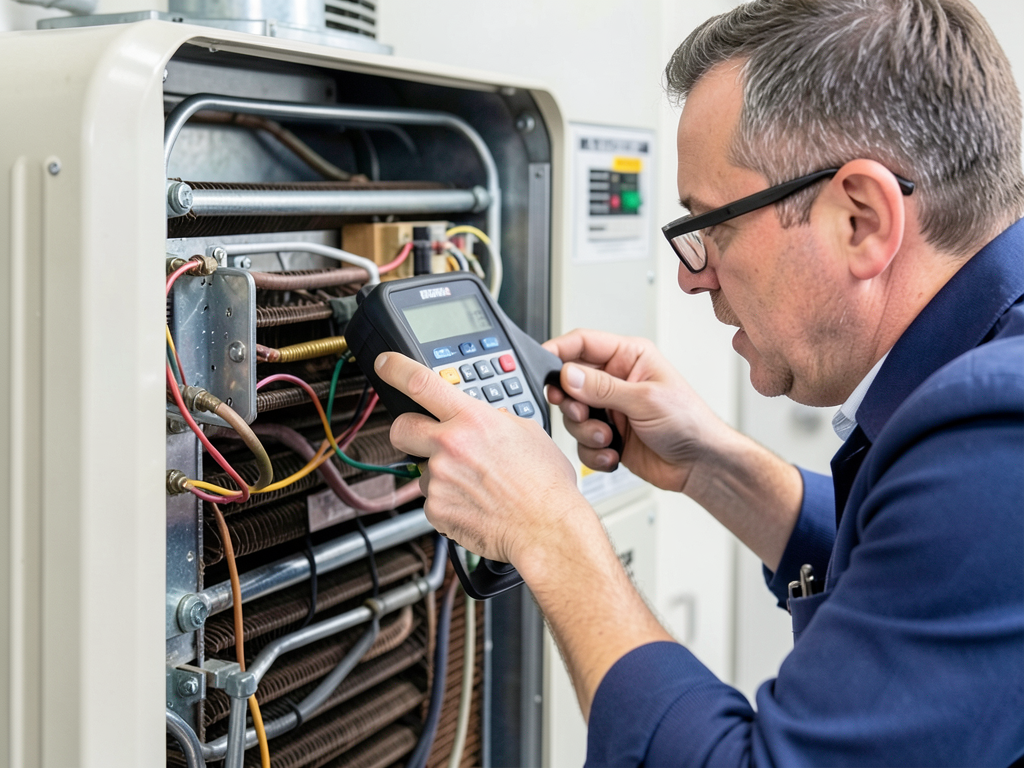
A licensed HVAC technician uses a combustion analyzer to measure furnace efficiency and detect carbon monoxide leaks. They check heat exchanger integrity with a mirror and flashlight—cracks often hide on the underside. They measure refrigerant pressures to verify proper charge and system health.
Technicians verify electrical connections aren’t loose or corroded. They check capacitor health—a $150 part that prevents $1,000+ compressor failures. They inspect the condensate drain line for clogs that cause water damage.
Professional diagnostics include checking ductwork static pressure. High pressure indicates restrictive ducts that reduce efficiency and comfort. Low pressure suggests leaks that waste conditioned air.
Cost Factors and Negotiation Points
Understanding potential repair costs helps you negotiate. A simple capacitor replacement costs $150-250. A new condenser fan motor runs $400-600. Heat exchanger replacement in a furnace costs $1,500-2,500—often approaching the price of a new furnace.
Full system replacement costs vary by size and efficiency. A basic 2-ton AC replacement runs $3,500-4,500. High-efficiency 16 SEER systems cost $5,000-7,000. Furnace replacements range from $2,500 for basic models to $4,500+ for high-efficiency units.
Factor in ductwork modifications. Adding returns or resizing supply ducts can add $1,000-3,000 to replacement costs. Duct cleaning for existing systems runs $300-500.
Use inspection findings for negotiation. A system over 15 years old with R-22 refrigerant provides strong leverage for price reduction or seller-paid repairs.
Local Building Code and Permit Considerations
Franklin County requires permits for HVAC replacements. Ask the seller for permit history. Unpermitted work could indicate DIY installations or code violations that need correction. Franklin County permit requirements.
Ohio Mechanical Code 4101:8-14-01 mandates proper venting for gas appliances. Check that flue pipes slope upward and have adequate clearance from combustibles. Missing or damaged vent caps are red flags.
Condensate drains must tie into sanitary sewer or discharge outside properly. Improper drainage causes water damage and mold growth.
Electrical connections must follow NEC requirements. Double lugging (two wires under one breaker screw) is a common violation in older homes that poses fire risks.
Age Verification and Warranty Transfer
Decode the serial number to verify equipment age. For most brands the first four digits indicate manufacturing date. For example 1420xxxx means April 2020.. Read more about A First Time Homeowner Guide to the Furnace Room in North Linden.
Check for transferable warranties. Many manufacturers allow warranty transfer to new owners if requested within 30-60 days of sale. This can save thousands on future repairs.. Read more about How Much You Should Actually Save for a Future HVAC Replacement Fund.
Ask for maintenance records. Regular professional maintenance extends equipment life by 3-5 years. Lack of maintenance suggests neglect and higher failure risk.. Read more about The Landlord Guide to Low Maintenance HVAC in the University District.
Verify if the system had any major repairs or replacements. A new condenser in 2018 but original 2005 furnace suggests mismatched components that operate inefficiently together.
Energy Efficiency and Operating Costs
Request 12 months of utility bills from the seller. High summer bills with an old AC indicate inefficiency. Compare bills to similar homes in the area using AEP Ohio’s online comparison tools. AEP Ohio utility comparison tools.
Check for programmable thermostats or smart controls. Manual thermostats waste energy through constant temperature swings.
Look for proper zoning if the home has multiple stories. Single-zone systems struggle to maintain even temperatures across floors running longer and costing more.
Verify insulation levels in attics and walls. R-30 minimum in attics is current code. Poor insulation forces HVAC systems to run constantly.
Red Flags That Demand Professional Inspection
Yellow or flickering burner flames instead of blue indicate improper combustion and potential carbon monoxide production. This requires immediate professional evaluation.
Excessive rust on the heat exchanger or burner assembly suggests moisture problems and potential cracks. Heat exchanger cracks allow carbon monoxide into living spaces.
Oil or refrigerant stains around equipment indicate leaks. Refrigerant leaks reduce cooling capacity and can damage compressors. Oil leaks from furnaces suggest burner problems.
Uneven heating or cooling across rooms points to ductwork issues improper system sizing or failing components. Troubleshooting AC Issues.
Frequent cycling (turning on and off rapidly) suggests thermostat problems refrigerant issues or oversized equipment.
Making Your Offer Contingent on HVAC Inspection
Include an HVAC inspection contingency in your purchase agreement. This allows you to renegotiate or walk away based on professional findings.
Specify that the inspection covers heat exchanger integrity refrigerant charge verification and combustion analysis. These are beyond standard home inspection scope.
Request a written report with repair estimates. Use this to negotiate seller credits or price reductions.
Consider offering slightly more for a home with a newer well-maintained HVAC system. The peace of mind and avoided repair costs often justify the premium.
Post-Purchase Maintenance Planning
Schedule professional maintenance within 30 days of moving in. This establishes a baseline and catches any deferred maintenance issues.
Change air filters immediately. Previous owners may have neglected this basic task. Clean filters improve efficiency and indoor air quality. Improving the Air Quality in Your Older Clintonville Home.
Test carbon monoxide detectors near bedrooms and on each floor. Replace batteries and verify operation. CO detectors are life-saving devices for gas appliances.
Consider a maintenance agreement with a local HVAC company. Regular professional maintenance prevents 80% of emergency repairs and maintains efficiency. Where to Find 24 Hour Emergency HVAC Help Anywhere in Columbus.
Monitor utility bills for the first few months. Unexpected increases could indicate developing problems.
Conclusion: Your HVAC Protection Strategy
Buying a home with a problematic HVAC system can cost you thousands in unexpected repairs and discomfort. Use this checklist to identify red flags before closing. Focus on system age refrigerant type and visible condition. When in doubt invest in a professional HVAC diagnostic—it’s far cheaper than emergency repairs after moving in.
Columbus’s climate demands reliable heating and cooling. Don’t let an inherited HVAC problem ruin your first winter or summer in your new home. Take time to evaluate the system properly negotiate repairs or price adjustments based on findings and plan for professional maintenance from day one.
Your due diligence now prevents costly headaches later. A thorough HVAC evaluation is one of the smartest investments you can make during the home buying process.
Frequently Asked Questions
How old is too old for an HVAC system in Columbus?
Systems over 15 years old are approaching end of life in our climate. Units manufactured before 2010 may use obsolete R-22 refrigerant requiring expensive conversion or replacement.
Can I trust the home inspector’s HVAC evaluation?
Home inspectors provide basic operation checks but miss critical issues like heat exchanger cracks refrigerant charge problems and carbon monoxide leaks. Professional HVAC technicians use specialized tools for comprehensive diagnostics.
What’s the cost difference between repairing and replacing an old system?
Minor repairs like capacitor replacement cost $150-250. Major repairs like heat exchanger replacement run $1,500-2,500. Full system replacement costs $4,000-8,000 depending on size and efficiency. If repairs approach 50% of replacement cost replacement often makes more financial sense.
Should I ask the seller to service the HVAC before closing?
Professional maintenance before closing provides peace of mind and documents system condition. However focus negotiations on actual repair needs rather than routine maintenance. Use professional inspection findings to justify price reductions or seller credits.
{
“@context”: “https://schema.org”,
“@type”: “BlogPosting”,
“headline”: “Essential HVAC Checklist for Every Columbus Homeowner Moving into a Pre-Owned House”,
“description”: “Protect your investment with this HVAC inspection checklist for Columbus pre-owned homes. Spot red flags before buying and avoid costly repairs.”,
“wordCount”: 1817,
“datePublished”: “2026-05-30T11:14:00.000Z”,
“dateModified”: “2026-05-30T11:14:00.000Z”,
“inLanguage”: “en-US”,
“mainEntityOfPage”: {
“@type”: “WebPage”,
“@id”: “https://grandhvaccolumbus.com”
},
“publisher”: {
“@type”: “LocalBusiness”,
“name”: “Grand HVAC Columbus”,
“url”: “https://grandhvaccolumbus.com”
},
“author”: {
“@type”: “Organization”,
“name”: “Grand HVAC Columbus”,
“url”: “https://grandhvaccolumbus.com”
},
“image”: {
“@type”: “ImageObject”,
“url”: “https://grandhvaccolumbus.com/wp-content/uploads/2026/03/essential-hvac-checklist-for-every-columbus-homeow-1.png”
}
}
{
“@context”: “https://schema.org”,
“@type”: “HVACBusiness”,
“name”: “Grand HVAC Columbus”,
“url”: “https://grandhvaccolumbus.com”,
“address”: {
“@type”: “PostalAddress”,
“addressLocality”: “Columbus”
},
“areaServed”: {
“@type”: “City”,
“name”: “Columbus”
}
}
{
“@context”: “https://schema.org”,
“@type”: “FAQPage”,
“mainEntity”: [
{
“@type”: “Question”,
“name”: “How old is too old for an HVAC system in Columbus?”,
“acceptedAnswer”: {
“@type”: “Answer”,
“text”: “Systems over 15 years old are approaching end of life in our climate. Units manufactured before 2010 may use obsolete R-22 refrigerant requiring expensive conversion or replacement.”
}
},
{
“@type”: “Question”,
“name”: “Can I trust the home inspector’s HVAC evaluation?”,
“acceptedAnswer”: {
“@type”: “Answer”,
“text”: “Home inspectors provide basic operation checks but miss critical issues like heat exchanger cracks refrigerant charge problems and carbon monoxide leaks. Professional HVAC technicians use specialized tools for comprehensive diagnostics.”
}
},
{
“@type”: “Question”,
“name”: “What’s the cost difference between repairing and replacing an old system?”,
“acceptedAnswer”: {
“@type”: “Answer”,
“text”: “Minor repairs like capacitor replacement cost $150-250. Major repairs like heat exchanger replacement run $1,500-2,500. Full system replacement costs $4,000-8,000 depending on size and efficiency. If repairs approach 50% of replacement cost replacement often makes more financial sense.”
}
},
{
“@type”: “Question”,
“name”: “Should I ask the seller to service the HVAC before closing?”,
“acceptedAnswer”: {
“@type”: “Answer”,
“text”: “Professional maintenance before closing provides peace of mind and documents system condition. However focus negotiations on actual repair needs rather than routine maintenance. Use professional inspection findings to justify price reductions or seller credits.”
}
}
]
}
{
“@context”: “https://schema.org”,
“@type”: “BreadcrumbList”,
“itemListElement”: [
{
“@type”: “ListItem”,
“position”: 1,
“name”: “Home”,
“item”: “https://grandhvaccolumbus.com”
},
{
“@type”: “ListItem”,
“position”: 2,
“name”: “Blog”,
“item”: “https://grandhvaccolumbus.com/blog”
},
{
“@type”: “ListItem”,
“position”: 3,
“name”: “Essential HVAC Checklist for Every Columbus Homeowner Moving into a Pre-Owned House”
}
]
}
{
“@context”: “https://schema.org”,
“@type”: “Service”,
“serviceType”: “HVAC”,
“provider”: {
“@type”: “LocalBusiness”,
“name”: “Grand HVAC Columbus”,
“url”: “https://grandhvaccolumbus.com”
},
“areaServed”: {
“@type”: “City”,
“name”: “Columbus”
},
“description”: “Protect your investment with this HVAC inspection checklist for Columbus pre-owned homes. Spot red flags before buying and avoid costly repairs.”
}