
How to Add Air Conditioning to a Finished Attic in Your Eastgate Tudor Without Using Window Units
Eastgate Tudor homes are known for their charming architecture and finished third-floor spaces, but those attic rooms often become unbearable during Columbus summers. The stack effect causes hot air to rise and trap in upper levels, creating temperature differentials of 10-15 degrees higher than your main living area. Window units solve the problem temporarily but destroy your home’s aesthetic and often violate HOA guidelines in Eastgate’s historic district. The Honest Guide to Replacing Your Upper Arlington Furnace This Winter.
Before you resign yourself to sweating through another summer or ruining your Tudor’s classic lines with bulky window ACs, there are permanent solutions that maintain your home’s character while delivering consistent comfort. The right system depends on your attic’s existing ductwork, insulation levels, and your long-term comfort goals.
Why Attics Become Heat Traps (The Stack Effect)
The stack effect is physics working against your comfort. As warm air rises through your home, it creates positive pressure at the top and negative pressure at the bottom. In Eastgate Tudors with finished attics, this means hot air gets trapped in your third-floor space with nowhere to escape. Combined with Columbus’s high summer humidity and afternoon sun beating down on your roof, attic temperatures can exceed 90 degrees even when your thermostat reads a comfortable 72 downstairs. Where to Find 24 Hour Emergency HVAC Help Anywhere in Columbus.
Many Eastgate homes were built between 1920-1940 with minimal attic insulation by today’s standards. The original plaster walls and single-pane windows allow heat transfer that modern building codes would never permit. Without proper ventilation and cooling, your finished attic becomes a seasonal room you avoid from June through September.
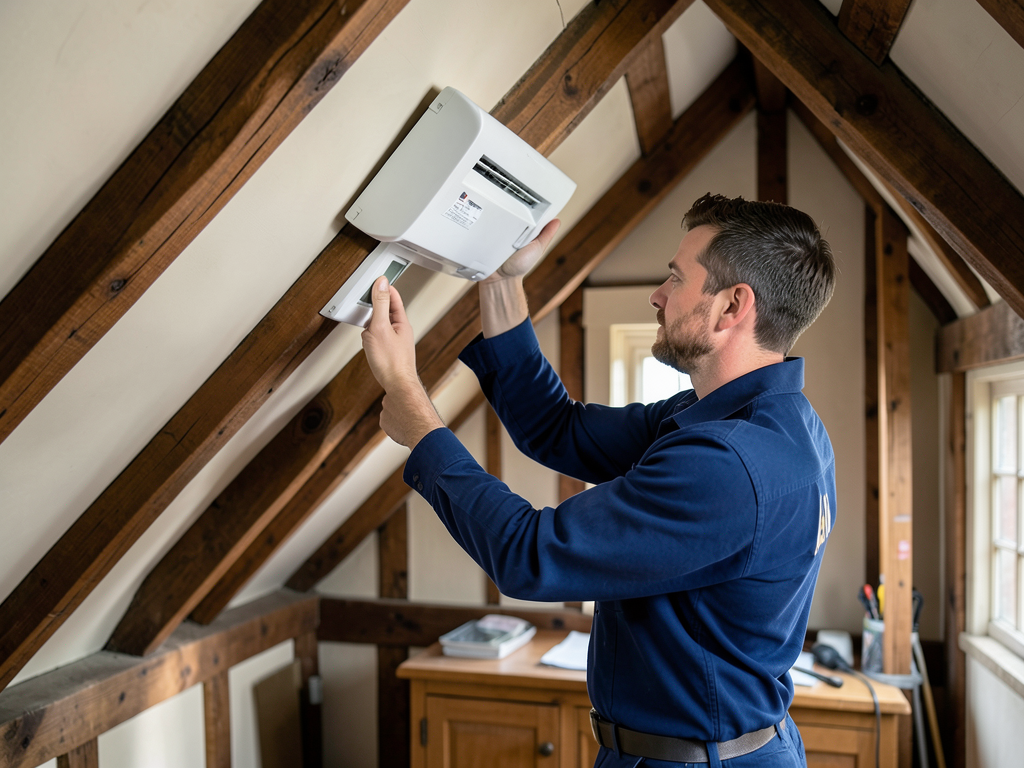
Diagram showing stack effect in a multi-story home with heat rising to attic spaces and creating pressure differentials
Solution 1: Ductless Mini-Split Systems (The Gold Standard)
Ductless mini-split systems have revolutionized attic cooling for historic homes. These systems consist of an outdoor condenser unit connected to one or more indoor air handlers mounted on your attic walls or ceiling. The beauty for Eastgate Tudors is that they require no ductwork modifications and can be installed with minimal structural impact. Ductless Mini-Split Systems.
A single-zone mini-split typically costs between $3,500-$5,500 installed in the Columbus area, while multi-zone systems range from $6,000-$12,000 depending on capacity. The key advantage is their inverter technology, which modulates compressor speed to maintain exact temperatures rather than cycling on and off like traditional systems. This translates to 30-40% energy savings compared to window units.
For Eastgate Tudors specifically, mini-splits offer aesthetic flexibility. The indoor units come in low-profile designs that mount flush with your walls, and the refrigerant lines run through small 3-inch holes rather than large ductwork chases. Many homeowners choose ceiling cassette models that sit flush with the ceiling plane, maintaining the room’s original character.
Installation Considerations for Historic Homes
Installing mini-splits in Eastgate Tudors requires careful planning to preserve architectural integrity. The outdoor condenser must be placed where it won’t be visible from the street, often on the rear or side of the home. Franklin County building codes require units to be at least 36 inches from property lines and properly secured to prevent vibration transmission to the structure.
The indoor mounting location should maximize airflow while avoiding original architectural features. Many Eastgate attics have sloped ceilings with dormers that create natural mounting points for wall units. The refrigerant lines can be routed through existing wall cavities or along baseboards with minimal intrusion.
Solution 2: Extending Existing Ductwork (Pros & Cons)
If your Eastgate Tudor has a central HVAC system, extending the existing ductwork to the attic might seem like the most straightforward solution. However, this approach comes with significant challenges specific to historic home construction. Many Eastgate homes have plaster walls with limited access to wall cavities, making ductwork routing extremely difficult and expensive.
The cost to extend ductwork typically ranges from $2,500-$6,000, but can easily exceed $10,000 if extensive demolition and reconstruction are required. You’ll need to ensure your existing furnace or air handler has sufficient capacity to handle the additional cooling load. Most systems installed before 2000 were sized for the home’s original square footage, not modern finished attic spaces.
Franklin County mechanical codes require that any new ductwork be properly sealed and insulated to prevent condensation issues. The Ohio Mechanical Code Section 1303.2 mandates that supply ducts in unconditioned spaces must have a minimum R-8 insulation value, which adds to the installation complexity and cost. Troubleshooting AC Issues.
When Duct Extension Makes Sense
Duct extension becomes viable when your existing system has excess capacity and you have good access to wall cavities or unfinished basement spaces. Homes built after 1980 often have more accessible chase ways and may have been designed with future expansions in mind. The key is having a professional load calculation performed to determine if your system can handle the additional 300-500 square feet of cooling demand.
The advantage of ducted systems is their ability to integrate seamlessly with your existing thermostat and provide whole-home temperature control. However, you’ll sacrifice some efficiency due to duct losses, which can be 20-30% in older homes with leaky or uninsulated ducts.
Solution 3: High-Velocity HVAC Systems
High-velocity HVAC systems offer a middle ground between mini-splits and traditional ductwork. These systems use small, flexible 2-inch ducts that can be routed through existing wall cavities with minimal demolition. The supply outlets are also much smaller than standard registers, making them less obtrusive in historic interiors.
The initial investment for high-velocity systems ranges from $8,000-$15,000, making them more expensive than mini-splits but potentially less costly than extensive duct renovations. They excel in situations where you need to cool multiple rooms or want whole-home integration without the visual impact of traditional ductwork.
Columbus’s climate zone 5A requires systems with adequate dehumidification capacity, which high-velocity units provide through their high-velocity air movement. This constant air circulation helps prevent the stagnant, humid conditions that plague many attic spaces during Ohio summers.
Solution 4: Solar Attic Fans and Ventilation
Before investing in mechanical cooling, consider whether improved ventilation could solve your problem. Solar attic fans can reduce attic temperatures by 20-30 degrees by actively exhausting hot air and drawing in cooler outside air through soffit vents. For Eastgate Tudors with unfinished attic spaces above the finished area, this passive approach can significantly reduce cooling loads.
A quality solar attic fan system costs $800-$2,000 installed and works best when combined with proper insulation upgrades. The fans operate during daylight hours when cooling demand is highest, providing free ventilation without adding to your electric bill. However, they don’t provide actual cooling and won’t help when outside temperatures exceed indoor comfort levels. Improving the Air Quality in Your Older Clintonville Home.
Franklin County building codes require proper attic ventilation with a minimum 1:150 ratio of net free ventilation area to attic floor area. Many Eastgate homes built before modern codes have inadequate ventilation, which compounds heat buildup problems.
Comparing Costs and Efficiency (SEER2 Ratings)
Understanding the long-term operating costs is crucial when choosing an attic cooling solution. Modern systems are rated using SEER2 (Seasonal Energy Efficiency Ratio 2), which replaced SEER in 2023 and provides more accurate efficiency measurements under real-world conditions. For Columbus’s climate, a minimum SEER2 rating of 14 is recommended, though 16-18 offers better efficiency for the humid summers we experience.
Here’s how the solutions compare on operating costs and efficiency:
| Solution Type | Initial Cost Range | Typical SEER2 Rating | Annual Operating Cost |
|---|---|---|---|
| Ductless Mini-Split | $3,500-$12,000 | 16-22 | $180-$280 |
| Duct Extension | $2,500-$10,000 | 14-16 | $220-$320 |
| High-Velocity System | $8,000-$15,000 | 15-18 | $200-$280 |
| Solar Ventilation | $800-$2,000 | N/A | $0-$50 |
The efficiency differences become more pronounced over time. A SEER2-22 mini-split uses approximately 25% less energy than a SEER2-14 system, which can save $50-$75 annually on cooling costs. Over a 15-year system life, that’s $750-$1,125 in energy savings.
Local Columbus Installation Considerations: Insulation & Codes
Before installing any cooling system in your Eastgate Tudor, you must address the underlying insulation issues that contribute to heat gain. Columbus’s climate requires attic insulation levels of R-49 to R-60, which is significantly higher than what most historic homes originally had. Many Eastgate attics have only R-11 to R-19 insulation, leaving them vulnerable to summer heat gain.
Franklin County building permits are required for all new HVAC installations, including attic cooling systems. The permit process ensures your installation meets Ohio Mechanical Code requirements and passes inspection for proper refrigerant line sizing, electrical connections, and condensate drainage. Skipping permits can result in fines and complicate future home sales.
Ohio’s electrical code also requires dedicated circuits for HVAC equipment. Most attic cooling systems need a 240-volt circuit with proper grounding and surge protection. If your Eastgate home’s electrical service is original, you may need an electrical panel upgrade to support the new cooling load.
Humidity Control in Columbus Summers
Columbus’s high summer humidity (often 70-80% relative humidity) makes cooling more challenging than in drier climates. Proper dehumidification is essential for attic comfort. Mini-split systems with inverter technology excel at humidity control because they can run at reduced capacity for longer periods, removing more moisture from the air.
The ideal indoor humidity level for comfort and health is 40-50%. Systems that short-cycle (turn on and off frequently) may cool the air but won’t effectively remove humidity, leaving your attic feeling clammy and uncomfortable. This is why system sizing is critical – an oversized unit will cool quickly but fail at dehumidification.
FAQ: Frequently Asked Questions about Attic Cooling
How long does attic cooling installation take?
Most attic cooling installations in Eastgate Tudors take 1-2 days for mini-splits and 2-4 days for ducted systems. High-velocity installations typically require 3-5 days due to the complexity of routing small ducts through existing wall cavities.
Will adding attic cooling increase my home’s value?
Yes, finished attic spaces with proper climate control typically add $15-$25 per square foot to your home’s value. In Eastgate’s competitive market, comfortable third-floor spaces are increasingly important to buyers, especially those with growing families needing extra living area.
Are there rebates available for energy-efficient attic cooling?
AEP Ohio offers rebates of $300-$500 for high-efficiency cooling systems with SEER2 ratings of 16 or higher. Additionally, federal tax credits of up to 30% are available for qualifying energy-efficient HVAC equipment installed in 2026.
Can I install attic cooling myself?
DIY installation of HVAC equipment is illegal in Ohio and voids all manufacturer warranties. Refrigerant handling requires EPA certification, and improper installation can create safety hazards including carbon monoxide risks, electrical fires, and water damage from condensate leaks. EPA guidelines.
How do I know what size system I need?
Proper sizing requires a Manual J load calculation that considers your attic’s square footage, insulation levels, window orientation, and local climate data. Guessing at system size often results in oversized units that short-cycle and fail at dehumidification.
Technician performing Manual J load calculation on an Eastgate Tudor attic using thermal imaging to identify heat gain sources
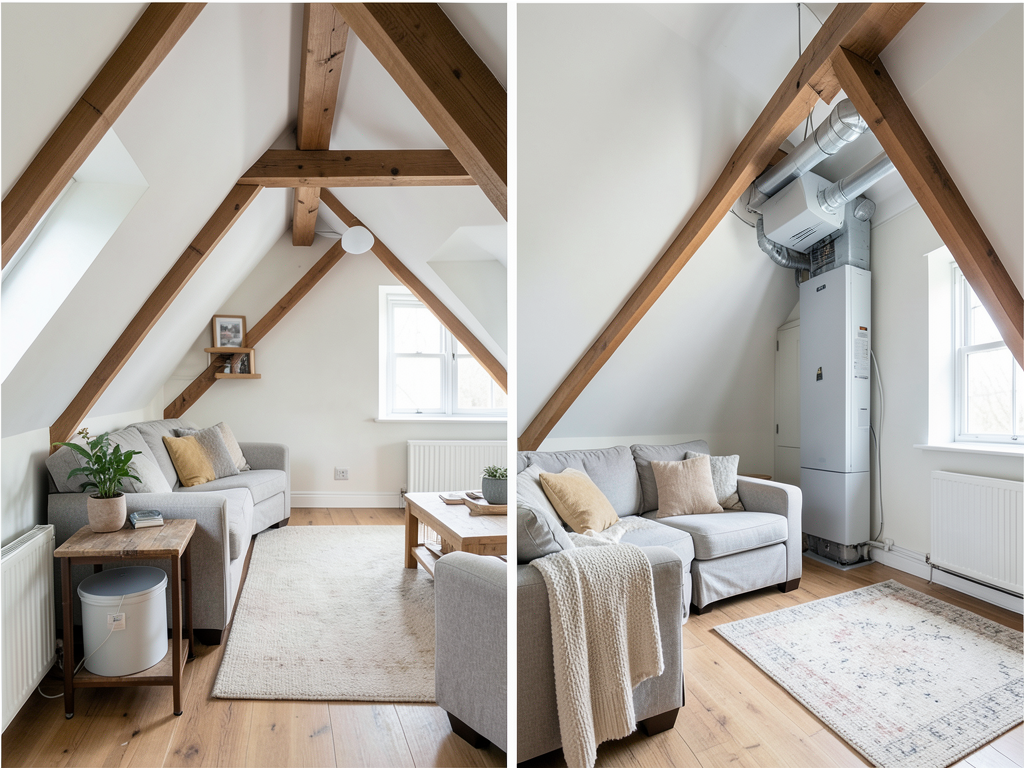
Before and after comparison showing attic transformation from hot, unusable space to comfortable living area with hidden mini-split installation
Ready to Transform Your Hot Attic into Comfortable Living Space?
Don’t let another Columbus summer make your finished attic unusable. The right cooling solution can transform that hot, stuffy third floor into your favorite room in the house. Whether you choose a sleek mini-split, extend your existing ductwork, or opt for high-velocity cooling, proper installation by licensed professionals ensures years of reliable comfort.
Call (380) 253-3188 today to schedule your free attic cooling assessment. We’ll evaluate your current system, measure heat gain, and recommend the most cost-effective solution for your Eastgate Tudor. Our team understands the unique challenges of historic home cooling and will work to preserve your home’s character while delivering modern comfort.
Pick up the phone and call (380) 253-3188 before the next heat wave hits. Your attic doesn’t have to be a seasonal space anymore. Let’s make it comfortable year-round.
- Schedule Professional Assessment
Have a licensed HVAC technician evaluate your attic’s heat gain, existing system capacity, and structural constraints.
- Choose Your Cooling Solution
Based on assessment results, select between mini-splits, duct extensions, or high-velocity systems that fit your budget and home style.
- Obtain Necessary Permits
Ensure all required Franklin County permits are secured before installation begins to avoid code violations.
- Complete Installation
Professional installation typically takes 1-5 days depending on system complexity and home accessibility.
- Enjoy Year-Round Comfort
Test your new system and make any needed adjustments to thermostat settings for optimal performance. For more information, visit International Code Council.
{
“@context”: “https://schema.org”,
“@type”: “BlogPosting”,
“headline”: “How to Add Air Conditioning to a Finished Attic in Your Eastgate Tudor Without Using Window Units”,
“description”: “Discover permanent attic cooling solutions for Eastgate Tudor homes. Learn about mini-splits, ductwork extensions, and ventilation systems that beat the Ohio heat without ugly window units.”,
“wordCount”: 2099,
“datePublished”: “2026-05-08T08:05:00.000Z”,
“dateModified”: “2026-05-08T08:05:00.000Z”,
“inLanguage”: “en-US”,
“mainEntityOfPage”: {
“@type”: “WebPage”,
“@id”: “https://grandhvaccolumbus.com”
},
“publisher”: {
“@type”: “LocalBusiness”,
“name”: “Grand HVAC Columbus”,
“url”: “https://grandhvaccolumbus.com”
},
“author”: {
“@type”: “Organization”,
“name”: “Grand HVAC Columbus”,
“url”: “https://grandhvaccolumbus.com”
},
“image”: {
“@type”: “ImageObject”,
“url”: “https://grandhvaccolumbus.com/wp-content/uploads/2026/03/how-to-add-air-conditioning-to-a-finished-attic-in-1.png”
}
}
{
“@context”: “https://schema.org”,
“@type”: “HVACBusiness”,
“name”: “Grand HVAC Columbus”,
“url”: “https://grandhvaccolumbus.com”,
“address”: {
“@type”: “PostalAddress”,
“addressLocality”: “Columbus”
},
“areaServed”: {
“@type”: “City”,
“name”: “Columbus”
}
}
{
“@context”: “https://schema.org”,
“@type”: “FAQPage”,
“mainEntity”: [
{
“@type”: “Question”,
“name”: “How long does attic cooling installation take?”,
“acceptedAnswer”: {
“@type”: “Answer”,
“text”: “Most attic cooling installations in Eastgate Tudors take 1-2 days for mini-splits and 2-4 days for ducted systems. High-velocity installations typically require 3-5 days due to the complexity of routing small ducts through existing wall cavities.”
}
},
{
“@type”: “Question”,
“name”: “Will adding attic cooling increase my home’s value?”,
“acceptedAnswer”: {
“@type”: “Answer”,
“text”: “Yes, finished attic spaces with proper climate control typically add $15-$25 per square foot to your home’s value. In Eastgate’s competitive market, comfortable third-floor spaces are increasingly important to buyers, especially those with growing families needing extra living area.”
}
},
{
“@type”: “Question”,
“name”: “Are there rebates available for energy-efficient attic cooling?”,
“acceptedAnswer”: {
“@type”: “Answer”,
“text”: “AEP Ohio offers rebates of $300-$500 for high-efficiency cooling systems with SEER2 ratings of 16 or higher. Additionally, federal tax credits of up to 30% are available for qualifying energy-efficient HVAC equipment installed in 2026.”
}
},
{
“@type”: “Question”,
“name”: “Can I install attic cooling myself?”,
“acceptedAnswer”: {
“@type”: “Answer”,
“text”: “DIY installation of HVAC equipment is illegal in Ohio and voids all manufacturer warranties. Refrigerant handling requires EPA certification, and improper installation can create safety hazards including carbon monoxide risks, electrical fires, and water damage from condensate leaks. EPA guidelines.”
}
},
{
“@type”: “Question”,
“name”: “How do I know what size system I need?”,
“acceptedAnswer”: {
“@type”: “Answer”,
“text”: “Proper sizing requires a Manual J load calculation that considers your attic’s square footage, insulation levels, window orientation, and local climate data. Guessing at system size often results in oversized units that short-cycle and fail at dehumidification.”
}
},
{
“@type”: “Question”,
“name”: “Ready to Transform Your Hot Attic into Comfortable Living Space?”,
“acceptedAnswer”: {
“@type”: “Answer”,
“text”: “Don’t let another Columbus summer make your finished attic unusable. The right cooling solution can transform that hot, stuffy third floor into your favorite room in the house. Whether you choose a sleek mini-split, extend your existing ductwork, or opt for high-velocity cooling, proper installation by licensed professionals ensures years of reliable comfort.”
}
}
]
}
{
“@context”: “https://schema.org”,
“@type”: “HowTo”,
“name”: “How to Add Attic Cooling”,
“step”: [
{
“@type”: “HowToStep”,
“position”: 1,
“name”: “Schedule Professional Assessment”,
“text”: “Have a licensed HVAC technician evaluate your attic’s heat gain, existing system capacity, and structural constraints.”
},
{
“@type”: “HowToStep”,
“position”: 2,
“name”: “Choose Your Cooling Solution”,
“text”: “Based on assessment results, select between mini-splits, duct extensions, or high-velocity systems that fit your budget and home style.”
},
{
“@type”: “HowToStep”,
“position”: 3,
“name”: “Obtain Necessary Permits”,
“text”: “Ensure all required Franklin County permits are secured before installation begins to avoid code violations.”
},
{
“@type”: “HowToStep”,
“position”: 4,
“name”: “Complete Installation”,
“text”: “Professional installation typically takes 1-5 days depending on system complexity and home accessibility.”
},
{
“@type”: “HowToStep”,
“position”: 5,
“name”: “Enjoy Year-Round Comfort”,
“text”: “Test your new system and make any needed adjustments to thermostat settings for optimal performance. For more information, visit International Code Council.”
}
],
“image”: “https://grandhvaccolumbus.com/wp-content/uploads/2026/03/how-to-add-air-conditioning-to-a-finished-attic-in-1.png”
}
{
“@context”: “https://schema.org”,
“@type”: “BreadcrumbList”,
“itemListElement”: [
{
“@type”: “ListItem”,
“position”: 1,
“name”: “Home”,
“item”: “https://grandhvaccolumbus.com”
},
{
“@type”: “ListItem”,
“position”: 2,
“name”: “Blog”,
“item”: “https://grandhvaccolumbus.com/blog”
},
{
“@type”: “ListItem”,
“position”: 3,
“name”: “How to Add Air Conditioning to a Finished Attic in Your Eastgate Tudor Without Using Window Units”
}
]
}
{
“@context”: “https://schema.org”,
“@type”: “Service”,
“serviceType”: “HVAC”,
“provider”: {
“@type”: “LocalBusiness”,
“name”: “Grand HVAC Columbus”,
“url”: “https://grandhvaccolumbus.com”
},
“areaServed”: {
“@type”: “City”,
“name”: “Columbus”
},
“description”: “Discover permanent attic cooling solutions for Eastgate Tudor homes. Learn about mini-splits, ductwork extensions, and ventilation systems that beat the Ohio heat without ugly window units.”
}