
Water pooling around your indoor AC unit means your condensate drain line is clogged. This is one of the most common HVAC problems in South Bloomfield homes during our humid Ohio summers. When warm air passes over the evaporator coil, moisture condenses and needs to drain away. If the PVC pipe that carries this water gets blocked, you’ll face water damage, mold growth, and even system shutdown. Ohio Mechanical Code requirements.
The good news is you can often clear a simple clog yourself using basic tools and vinegar. But if your system has a secondary drain pan or the clog keeps coming back, you need professional help before your basement floods. This guide shows you exactly what to do, when to call (380) 253-3188, and how to prevent future problems. The Honest Guide to Replacing Your Upper Arlington Furnace This Winter.
Common Signs of a Clogged AC Drain Line
Recognizing the symptoms early can save you from expensive water damage repairs. Here’s what to watch for in your South Bloomfield home: EPA guidelines on HVAC maintenance.
- Water dripping from the secondary drain pan under your indoor unit
- Musty or moldy odors coming from your vents
- Your AC shuts off unexpectedly (the float switch activates)
- Damp spots on walls or ceilings near the indoor handler
- Visible algae or slime around the drain line exit
The float switch is a safety device that cuts power when water backs up. If your system keeps shutting off, the drain line is likely blocked and needs immediate attention. Why Your Westerville AC Needs a Tune Up Before the Humidity Hits.
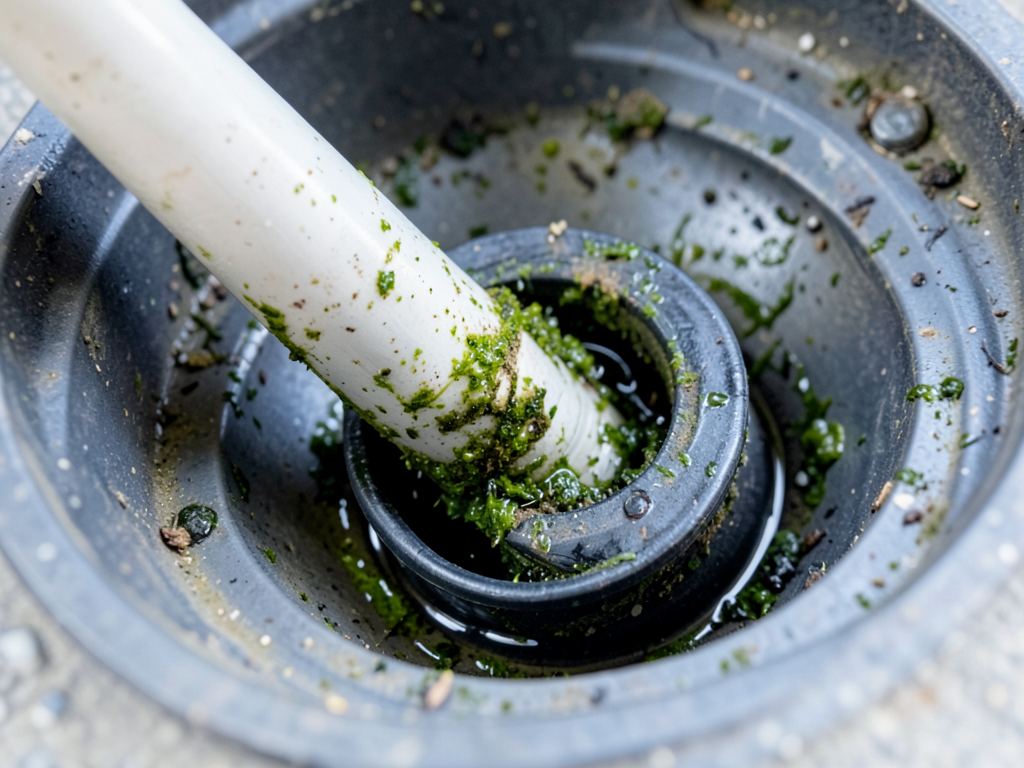
Image Description: Close-up photo showing a clogged PVC condensate drain line with visible algae growth and water backup in the secondary drain pan.
The DIY Fix: 5 Steps to Clear Your AC Drain Line
Before starting, turn off the power to your AC at the breaker. Never work on a live electrical system with water present. Here’s how to clear a basic clog:
- Locate the Drain Line
Find the white PVC pipe near your indoor air handler. It should have a T-shaped vent with a cap on top. In South Bloomfield homes, this is often in the basement or attic.
- Remove the Cap
Unscrew the cap on the vent. You may see standing water or visible debris. This confirms a clog.
- Vacuum the Line
Attach a wet/dry vacuum to the drain line exit outside your home. Seal the connection with duct tape. Run the vacuum for 2-3 minutes to suck out the clog.
- Flush with Vinegar
Pour 1 cup of distilled white vinegar into the vent opening. Let it sit for 30 minutes. Vinegar kills algae and dissolves minor buildup without damaging PVC pipes.
- Test the System
Run your AC for 10 minutes. Check that water flows freely from the drain line exit. If water still backs up, the clog is deeper or the line needs professional cleaning.
Never use chemical drain cleaners on your AC line. These can damage PVC pipes and harm your evaporator coil. Stick with vinegar or specialized HVAC tablets available at local hardware stores.
When to Call a Professional Columbus HVAC Technician
Some clogs require professional equipment and expertise. Call (380) 253-3188 if you notice any of these warning signs:
- The clog returns within days of DIY cleaning
- You see mold growth in the drain pan or around the line
- Your system has a complex secondary drain setup
- The float switch trips repeatedly even after cleaning
- You notice water damage to walls, ceilings, or flooring
Professional cleaning involves using high-pressure nitrogen to clear deep blockages and applying EPA-registered biocides to prevent algae regrowth. We also inspect the entire condensate system for cracks or improper installation that might cause recurring problems.
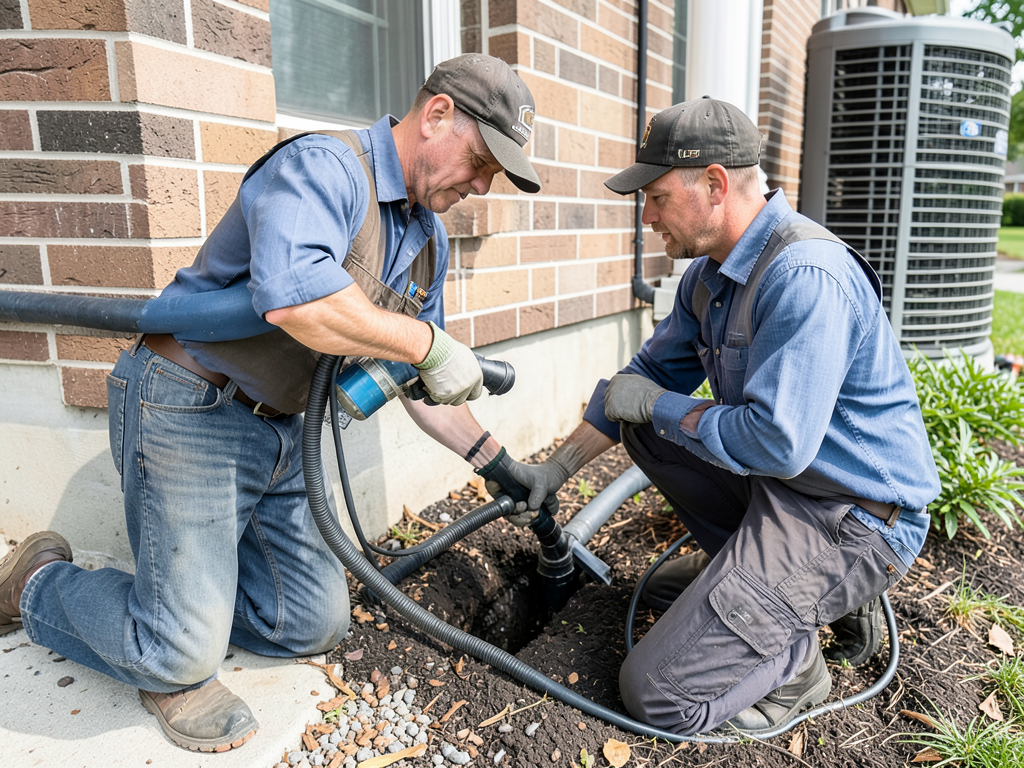
Image Description: Technician using a wet/dry vacuum to clear a clogged AC condensate drain line outside a South Bloomfield home, showing proper vacuum attachment technique.
Why Columbus Humidity Makes Drain Lines Worse
South Bloomfield sits in Central Ohio’s humid continental climate zone. Our summer dew points regularly exceed 70°F, meaning the air holds massive amounts of moisture. This creates ideal conditions for algae and mold growth inside your AC system.. Read more about What to Do When Your Central Village Apartment Air Conditioning Just Can’t Keep Up with the Heat.
According to Ohio building codes, condensate drain lines must maintain a minimum slope of 1/4 inch per foot to ensure proper drainage. In older South Bloomfield homes, settling foundations or poor initial installation can create low spots where water pools and algae thrives. Where to Find 24 Hour Emergency HVAC Help Anywhere in Columbus.
The Ohio Mechanical Code (Section 1101.2) requires all residential AC systems to have a secondary drain pan with a separate overflow drain. This protects your home when the primary line clogs, but it also means you have two potential failure points to monitor.
Prevention and Maintenance Tips
Regular maintenance prevents most drain line clogs. Here’s how to keep your system flowing freely:
| Maintenance Task | Frequency | Cost Range |
|---|---|---|
| Annual professional cleaning | Once per year | $75-150 |
| Vinegar flush | Every 3 months | $2-5 |
| Filter replacement | Every 1-3 months | $10-40 |
| Biocide tablets | Every 6 months | $15-25 |
Change your air filter regularly. A dirty filter reduces airflow over the evaporator coil, causing excess condensation and faster algae growth. Use a high-quality pleated filter rated MERV 8-11 for best results. Improving the Air Quality in Your Older Clintonville Home.
Install a condensate pump if your indoor unit sits below the drain line exit elevation. This prevents gravity from causing water backup in low areas.
Safety Considerations for DIY Work
Working with your AC system involves electrical and water hazards. Always turn off the breaker before starting any work. If you’re unsure about any step, call a professional.
Wear gloves when handling the drain line. The algae and mold inside can cause allergic reactions. Never touch the evaporator coil or other internal components unless you’re trained to do so.
If you see rust, corrosion, or damaged PVC fittings, don’t attempt repairs yourself. These indicate system age or water damage that requires professional assessment.
Image Description: Technician inspecting a secondary drain pan with a flashlight, showing water level and algae buildup that indicates a clogged primary drain line.
Cost Comparison: DIY vs Professional Service
Understanding the cost differences helps you make informed decisions about when to tackle clogs yourself versus calling for help.
| Service Type | Typical Cost | Success Rate | Time Required |
|---|---|---|---|
| DIY Vinegar Flush | $5-10 | 60-70% | 30-60 minutes |
| Wet/Dry Vacuum | $0-50 | 70-80% | 45-90 minutes |
| Professional Cleaning | $100-200 | 95-100% | 1-2 hours |
| Emergency Service | $150-300 | 100% | 2-4 hours |
DIY methods work for simple clogs but carry the risk of incomplete cleaning or missed damage. Professional service includes system inspection and preventative treatments that reduce future problems.
Frequently Asked Questions
How often should I clean my AC drain line?
Clean your drain line every 3 months during cooling season. If you have pets or live in a high-humidity area like South Bloomfield, increase to monthly cleaning.. Read more about Managing Humidity and Mold Risks for Buckeye Lake Vacation Rentals.
Can I use bleach instead of vinegar?
No. Bleach can damage PVC pipes and create harmful fumes when mixed with other chemicals. Stick with distilled white vinegar or HVAC-specific cleaning tablets.
What causes recurring clogs?
Recurring clogs usually indicate algae growth, improper line slope, or system issues causing excess condensation. Professional inspection can identify the root cause. Troubleshooting AC Issues.
How do I know if my float switch is working?
Pour a small amount of water into the secondary drain pan. The system should shut off within 30 seconds. If it doesn’t, the float switch needs replacement.
Is a clogged drain line covered by warranty?
Most manufacturer warranties don’t cover drain line maintenance. However, if the clog causes damage to covered components, you might have a claim. Check your specific warranty terms.
Don’t Let a Small Problem Become a Big Disaster
A clogged AC drain line might seem like a minor inconvenience, but in South Bloomfield’s humid climate, it can quickly escalate into major water damage. The combination of our high summer humidity and older home construction makes this a year-round concern.
If you’ve tried the DIY methods and your system still isn’t draining properly, or if you notice water damage spreading, don’t wait. Call (380) 253-3188 today. Our NATE-certified technicians can diagnose and fix the problem before it costs you thousands in repairs.
Pick up the phone and call (380) 253-3188 before the next storm hits. We’ll get your system running safely and efficiently, protecting your home from water damage and mold growth. Serving South Bloomfield and all of Central Ohio with fast, reliable HVAC service when you need it most.
You may also find this helpful. Solving the Mystery of the Clicking Noise When Your AC Tries to Turn On in Lockbourne.
{
“@context”: “https://schema.org”,
“@type”: “BlogPosting”,
“headline”: “How to Clear a Clogged AC Condensate Drain Line in Your South Bloomfield Home”,
“description”: “Learn how to clear a clogged AC drain line in South Bloomfield with step-by-step DIY methods, when to call a pro, and why Central Ohio humidity makes this problem worse.”,
“wordCount”: 1418,
“datePublished”: “2026-04-09T11:19:00.000Z”,
“dateModified”: “2026-04-09T11:19:00.000Z”,
“inLanguage”: “en-US”,
“mainEntityOfPage”: {
“@type”: “WebPage”,
“@id”: “https://grandhvaccolumbus.com”
},
“publisher”: {
“@type”: “LocalBusiness”,
“name”: “Grand HVAC Columbus”,
“url”: “https://grandhvaccolumbus.com”
},
“author”: {
“@type”: “Organization”,
“name”: “Grand HVAC Columbus”,
“url”: “https://grandhvaccolumbus.com”
},
“image”: {
“@type”: “ImageObject”,
“url”: “https://grandhvaccolumbus.com/wp-content/uploads/2026/03/how-to-clear-a-clogged-ac-condensate-drain-line-in-1.png”
}
}
{
“@context”: “https://schema.org”,
“@type”: “HVACBusiness”,
“name”: “Grand HVAC Columbus”,
“url”: “https://grandhvaccolumbus.com”,
“address”: {
“@type”: “PostalAddress”,
“addressLocality”: “Columbus”
},
“areaServed”: {
“@type”: “City”,
“name”: “Columbus”
}
}
{
“@context”: “https://schema.org”,
“@type”: “FAQPage”,
“mainEntity”: [
{
“@type”: “Question”,
“name”: “How often should I clean my AC drain line?”,
“acceptedAnswer”: {
“@type”: “Answer”,
“text”: “Clean your drain line every 3 months during cooling season. If you have pets or live in a high-humidity area like South Bloomfield, increase to monthly cleaning.”
}
},
{
“@type”: “Question”,
“name”: “Can I use bleach instead of vinegar?”,
“acceptedAnswer”: {
“@type”: “Answer”,
“text”: “No. Bleach can damage PVC pipes and create harmful fumes when mixed with other chemicals. Stick with distilled white vinegar or HVAC-specific cleaning tablets.”
}
},
{
“@type”: “Question”,
“name”: “What causes recurring clogs?”,
“acceptedAnswer”: {
“@type”: “Answer”,
“text”: “Recurring clogs usually indicate algae growth, improper line slope, or system issues causing excess condensation. Professional inspection can identify the root cause. Troubleshooting AC Issues.”
}
},
{
“@type”: “Question”,
“name”: “How do I know if my float switch is working?”,
“acceptedAnswer”: {
“@type”: “Answer”,
“text”: “Pour a small amount of water into the secondary drain pan. The system should shut off within 30 seconds. If it doesn’t, the float switch needs replacement.”
}
},
{
“@type”: “Question”,
“name”: “Is a clogged drain line covered by warranty?”,
“acceptedAnswer”: {
“@type”: “Answer”,
“text”: “Most manufacturer warranties don’t cover drain line maintenance. However, if the clog causes damage to covered components, you might have a claim. Check your specific warranty terms.”
}
}
]
}
{
“@context”: “https://schema.org”,
“@type”: “HowTo”,
“name”: “How to Clear a Clogged AC Drain Line”,
“step”: [
{
“@type”: “HowToStep”,
“position”: 1,
“name”: “Locate the Drain Line”,
“text”: “Find the white PVC pipe near your indoor air handler. It should have a T-shaped vent with a cap on top. In South Bloomfield homes, this is often in the basement or attic.”
},
{
“@type”: “HowToStep”,
“position”: 2,
“name”: “Remove the Cap”,
“text”: “Unscrew the cap on the vent. You may see standing water or visible debris. This confirms a clog.”
},
{
“@type”: “HowToStep”,
“position”: 3,
“name”: “Vacuum the Line”,
“text”: “Attach a wet/dry vacuum to the drain line exit outside your home. Seal the connection with duct tape. Run the vacuum for 2-3 minutes to suck out the clog.”
},
{
“@type”: “HowToStep”,
“position”: 4,
“name”: “Flush with Vinegar”,
“text”: “Pour 1 cup of distilled white vinegar into the vent opening. Let it sit for 30 minutes. Vinegar kills algae and dissolves minor buildup without damaging PVC pipes.”
},
{
“@type”: “HowToStep”,
“position”: 5,
“name”: “Test the System”,
“text”: “Run your AC for 10 minutes. Check that water flows freely from the drain line exit. If water still backs up, the clog is deeper or the line needs professional cleaning.”
}
],
“image”: “https://grandhvaccolumbus.com/wp-content/uploads/2026/03/how-to-clear-a-clogged-ac-condensate-drain-line-in-1.png”
}
{
“@context”: “https://schema.org”,
“@type”: “BreadcrumbList”,
“itemListElement”: [
{
“@type”: “ListItem”,
“position”: 1,
“name”: “Home”,
“item”: “https://grandhvaccolumbus.com”
},
{
“@type”: “ListItem”,
“position”: 2,
“name”: “Blog”,
“item”: “https://grandhvaccolumbus.com/blog”
},
{
“@type”: “ListItem”,
“position”: 3,
“name”: “How to Clear a Clogged AC Condensate Drain Line in Your South Bloomfield Home”
}
]
}
{
“@context”: “https://schema.org”,
“@type”: “Service”,
“serviceType”: “HVAC”,
“provider”: {
“@type”: “LocalBusiness”,
“name”: “Grand HVAC Columbus”,
“url”: “https://grandhvaccolumbus.com”
},
“areaServed”: {
“@type”: “City”,
“name”: “Columbus”
},
“description”: “Learn how to clear a clogged AC drain line in South Bloomfield with step-by-step DIY methods, when to call a pro, and why Central Ohio humidity makes this problem worse.”
}