
Why Your Columbus Condo AC is Noisy: A Diagnostic Guide
Your AC unit is rattling, buzzing, or humming louder than your neighbor’s TV. In Tuttle Crossing’s dense condo community, that noise travels through shared walls, balconies, and common areas. Columbus humidity makes outdoor units work harder, and vibration travels through the lightweight construction common in garden-style condos. Before you call for help, understanding the specific noise type can save you time and money.
Common AC Noises and What They Mean
Banging or Clanking (Loose parts or compressor issues)
A banging sound usually means something inside the compressor or fan assembly has come loose. In Columbus’ humid climate, metal components expand and contract more frequently, loosening bolts faster than in drier regions. This isn’t just annoying—it can cause catastrophic failure if the loose part hits the copper refrigerant lines.
Squealing or Screeching (Belt or motor bearing failure)
High-pitched squeals often come from failing fan motor bearings or a worn serpentine belt in older units. The Ohio Mechanical Code requires proper belt tension and bearing lubrication for units installed after 2015. Ignoring this sound leads to motor burnout, which costs significantly more than a simple bearing replacement. Ohio Mechanical Code Requirements.
Hissing (Refrigerant leak)
A hissing noise indicates refrigerant escaping under pressure. This violates EPA Section 608 regulations, which require certified technicians to handle refrigerant. Beyond the noise, leaks reduce cooling efficiency and can cause the compressor to overheat—especially problematic during Columbus’ July heat waves when your unit runs 18+ hours daily. EPA Section 608 Refrigerant Regulations.
Vibrating or Humming (Loose contactors or unbalanced fans)
Constant vibration often stems from loose electrical contactors or unbalanced fan blades. In Tuttle Crossing’s older garden-style buildings, vibration transfers through shared concrete slabs, amplifying the noise throughout connected units. Franklin County building code requires vibration isolation pads for multi-family installations to prevent this exact problem.. Read more about Moving Your AC Unit to Make Room for a New Deck or Patio in Franklin Park.
Condo-Specific Noise Challenges
HOA Compliance and Noise Ordinances in Columbus
Columbus enforces strict noise ordinances between 10 PM and 7 AM. Tuttle Crossing HOA rules often add their own restrictions, requiring AC units to stay below 60 decibels during daytime hours. The Franklin County Health Department can issue fines for violations, and HOAs can mandate immediate repairs or replacements.
Vibration transfer through shared walls and flooring
Garden-style condos in Tuttle Crossing share common foundations and walls. When your AC unit vibrates, that energy travels through concrete and wood framing into your neighbor’s unit. This violates most HOA quiet enjoyment clauses and can lead to formal complaints or arbitration hearings.
Balcony unit resonance vs. rooftop unit rattling
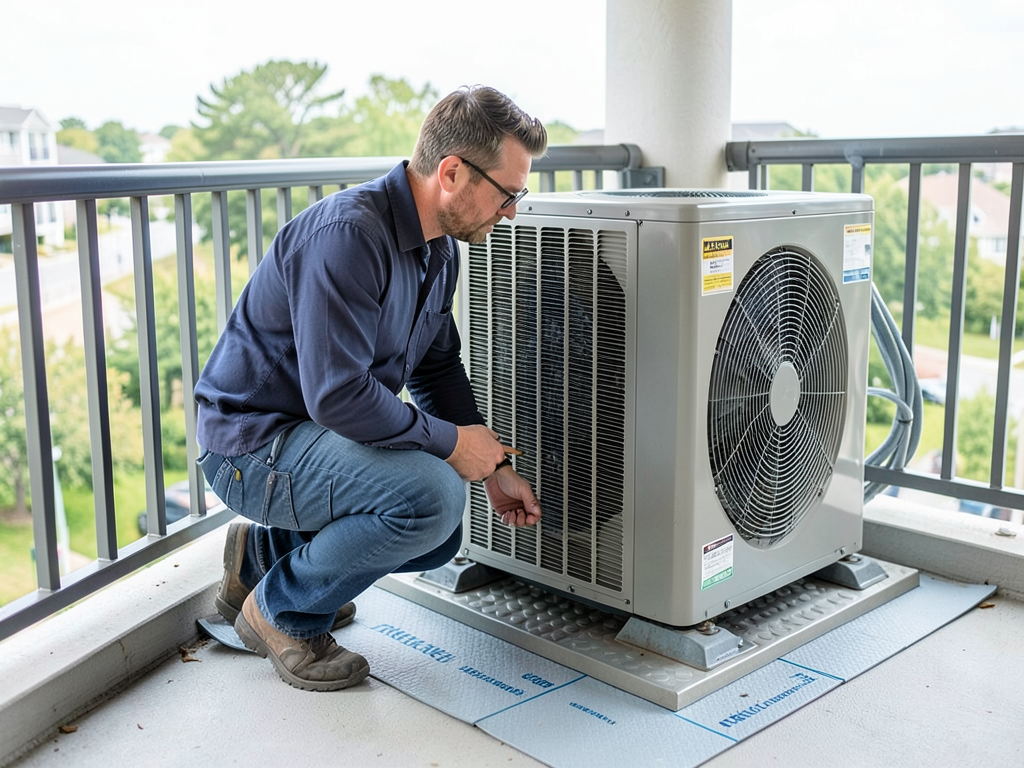
Balcony-mounted units create different problems than rooftop units. Balcony units sit on metal brackets that can amplify vibrations like a drum. Rooftop units, common in Tuttle Crossing’s mid-rise buildings, rattle against roof decking and can loosen shingles. Each location requires specific mounting solutions to meet both noise and building code requirements.
Pro-Active Solutions for Condo Owners
Installing Vibration Isolation Pads
Vibration isolation pads are rubber or composite mounts that absorb compressor and fan vibrations before they reach your building structure. Columbus HVAC contractors must use UL-listed pads rated for your specific unit weight. These pads can reduce noise transmission by 40-60% and are often the first solution HOAs approve for noise complaints.
HVAC Sound Blankets (Compressor wraps)
Sound blankets are acoustic insulation wraps that fit around your compressor. They reduce noise output by 3-5 decibels—enough to bring a loud unit into compliance with most HOA rules. The blankets must be fire-resistant and rated for outdoor use in Ohio’s climate, where summer humidity can degrade standard insulation. Where to Find 24 Hour Emergency HVAC Help Anywhere in Columbus.
Regular Maintenance: The Columbus Humidity Factor
Columbus’ high humidity (average 72% in July) causes more frequent AC cycling and moisture buildup. Annual maintenance includes cleaning condenser coils, checking refrigerant charge, and lubricating moving parts. This prevents the cascading failures that turn a quiet unit into a noisy one. Franklin County code requires documentation of maintenance for multi-family units.
When to choose a ‘High-SEER’ quiet-rated replacement
Modern high-SEER units (16+) include variable-speed compressors that run at lower RPMs, reducing noise output by up to 50%. They also include sound-dampening cabinets and improved fan blade designs. While the upfront cost is higher, they often meet HOA requirements without additional modifications and qualify for AEP Ohio energy rebates.
Local Regulations & Professional Help
Columbus requires HVAC work in multi-family buildings to be performed by Ohio-licensed contractors. The Ohio Construction Industry Licensing Board mandates specific training for condo installations, including knowledge of shared utility systems and noise transmission pathways. DIY repairs or unlicensed work can void warranties and violate condo association rules.
Professional HVAC technicians use sound level meters to measure actual decibel output and vibration analysis tools to identify specific noise sources. They understand Tuttle Crossing’s building layout and can recommend solutions that work within your HOA’s approval process. Most importantly, they carry liability insurance that protects you if modifications cause damage to neighboring units.
Columbus’ building inspectors can require permits for AC modifications, especially those affecting structural mounting or electrical connections. Working with a local contractor familiar with Tuttle Crossing’s specific requirements prevents costly rework and ensures your solution lasts through Ohio’s freeze-thaw cycles.
If your AC noise is keeping you or your neighbors awake, don’t wait for a formal complaint. The problem usually worsens over time, and early intervention costs less. Call (380) 253-3188 today to schedule your inspection. Our Columbus-based technicians understand the unique challenges of condo living and can recommend solutions that keep everyone happy.
Frequently Asked Questions
Can I install soundproofing around my AC unit myself?
DIY soundproofing often violates HOA rules and building codes. Materials must be fire-resistant, weatherproof, and properly ventilated. Improper installation can trap heat and cause unit failure. Always check with your HOA and consult a licensed HVAC contractor before modifying your unit’s enclosure.
How much noise reduction can I expect from professional solutions?
Professional solutions typically reduce noise by 40-70% depending on the source. Vibration pads alone can cut transmitted noise by half. Combined with sound blankets and proper maintenance, most units can meet the 60-decibel daytime standard required by Tuttle Crossing HOA rules.
Will replacing my AC unit void my condo association agreement?
Unit replacement requires HOA approval and proper permitting. Licensed contractors familiar with Tuttle Crossing’s requirements can handle the approval process. Using approved, high-efficiency units often makes approval easier since they meet modern noise and energy standards.
How often should I maintain my condo AC unit?
Columbus’ humidity demands bi-annual maintenance—once before cooling season and once after. This includes coil cleaning, refrigerant checks, and component lubrication. Regular maintenance prevents the noise issues that commonly develop in units running daily through Ohio’s humid summers. Troubleshooting AC Issues.
You may also find this helpful. Comparing the Best Ultra-Quiet Furnaces for Smaller Homes in Old North Columbus.
{
“@context”: “https://schema.org”,
“@type”: “BlogPosting”,
“headline”: “How to Quiet a Noisy AC Unit Without Breaking Your Tuttle Crossing Condo Association Rules”,
“description”: “Struggling with a loud AC in your Tuttle Crossing condo? Discover HOA-compliant fixes, Columbus-specific noise codes, and quiet HVAC solutions from local experts.”,
“wordCount”: 1122,
“datePublished”: “2026-04-29T10:43:00.000Z”,
“dateModified”: “2026-04-29T10:43:00.000Z”,
“inLanguage”: “en-US”,
“mainEntityOfPage”: {
“@type”: “WebPage”,
“@id”: “https://grandhvaccolumbus.com”
},
“publisher”: {
“@type”: “LocalBusiness”,
“name”: “Grand HVAC Columbus”,
“url”: “https://grandhvaccolumbus.com”
},
“author”: {
“@type”: “Organization”,
“name”: “Grand HVAC Columbus”,
“url”: “https://grandhvaccolumbus.com”
},
“image”: {
“@type”: “ImageObject”,
“url”: “https://grandhvaccolumbus.com/wp-content/uploads/2026/03/how-to-quiet-a-noisy-ac-unit-without-breaking-your-1.png”
}
}
{
“@context”: “https://schema.org”,
“@type”: “HVACBusiness”,
“name”: “Grand HVAC Columbus”,
“url”: “https://grandhvaccolumbus.com”,
“address”: {
“@type”: “PostalAddress”,
“addressLocality”: “Columbus”
},
“areaServed”: {
“@type”: “City”,
“name”: “Columbus”
}
}
{
“@context”: “https://schema.org”,
“@type”: “FAQPage”,
“mainEntity”: [
{
“@type”: “Question”,
“name”: “Can I install soundproofing around my AC unit myself?”,
“acceptedAnswer”: {
“@type”: “Answer”,
“text”: “DIY soundproofing often violates HOA rules and building codes. Materials must be fire-resistant, weatherproof, and properly ventilated. Improper installation can trap heat and cause unit failure. Always check with your HOA and consult a licensed HVAC contractor before modifying your unit’s enclosure.”
}
},
{
“@type”: “Question”,
“name”: “How much noise reduction can I expect from professional solutions?”,
“acceptedAnswer”: {
“@type”: “Answer”,
“text”: “Professional solutions typically reduce noise by 40-70% depending on the source. Vibration pads alone can cut transmitted noise by half. Combined with sound blankets and proper maintenance, most units can meet the 60-decibel daytime standard required by Tuttle Crossing HOA rules.”
}
},
{
“@type”: “Question”,
“name”: “Will replacing my AC unit void my condo association agreement?”,
“acceptedAnswer”: {
“@type”: “Answer”,
“text”: “Unit replacement requires HOA approval and proper permitting. Licensed contractors familiar with Tuttle Crossing’s requirements can handle the approval process. Using approved, high-efficiency units often makes approval easier since they meet modern noise and energy standards.”
}
},
{
“@type”: “Question”,
“name”: “How often should I maintain my condo AC unit?”,
“acceptedAnswer”: {
“@type”: “Answer”,
“text”: “Columbus’ humidity demands bi-annual maintenance—once before cooling season and once after. This includes coil cleaning, refrigerant checks, and component lubrication. Regular maintenance prevents the noise issues that commonly develop in units running daily through Ohio’s humid summers. Troubleshooting AC Issues.”
}
}
]
}
{
“@context”: “https://schema.org”,
“@type”: “BreadcrumbList”,
“itemListElement”: [
{
“@type”: “ListItem”,
“position”: 1,
“name”: “Home”,
“item”: “https://grandhvaccolumbus.com”
},
{
“@type”: “ListItem”,
“position”: 2,
“name”: “Blog”,
“item”: “https://grandhvaccolumbus.com/blog”
},
{
“@type”: “ListItem”,
“position”: 3,
“name”: “How to Quiet a Noisy AC Unit Without Breaking Your Tuttle Crossing Condo Association Rules”
}
]
}
{
“@context”: “https://schema.org”,
“@type”: “Service”,
“serviceType”: “HVAC”,
“provider”: {
“@type”: “LocalBusiness”,
“name”: “Grand HVAC Columbus”,
“url”: “https://grandhvaccolumbus.com”
},
“areaServed”: {
“@type”: “City”,
“name”: “Columbus”
},
“description”: “Struggling with a loud AC in your Tuttle Crossing condo? Discover HOA-compliant fixes, Columbus-specific noise codes, and quiet HVAC solutions from local experts.”
}