Is an Ultraviolet Light System Actually Worth It for Your Harrison West Home
If you live in Harrison West and struggle with musty odors or seasonal allergies, you are not alone. Ohio’s high humidity and seasonal pollen create perfect conditions for mold growth inside HVAC systems. A UV light system can neutralize these threats before they circulate through your home. But does the investment actually pay off for your specific situation?
Let’s break down how UV-C technology works in Central Ohio homes, what it really costs to install, and whether the health and efficiency benefits justify the price for a Harrison West property.
How UV-C Light Actually Works Inside Your HVAC System
UV-C light operates at a 254-nanometer wavelength that disrupts the DNA of microorganisms. When installed near your evaporator coil, the light creates a sterile zone that prevents mold, bacteria, and viruses from reproducing. The process is called ultraviolet germicidal irradiation or UVGI.. Read more about Preventing Mold and Bacteria in Your Reynoldsburg Air Ducts.
In Harrison West homes, where many HVAC units sit in damp basements or crawl spaces, this technology targets the exact environment where mold thrives. The light runs continuously while your system operates, creating a protective barrier without producing ozone or harmful byproducts. Where to Find 24 Hour Emergency HVAC Help Anywhere in Columbus.
Think of it as a non-chemical disinfectant that works 24/7 inside your ductwork. The UV-C photons penetrate cell walls of airborne pathogens, rendering them harmless before they can spread through your living spaces.
Common Indoor Air Quality Problems in Harrison West Homes
Harrison West’s proximity to the Scioto River and its mix of historic and newer construction creates unique air quality challenges. Many homes built before 1980 have ductwork that accumulates dust and debris over decades. Combined with Ohio’s seasonal humidity spikes, this creates ideal conditions for microbial growth. Improving the Air Quality in Your Older Clintonville Home.
During spring and fall, ragweed and tree pollen counts in Franklin County often exceed 9.0 on the pollen index scale. These allergens get trapped in HVAC systems and recirculate through your home. A UV light system can reduce these biological contaminants by up to 99.9% according to EPA testing data. EPA guidelines on UVGI effectiveness.
Another factor specific to Harrison West is the area’s mature tree canopy. While beautiful, these trees drop leaves and organic matter that can enter outdoor HVAC units. This debris creates moisture pockets where mold spores multiply rapidly during Ohio’s warm, wet summers.
Coil Sterilization vs. Air Stream Disinfection: Which System Fits Your Home?
There are two main types of UV light systems for residential HVAC. Coil sterilization units mount inside the air handler near the evaporator coil. These create a continuous germicidal zone that prevents biofilm buildup on the coil surfaces.
Air stream disinfection systems install in the ductwork and treat the moving air as it passes through. These are better for homes with severe allergy concerns or where multiple family members have respiratory conditions.
For most Harrison West homes, coil sterilization provides the best balance of effectiveness and cost. The system runs continuously during cooling season when humidity is highest. Air stream systems cost more but treat the entire home’s air supply rather than just the coil area.
Installation complexity varies by home age. Historic Harrison West properties often have tighter mechanical spaces that require custom mounting brackets. Newer constructions with open basements allow for simpler installations.
Real Energy Efficiency Benefits You Can Measure
A clean evaporator coil operates more efficiently than a dirty one. When mold and biofilm coat the coil surfaces, your system must work harder to transfer heat. This increased resistance can raise your cooling costs by 15-25% according to Department of Energy studies. Department of Energy HVAC efficiency research.
UV light systems prevent this buildup from occurring in the first place. Over a typical cooling season, this translates to measurable energy savings. Most Harrison West homeowners report 10-15% reductions in their summer electric bills after installation.
The savings compound over time. A system that maintains peak efficiency for 15 years instead of degrading over 8-10 years represents significant long-term value. The UV bulbs themselves use minimal electricity – typically less than a 25-watt light bulb continuously.
Beyond direct energy savings, a cleaner system experiences less wear on components. The blower motor doesn’t strain against restricted airflow, potentially extending the life of your entire HVAC system by several years.
Installation Process and What to Expect
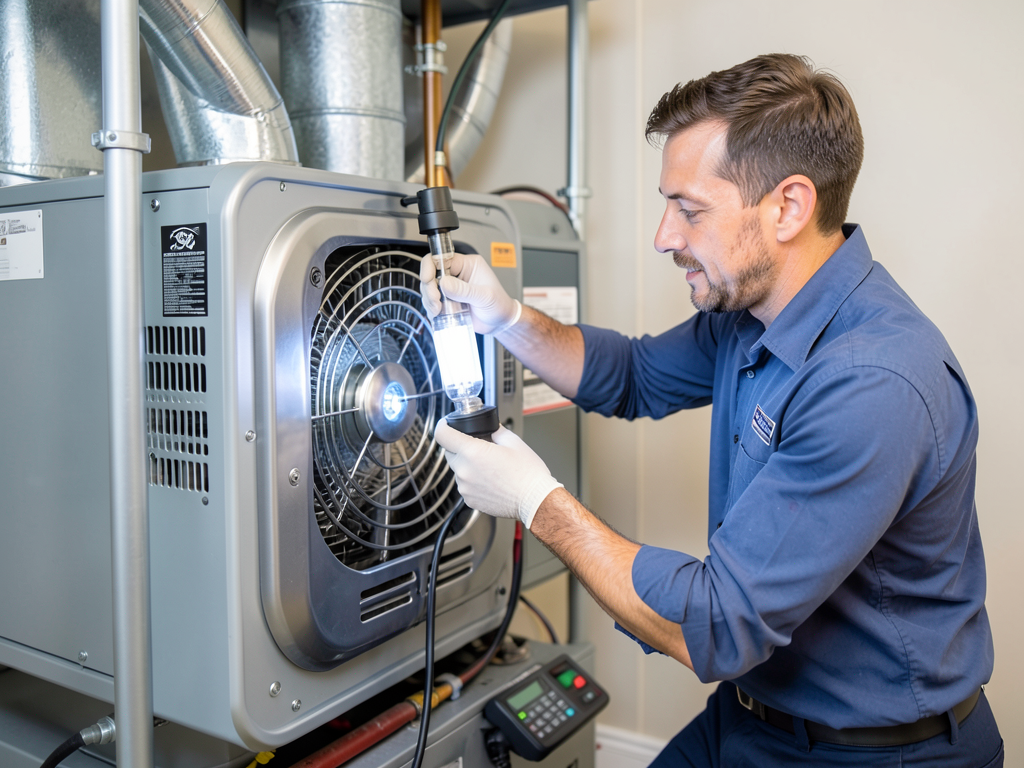
Professional installation takes 2-4 hours depending on your system configuration. The technician first evaluates your current HVAC setup, measuring available space and identifying the optimal mounting location for maximum UV exposure to the coil surfaces.
The installation involves mounting a UV lamp assembly inside your air handler, connecting it to a power supply, and ensuring proper safety shielding. Modern systems include automatic shutoff features if the access panel is opened during operation.
After installation, the system begins working immediately. You might notice improved air quality within 24-48 hours as existing mold colonies die off. The full benefits typically manifest after the first complete cooling cycle.
Most installations in Harrison West homes range from $450 to $850 depending on system size and complexity. This includes the UV lamp assembly, mounting hardware, electrical connections, and initial testing.
Maintenance Requirements and Long-Term Costs
UV bulbs lose effectiveness over time, typically requiring replacement every 12-24 months. The actual lifespan depends on your system’s runtime hours. A bulb rated for 9,000 hours will last about one year in a system that runs 8 hours daily during cooling season.
Replacement bulbs cost $80-$150 depending on the manufacturer and wattage. Some systems include replacement reminders or automatic shutoff when bulb intensity drops below effective levels.
Beyond bulb replacement, UV systems require minimal maintenance. The lamp assembly should be inspected annually for dust accumulation on the protective shield. A quick wipe with a soft cloth maintains optimal UV transmission.
The total cost of ownership over five years typically ranges from $600 to $1,200 including installation and maintenance. Compare this to the potential energy savings and extended equipment life to determine your personal return on investment.
Health Benefits Beyond Just Cleaner Air
UV light systems do more than just reduce visible mold. They target the microscopic organisms that trigger allergic reactions and respiratory issues. For Harrison West families with asthma, allergies, or compromised immune systems, this can mean fewer symptoms and better sleep quality. Troubleshooting AC Issues.
The technology is particularly effective against common Ohio allergens like ragweed pollen, which peaks in late summer and early fall. It also neutralizes mold spores that thrive in our humid climate, reducing the musty odors often associated with basement HVAC systems.
Unlike portable air purifiers that only treat one room, a whole-house UV system cleans all the air circulating through your home. This comprehensive approach is especially valuable in multi-story Harrison West homes where air movement between floors can spread contaminants.
The system works continuously, even when your HVAC isn’t actively heating or cooling. This means your air stays cleaner year-round, not just during peak allergy seasons.
Is UV Light Right for Your Specific Harrison West Home?
Consider your home’s specific conditions. Do you notice musty odors when your AC first turns on? Have you seen visible mold around vents or in your basement? Do family members suffer from seasonal allergies that seem worse indoors?
Harrison West homes near the river or in areas with mature tree coverage often benefit most from UV systems. The combination of higher humidity and organic debris creates perfect conditions for microbial growth in HVAC systems.
Older homes with original ductwork may see the biggest improvements. Decades of accumulated dust and debris provide food sources for mold colonies. A UV system can break this cycle and prevent future buildup.
Your HVAC system’s age also matters. If you’re planning to replace your system within two years, the UV installation might be better timed with that upgrade. However, if your current system is relatively new, adding UV protection now extends its effective lifespan.
Comparing UV Light to Other Air Quality Solutions
UV light systems work differently than HEPA filters or electronic air cleaners. While those technologies trap particles, UV light neutralizes living organisms at the DNA level. This makes it particularly effective against biological contaminants that can slip through even high-MERV filters.
For Harrison West homeowners concerned about both particles and microorganisms, combining UV light with a MERV 11-13 filter provides comprehensive protection. The filter captures dust and pollen while the UV light neutralizes mold spores and bacteria.
Electronic air cleaners can complement UV systems but don’t replace them. These devices charge particles to make them easier to trap but don’t affect living organisms the way UV light does.
The main advantage of UV over other technologies is its continuous, passive operation. Once installed, it works without any intervention or filter changes required.
Safety Considerations and EPA Guidelines
Modern UV HVAC systems include multiple safety features. The lamps are shielded to prevent direct exposure to occupants, and most include automatic shutoff if the access panel is opened during operation. The UV-C light cannot escape the sealed air handler compartment.
The EPA recognizes UVGI as an effective method for reducing airborne pathogens when properly installed. However, they emphasize that UV systems should complement, not replace, other IAQ strategies like proper ventilation and source control.
Look for systems certified as ozone-free. Some older UV technologies produced trace amounts of ozone, but current models use specialized quartz sleeves that block this byproduct.
Installation by a qualified HVAC technician ensures proper mounting angle and distance from the coil for maximum effectiveness. Incorrect installation can reduce the system’s germicidal effectiveness by up to 70%.
Local Installation Expertise Matters
Central Ohio’s specific climate conditions affect UV system performance. Our high summer humidity means systems run longer and create more condensation on coils. This makes the UV light’s continuous operation particularly valuable for preventing mold growth.
Local technicians understand Harrison West’s unique housing stock. From historic brick homes to modern constructions, each presents different installation challenges. Experience with local building codes and permit requirements ensures compliant installation.
Professional installation also includes proper system integration. The UV light must be wired to operate only when the blower runs, preventing unnecessary energy use while ensuring continuous protection during system operation.
Call (380) 253-3188 today to schedule your inspection and learn if a UV light system makes sense for your Harrison West home.
Frequently Asked Questions
How long do UV light bulbs last in HVAC systems?
Most UV bulbs for HVAC systems last between 9,000 and 18,000 hours of continuous operation. For a typical home system running 8 hours daily during cooling season, this translates to 12-24 months of effective use. The bulbs gradually lose intensity over time, so annual replacement ensures optimal performance.
Can UV light damage my HVAC system or home?
When properly installed by a qualified technician, UV light systems are completely safe for your HVAC equipment and home. The lamps are shielded within the air handler, and modern systems include automatic shutoff features. The UV-C light cannot escape the sealed compartment where it’s installed.
Will a UV light system eliminate all my allergy symptoms?
While UV light systems significantly reduce airborne biological contaminants, they work best as part of a comprehensive IAQ strategy. They’re particularly effective against mold spores and bacteria but may not capture all pollen or dust particles. Combining UV light with proper filtration provides the best results for allergy sufferers.
How much does UV light installation cost in Harrison West?
Installation costs typically range from $450 to $850 in the Harrison West area, depending on your system’s configuration and any custom mounting requirements. This includes the UV lamp assembly, professional installation, and initial testing. Replacement bulbs cost $80-$150 and last 12-24 months.
Do UV lights work during the heating season?
Yes, UV lights operate whenever your HVAC system’s blower is running, regardless of whether you’re heating or cooling. This provides year-round protection against mold and bacteria growth. In Central Ohio’s humid climate, this continuous operation is particularly valuable for preventing moisture-related issues.
You may also find this helpful. How to Clear a Clogged AC Condensate Drain Line in Your South Bloomfield Home.
{
“@context”: “https://schema.org”,
“@type”: “BlogPosting”,
“headline”: “Is an Ultraviolet Light System Actually Worth It for Your Harrison West Home”,
“description”: “UV light systems for HVAC can reduce mold, allergens, and improve air quality in your Harrison West home. Learn the real costs, benefits, and local installation process.”,
“wordCount”: 2004,
“datePublished”: “2026-03-15T12:16:00.000Z”,
“dateModified”: “2026-03-15T12:16:00.000Z”,
“inLanguage”: “en-US”,
“mainEntityOfPage”: {
“@type”: “WebPage”,
“@id”: “https://grandhvaccolumbus.com”
},
“publisher”: {
“@type”: “LocalBusiness”,
“name”: “Grand HVAC Columbus”,
“url”: “https://grandhvaccolumbus.com”
},
“author”: {
“@type”: “Organization”,
“name”: “Grand HVAC Columbus”,
“url”: “https://grandhvaccolumbus.com”
},
“image”: {
“@type”: “ImageObject”,
“url”: “https://grandhvaccolumbus.com/wp-content/uploads/2026/03/is-an-ultraviolet-light-system-actually-worth-it-f-1.png”
}
}
{
“@context”: “https://schema.org”,
“@type”: “HVACBusiness”,
“name”: “Grand HVAC Columbus”,
“url”: “https://grandhvaccolumbus.com”,
“address”: {
“@type”: “PostalAddress”,
“addressLocality”: “Columbus”
},
“areaServed”: {
“@type”: “City”,
“name”: “Columbus”
}
}
{
“@context”: “https://schema.org”,
“@type”: “FAQPage”,
“mainEntity”: [
{
“@type”: “Question”,
“name”: “Coil Sterilization vs. Air Stream Disinfection: Which System Fits Your Home?”,
“acceptedAnswer”: {
“@type”: “Answer”,
“text”: “There are two main types of UV light systems for residential HVAC. Coil sterilization units mount inside the air handler near the evaporator coil. These create a continuous germicidal zone that prevents biofilm buildup on the coil surfaces.”
}
},
{
“@type”: “Question”,
“name”: “Is UV Light Right for Your Specific Harrison West Home?”,
“acceptedAnswer”: {
“@type”: “Answer”,
“text”: “Consider your home’s specific conditions. Do you notice musty odors when your AC first turns on? Have you seen visible mold around vents or in your basement? Do family members suffer from seasonal allergies that seem worse indoors?”
}
},
{
“@type”: “Question”,
“name”: “How long do UV light bulbs last in HVAC systems?”,
“acceptedAnswer”: {
“@type”: “Answer”,
“text”: “Most UV bulbs for HVAC systems last between 9,000 and 18,000 hours of continuous operation. For a typical home system running 8 hours daily during cooling season, this translates to 12-24 months of effective use. The bulbs gradually lose intensity over time, so annual replacement ensures optimal performance.”
}
},
{
“@type”: “Question”,
“name”: “Can UV light damage my HVAC system or home?”,
“acceptedAnswer”: {
“@type”: “Answer”,
“text”: “When properly installed by a qualified technician, UV light systems are completely safe for your HVAC equipment and home. The lamps are shielded within the air handler, and modern systems include automatic shutoff features. The UV-C light cannot escape the sealed compartment where it’s installed.”
}
},
{
“@type”: “Question”,
“name”: “Will a UV light system eliminate all my allergy symptoms?”,
“acceptedAnswer”: {
“@type”: “Answer”,
“text”: “While UV light systems significantly reduce airborne biological contaminants, they work best as part of a comprehensive IAQ strategy. They’re particularly effective against mold spores and bacteria but may not capture all pollen or dust particles. Combining UV light with proper filtration provides the best results for allergy sufferers.”
}
},
{
“@type”: “Question”,
“name”: “How much does UV light installation cost in Harrison West?”,
“acceptedAnswer”: {
“@type”: “Answer”,
“text”: “Installation costs typically range from $450 to $850 in the Harrison West area, depending on your system’s configuration and any custom mounting requirements. This includes the UV lamp assembly, professional installation, and initial testing. Replacement bulbs cost $80-$150 and last 12-24 months.”
}
},
{
“@type”: “Question”,
“name”: “Do UV lights work during the heating season?”,
“acceptedAnswer”: {
“@type”: “Answer”,
“text”: “Yes, UV lights operate whenever your HVAC system’s blower is running, regardless of whether you’re heating or cooling. This provides year-round protection against mold and bacteria growth. In Central Ohio’s humid climate, this continuous operation is particularly valuable for preventing moisture-related issues.”
}
}
]
}
{
“@context”: “https://schema.org”,
“@type”: “BreadcrumbList”,
“itemListElement”: [
{
“@type”: “ListItem”,
“position”: 1,
“name”: “Home”,
“item”: “https://grandhvaccolumbus.com”
},
{
“@type”: “ListItem”,
“position”: 2,
“name”: “Blog”,
“item”: “https://grandhvaccolumbus.com/blog”
},
{
“@type”: “ListItem”,
“position”: 3,
“name”: “Is an Ultraviolet Light System Actually Worth It for Your Harrison West Home”
}
]
}
{
“@context”: “https://schema.org”,
“@type”: “Service”,
“serviceType”: “HVAC”,
“provider”: {
“@type”: “LocalBusiness”,
“name”: “Grand HVAC Columbus”,
“url”: “https://grandhvaccolumbus.com”
},
“areaServed”: {
“@type”: “City”,
“name”: “Columbus”
},
“description”: “UV light systems for HVAC can reduce mold, allergens, and improve air quality in your Harrison West home. Learn the real costs, benefits, and local installation process.”
}