
Living in a Downtown Columbus condo comes with unique HVAC challenges. From strict HOA rules to complex building codes, installing or repairing your heating and cooling system requires careful navigation. This guide breaks down everything you need to know before making changes to your unit. Columbus Division of Building and Zoning Services.
Understanding Who Controls What in Your Condo
The first hurdle is figuring out who owns what. In Ohio condos, your unit typically includes everything from the interior walls inward, but the HVAC system often falls into a gray area. Many Downtown buildings have central chillers or boilers that serve multiple units, making them common elements. Ohio Revised Code Chapter 5311.
Ohio Revised Code Chapter 5311 defines this as ‘limited common elements’ – components that serve your unit but aren’t exclusively yours. The lineset running through the wall? That might belong to the association. The condenser on the roof? Also likely association property.
Before touching anything, review your condo declaration. Some Downtown buildings require board approval for even basic filter changes. Others mandate specific equipment brands to maintain system compatibility.
Columbus Building Codes That Affect Condo HVAC
The City of Columbus Division of Building and Zoning Services enforces strict mechanical codes for multi-family buildings. Any new installation or major replacement requires a mechanical permit.
Columbus follows the Ohio Mechanical Code, which mandates specific requirements for condo HVAC work. For example, condensate drain lines must connect to the building’s drainage system – you cannot simply drain onto a balcony or into a nearby planter.
Fire safety adds another layer. The National Fire Protection Association’s NFPA 90A standard requires fire dampers in all vertical HVAC shafts. These devices automatically close if smoke is detected, preventing fire spread between floors.
Historic districts like the Short North or German Village impose additional restrictions. The Columbus Historic Resources Commission reviews any exterior modifications, including HVAC condenser placement. Units visible from the street often require custom enclosures that match the building’s architecture.
Common HVAC Systems in Downtown Columbus Condos
Different building types use different systems, each with its own regulatory considerations.
High-rise buildings typically use water source heat pumps connected to a central boiler/chiller plant. These systems are efficient but complex. Any modification affects the entire building’s heating and cooling balance.
Garden-style condos often use individual split systems or packaged terminal air conditioners (PTACs). PTACs are common in older Downtown buildings but have strict installation requirements. The units must be properly sealed to prevent air infiltration, and condensate must drain correctly to avoid water damage to lower units.
Some newer Downtown developments use variable refrigerant flow (VRF) systems. These allow individual temperature control but require specialized knowledge to service. Improper handling can damage the entire system.
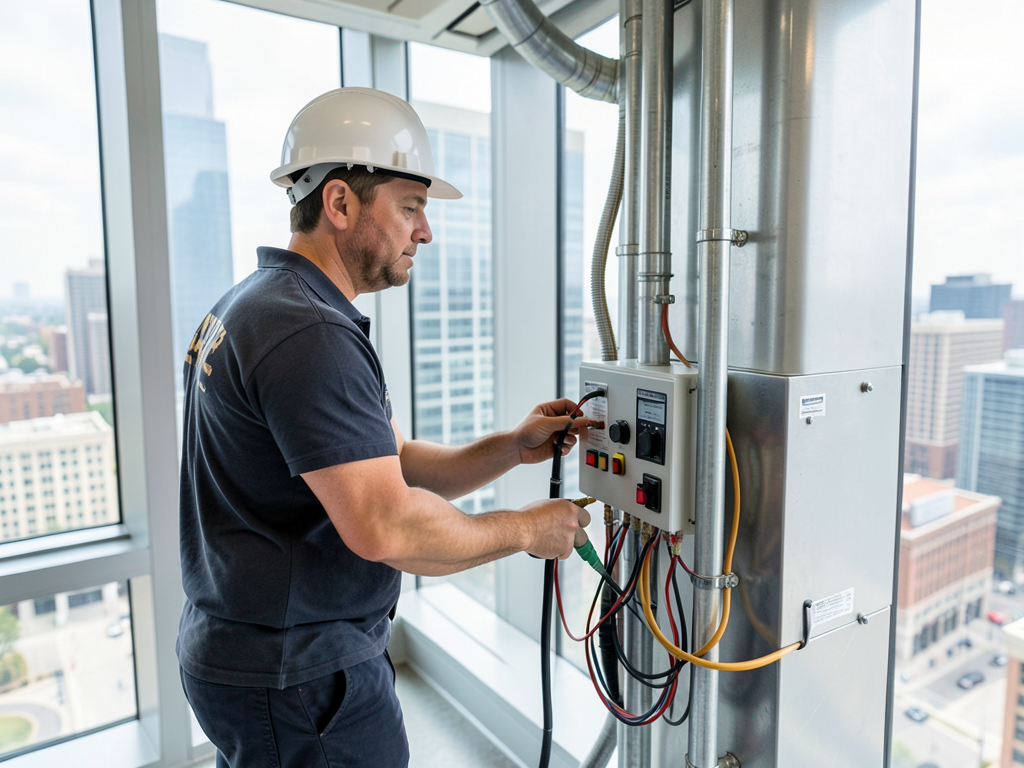
A technician inspects a water source heat pump in a Downtown Columbus high-rise, checking refrigerant levels and electrical connections.
Noise Regulations and Outdoor Unit Placement
Columbus has specific noise ordinances that affect HVAC installations. The city limits outdoor unit noise to 70 decibels at the property line during daytime hours. This restriction is stricter than many suburbs.
Condos in the Arena District or along the Scioto Mile face additional scrutiny. The Columbus Division of Building and Zoning Services often requires sound blankets or barrier walls for units near residential windows.
Historic districts have aesthetic requirements beyond noise. The German Village Commission might reject a standard condenser in favor of a custom-painted unit that blends with the building’s brick facade. These modifications can add $2,000-$5,000 to installation costs.
The Permitting Process in Franklin County
Pulling a mechanical permit in Columbus involves several steps. First, submit detailed plans showing the equipment location, electrical connections, and drainage. The city reviews these for code compliance.
For condo work, you’ll need additional documentation. This includes your condo association’s approval letter and, for historic districts, the HRC’s design review approval.
Franklin County Auditor tracks all permitted work. Unpermitted HVAC changes can trigger fines and, worse, void your insurance coverage. If a water leak damages the unit below yours, your insurance might deny the claim because the work wasn’t permitted.
Permit fees vary by project scope. A simple replacement might cost $100-$200, while a complex VRF installation could exceed $1,000 in fees. Budget these costs upfront – they’re non-negotiable.
Maintenance Standards and Fire Safety
Multi-story buildings have strict maintenance requirements. The Columbus Fire Department inspects fire dampers annually. These devices in your HVAC system must open and close properly – a stuck damper can delay fire department response.
Condensate management is critical in condos. A clogged drain line in unit 12B can flood unit 11B’s ceiling. Many Downtown buildings require overflow switches that shut down the system if water backs up.
Refrigerant handling follows EPA regulations. The phase-out of R-22 refrigerant means older systems need replacement parts that may no longer be available. Some Downtown buildings are upgrading to R-410A or the new A2L refrigerants, which have different pressure requirements. Upgrading to a Smart Thermostat in Grandview Heights to Lower Your Electric Bill.

A condensate pump installation in a Downtown Columbus condo, showing proper overflow protection and electrical connections.
Working With Your HOA and Management
Successful HVAC work in condos requires diplomacy. Start by contacting your property management company. They can provide the condo declaration and explain the approval process.
Board meetings typically review HVAC requests monthly. Submit your proposal well in advance – last-minute requests often get denied. Include equipment specifications, contractor credentials, and how you’ll minimize disruption to neighbors.
Some Downtown associations maintain a list of approved contractors. Using an unapproved vendor can result in fines or forced removal of the equipment. Check this list before scheduling any work.
Communication with neighbors matters too. If your replacement requires shutting down the building’s system, give advance notice. Most conflicts arise from poor communication rather than technical issues. Troubleshooting AC Issues.
Cost Considerations Unique to Condo HVAC
Condo HVAC work often costs 20-40% more than single-family homes. Why? Limited access is the biggest factor. Replacing a condenser on a 15th-floor balcony might require a crane and street closure permit.
Historic district requirements add costs. Custom enclosures, specialized equipment to protect historic materials, and additional inspections can double the installation budget.
Building insurance requirements affect contractor selection. Many Downtown buildings require contractors to carry $1 million+ liability insurance and provide certificates naming the association as additionally insured.
Energy efficiency upgrades might qualify for rebates, but condo associations control these decisions. Some Downtown buildings have implemented building-wide energy programs that individual owners cannot opt out of.
Emergency Situations and Quick Response
When your condo HVAC fails in July, waiting weeks for board approval isn’t an option. Most Downtown associations have emergency protocols. Document the failure with photos and obtain a repair estimate quickly. Where to Find 24 Hour Emergency HVAC Help Anywhere in Columbus.
Columbus experiences rapid temperature swings that can stress condo HVAC systems. A system working fine in April might fail during the first 90-degree day. Annual maintenance becomes crucial in these climate conditions.
Emergency repairs often require temporary solutions. A failing compressor might be replaced with a portable unit while waiting for permanent repairs. Discuss these options with your contractor and association beforehand.
A technician performs emergency diagnostics on a failing heat pump in a Downtown Columbus condo, using specialized gauges to check system pressures.
Making the Right Choice for Your Condo
Choosing HVAC equipment for your condo requires balancing multiple factors. Energy efficiency matters, but so does noise level and physical footprint. A high-efficiency unit that violates noise ordinances provides no benefit.
Consider the system’s age too. If your building uses water source heat pumps with a failing central plant, replacing just your unit might be throwing money away. Sometimes the association-level upgrade makes more financial sense.
Professional assessment is invaluable. A contractor familiar with Downtown condo systems can identify potential issues before work begins. They’ll know which equipment fits your specific building’s constraints and what approvals you’ll need.
Don’t let HVAC rules and restrictions overwhelm you. With proper planning and the right contractor, you can navigate the complexities of condo HVAC work successfully. The key is understanding the rules before you begin.
Frequently Asked Questions
Can I install a window air conditioner in my Downtown Columbus condo?
Most Downtown condo associations prohibit window units due to noise, energy inefficiency, and potential water damage. Some buildings make exceptions for medical necessity with proper documentation.
How long does it take to get HOA approval for HVAC work?
Approval typically takes 2-4 weeks, depending on your association’s meeting schedule. Emergency repairs may be expedited, but you’ll still need to submit documentation afterward.
Do I need a permit to replace my condo’s air filter?
No permit is needed for basic maintenance like filter changes. However, any work involving refrigerant, electrical connections, or structural modifications requires a mechanical permit from the City of Columbus.
Can I upgrade to a more efficient system without board approval?
No. Even if the new equipment fits in the same space, any change to the HVAC system requires board approval and often a building permit. Unauthorized changes can result in fines or mandatory removal.
What happens if my HVAC work causes damage to another unit?
You’re typically responsible for damage to other units, even if it wasn’t intentional. This is why proper permits and insurance are crucial. Your contractor’s insurance should cover accidental damage during installation.
{
“@context”: “https://schema.org”,
“@type”: “BlogPosting”,
“headline”: “Navigating HVAC Rules and Restrictions for Your Downtown Columbus Condo”,
“description”: “Confused about HVAC rules in your Downtown Columbus condo? Learn about permits, HOA regulations, and local codes to avoid fines and ensure safe installations.”,
“wordCount”: 1558,
“datePublished”: “2026-06-05T15:49:00.000Z”,
“dateModified”: “2026-06-05T15:49:00.000Z”,
“inLanguage”: “en-US”,
“mainEntityOfPage”: {
“@type”: “WebPage”,
“@id”: “https://grandhvaccolumbus.com”
},
“publisher”: {
“@type”: “LocalBusiness”,
“name”: “Grand HVAC Columbus”,
“url”: “https://grandhvaccolumbus.com”
},
“author”: {
“@type”: “Organization”,
“name”: “Grand HVAC Columbus”,
“url”: “https://grandhvaccolumbus.com”
},
“image”: {
“@type”: “ImageObject”,
“url”: “https://grandhvaccolumbus.com/wp-content/uploads/2026/03/navigating-hvac-rules-and-restrictions-for-your-do-1.png”
}
}
{
“@context”: “https://schema.org”,
“@type”: “HVACBusiness”,
“name”: “Grand HVAC Columbus”,
“url”: “https://grandhvaccolumbus.com”,
“address”: {
“@type”: “PostalAddress”,
“addressLocality”: “Columbus”
},
“areaServed”: {
“@type”: “City”,
“name”: “Columbus”
}
}
{
“@context”: “https://schema.org”,
“@type”: “FAQPage”,
“mainEntity”: [
{
“@type”: “Question”,
“name”: “Can I install a window air conditioner in my Downtown Columbus condo?”,
“acceptedAnswer”: {
“@type”: “Answer”,
“text”: “Most Downtown condo associations prohibit window units due to noise, energy inefficiency, and potential water damage. Some buildings make exceptions for medical necessity with proper documentation.”
}
},
{
“@type”: “Question”,
“name”: “How long does it take to get HOA approval for HVAC work?”,
“acceptedAnswer”: {
“@type”: “Answer”,
“text”: “Approval typically takes 2-4 weeks, depending on your association’s meeting schedule. Emergency repairs may be expedited, but you’ll still need to submit documentation afterward.”
}
},
{
“@type”: “Question”,
“name”: “Do I need a permit to replace my condo’s air filter?”,
“acceptedAnswer”: {
“@type”: “Answer”,
“text”: “No permit is needed for basic maintenance like filter changes. However, any work involving refrigerant, electrical connections, or structural modifications requires a mechanical permit from the City of Columbus.”
}
},
{
“@type”: “Question”,
“name”: “Can I upgrade to a more efficient system without board approval?”,
“acceptedAnswer”: {
“@type”: “Answer”,
“text”: “No. Even if the new equipment fits in the same space, any change to the HVAC system requires board approval and often a building permit. Unauthorized changes can result in fines or mandatory removal.”
}
},
{
“@type”: “Question”,
“name”: “What happens if my HVAC work causes damage to another unit?”,
“acceptedAnswer”: {
“@type”: “Answer”,
“text”: “You’re typically responsible for damage to other units, even if it wasn’t intentional. This is why proper permits and insurance are crucial. Your contractor’s insurance should cover accidental damage during installation.”
}
}
]
}
{
“@context”: “https://schema.org”,
“@type”: “BreadcrumbList”,
“itemListElement”: [
{
“@type”: “ListItem”,
“position”: 1,
“name”: “Home”,
“item”: “https://grandhvaccolumbus.com”
},
{
“@type”: “ListItem”,
“position”: 2,
“name”: “Blog”,
“item”: “https://grandhvaccolumbus.com/blog”
},
{
“@type”: “ListItem”,
“position”: 3,
“name”: “Navigating HVAC Rules and Restrictions for Your Downtown Columbus Condo”
}
]
}
{
“@context”: “https://schema.org”,
“@type”: “Service”,
“serviceType”: “HVAC”,
“provider”: {
“@type”: “LocalBusiness”,
“name”: “Grand HVAC Columbus”,
“url”: “https://grandhvaccolumbus.com”
},
“areaServed”: {
“@type”: “City”,
“name”: “Columbus”
},
“description”: “Confused about HVAC rules in your Downtown Columbus condo? Learn about permits, HOA regulations, and local codes to avoid fines and ensure safe installations.”
}