
Why Your Galloway Home Needs a Whole House HEPA Filter for Allergy Season
Your Galloway home sits in a valley where ragweed pollen, mold spores, and dust from nearby fields converge during peak allergy months. Standard HVAC filters capture only 20-30% of airborne particles, leaving your family exposed to allergens that trigger sneezing, congestion, and asthma attacks. A whole house HEPA filter installation in Columbus homes removes 99.97% of particles as small as 0.3 microns, creating a protective barrier against seasonal irritants that plague Central Ohio residents. EPA air quality standards.
Central Ohio’s unique geography creates perfect conditions for allergy sufferers. The flat terrain between Columbus and the Appalachian foothills allows pollen to travel unimpeded for miles. Add in Ohio’s dramatic seasonal shifts from humid summers to pollen-heavy springs, and your indoor air quality becomes a critical health factor. Unlike portable units that only clean one room, a whole house HEPA system integrates with your existing HVAC equipment to filter every cubic foot of air in your Galloway home. Ohio Department of Health.
How Whole House HEPA Systems Differ from Standard Filters
Standard furnace filters use spun fiberglass or pleated media rated between MERV 6 and MERV 11. These capture dust and larger particles but allow microscopic allergens to circulate freely. HEPA (High-Efficiency Particulate Air) filters trap particles down to 0.3 microns through a dense mat of randomly arranged fibers that create multiple barriers to airflow.
The key difference lies in pressure drop. Standard filters maintain adequate airflow with minimal resistance. HEPA filters require careful system design to prevent strain on your blower motor. Professional installation includes static pressure testing to ensure your system can handle the increased resistance without compromising efficiency or causing premature equipment failure.
Columbus Allergen Profile: What’s in Your Air
Franklin County’s air quality index shows elevated particulate matter during late summer and early fall. Ragweed season peaks from mid-August through October, with pollen counts often exceeding 200 grains per cubic meter. Ohio EPA monitoring stations in Columbus report that urban dust combines with agricultural allergens to create a unique air quality challenge. Improving the Air Quality in Your Older Clintonville Home.
Mold spores thrive in Ohio’s humid climate. The Ohio Department of Health tracks mold counts that frequently reach 10,000 spores per cubic meter during warm months. These microscopic particles pass through standard filters and settle in your ductwork, where they multiply and circulate throughout your home. Where to Find 24 Hour Emergency HVAC Help Anywhere in Columbus.
Installation Process for Galloway Homes
Professional HEPA installation begins with an indoor air quality assessment. Technicians use particle counters to measure current contaminant levels and identify problem areas. They examine your existing ductwork for leaks, proper sizing, and airflow patterns that might affect filter performance.
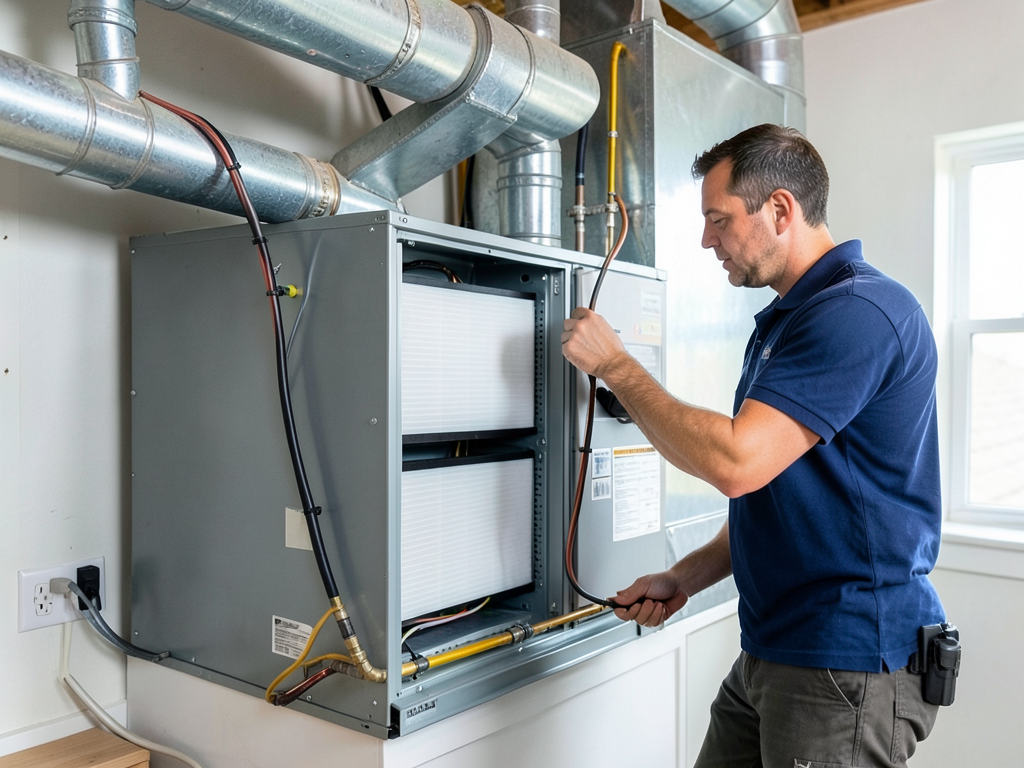
The installation process typically requires 4-6 hours. Technicians retrofit your existing air handler with a bypass HEPA system or install an inline configuration depending on your equipment layout. They seal all connections to prevent bypass air from circumventing the filter, ensuring every particle passes through the HEPA media.
Static Pressure and System Compatibility
HEPA filters increase static pressure by 0.2 to 0.4 inches of water column compared to standard filters. This additional resistance can cause your blower motor to work harder, reducing efficiency and potentially shortening equipment life. Professional installation includes pressure testing before and after installation to verify your system can handle the load.
Older Galloway homes with original ductwork often require modifications. Galvanized steel ducts from the 1970s and 1980s may have developed internal corrosion that restricts airflow. Technicians measure duct dimensions and calculate equivalent length to ensure your system maintains proper cubic feet per minute (CFM) after HEPA installation.
Cost Factors for Galloway HEPA Installation
Installation costs vary based on your existing system configuration and home size. Most Galloway homes require systems rated between 1,000 and 2,000 CFM. A typical 1,800 square foot home with a 3-ton air conditioner needs a HEPA system costing between $1,800 and $2,500 installed. Why Your Westerville AC Needs a Tune Up Before the Humidity Hits.
Factors affecting price include filter cabinet size, bypass configuration, and any necessary ductwork modifications. Homes with attic-mounted air handlers often require additional labor for proper filter access. Commercial-grade HEPA systems for larger Galloway properties can exceed $4,000 but provide superior filtration for multi-story homes.
Maintenance Requirements and Filter Replacement
HEPA filters require replacement every 12-18 months depending on usage and local conditions. Galloway’s high pollen counts may necessitate more frequent changes during peak seasons. Professional installation includes a maintenance schedule with reminders for filter replacement and system cleaning.
The cost of replacement filters ranges from $150 to $300 depending on size and efficiency rating. Some systems use washable pre-filters that extend HEPA media life by capturing larger particles before they reach the main filter. Annual maintenance typically costs $150-200 and includes pressure testing, duct inspection, and system calibration.
Energy Efficiency Impact
HEPA filtration increases your HVAC system’s energy consumption by 5-10% due to the additional resistance. However, this increase is often offset by improved system efficiency. Clean air reduces dust buildup on heat exchanger coils and blower wheels, maintaining optimal heat transfer and reducing runtime.
Modern HEPA systems include variable-speed blowers that adjust to maintain proper airflow. These systems use ECM (electronically commutated motor) technology that operates more efficiently than standard PSC motors. The energy savings from improved system performance can offset the additional filter resistance over time.
Health Benefits Beyond Allergies
HEPA filtration captures more than just allergens. The systems trap bacteria, viruses, and volatile organic compounds (VOCs) that standard filters miss. This creates a healthier indoor environment that benefits everyone, not just allergy sufferers. Studies show reduced incidence of respiratory infections in homes with HEPA filtration.
Pet dander, a common trigger for asthma and allergies, consists of particles ranging from 2.5 to 10 microns. HEPA filters capture 99.97% of these particles, significantly reducing pet-related respiratory issues. The filtration also removes cooking odors, tobacco smoke, and other airborne irritants that affect indoor air quality. Troubleshooting AC Issues.
Comparing HEPA to Other Air Quality Solutions
| System Type | Particle Capture | Coverage Area | Installation Cost | Energy Impact |
|---|---|---|---|---|
| Standard MERV 11 | 85-90% @ 3 microns | Whole house | $50-150 | Negligible |
| Portable HEPA | 99.97% @ 0.3 microns | 1 room | $300-800 | Low |
| Whole House HEPA | 99.97% @ 0.3 microns | Entire home | $1,800-4,000 | Moderate |
| Electronic Air Cleaner | 95-98% @ 0.3 microns | Whole house | $800-1,500 | Low |
Ohio Building Code Compliance
Ohio Mechanical Code Section 1301:1311 requires that HVAC modifications maintain proper airflow and pressure relationships. HEPA installation must comply with these standards to ensure safe and efficient operation. The code specifies minimum duct velocities and maximum pressure drops for residential systems.
Franklin County building inspectors verify that HEPA installations meet code requirements during final inspection. They check for proper filter access, adequate clearance for maintenance, and verification that the system maintains design airflow rates. Non-compliant installations can result in failed inspections and required modifications.
Professional Installation vs. DIY
DIY HEPA installation attempts often result in system damage and reduced efficiency. Professional installation includes proper sizing calculations, static pressure testing, and warranty protection. Technicians have specialized tools to measure airflow and verify that your system operates within manufacturer specifications.
Incorrect installation can cause your blower motor to overheat, ice formation on evaporator coils, and reduced heating and cooling capacity. Professional installation includes a performance guarantee and typically comes with a 5-10 year warranty on both equipment and labor.
Call (380) 253-3188 Today to Schedule Your Indoor Air Quality Assessment
Your family deserves clean air free from allergens and irritants. Our certified technicians will evaluate your current system, test your indoor air quality, and recommend the best HEPA solution for your Galloway home. We serve all of Central Ohio with same-day service availability for urgent air quality concerns.
Don’t wait until allergy season peaks to address your indoor air quality. Call (380) 253-3188 now to schedule your assessment. Our team will provide a detailed quote and explain exactly how a whole house HEPA system can transform your home’s air quality. Breathe easier knowing your family is protected from seasonal allergens.
Frequently Asked Questions
How long does whole house HEPA installation take?
Most installations require 4-6 hours depending on your system configuration and any necessary ductwork modifications. Our technicians work efficiently to minimize disruption to your home.
Will a HEPA filter make my HVAC system less efficient?
Properly installed HEPA systems may increase energy consumption by 5-10%, but this is often offset by improved system efficiency from cleaner coils and reduced dust buildup. Modern variable-speed systems minimize this impact.
How often do HEPA filters need replacement?
HEPA filters typically last 12-18 months. Homes in high-pollen areas like Galloway may need more frequent replacement during peak seasons. We provide a maintenance schedule and reminders for filter changes.
Can I install a HEPA filter myself?
DIY installation often results in system damage and reduced efficiency. Professional installation ensures proper sizing, static pressure testing, and warranty protection. Incorrect installation can void your HVAC equipment warranty.
{
“@context”: “https://schema.org”,
“@type”: “BlogPosting”,
“headline”: “Why Your Galloway Home Needs a Whole House HEPA Filter for Allergy Season”,
“description”: “Struggling with allergies in Galloway. Learn why a whole house HEPA filter installation is essential for your Columbus home’s air quality this allergy season.”,
“wordCount”: 1499,
“datePublished”: “2026-04-20T15:03:00.000Z”,
“dateModified”: “2026-04-20T15:03:00.000Z”,
“inLanguage”: “en-US”,
“mainEntityOfPage”: {
“@type”: “WebPage”,
“@id”: “https://grandhvaccolumbus.com”
},
“publisher”: {
“@type”: “LocalBusiness”,
“name”: “Grand HVAC Columbus”,
“url”: “https://grandhvaccolumbus.com”
},
“author”: {
“@type”: “Organization”,
“name”: “Grand HVAC Columbus”,
“url”: “https://grandhvaccolumbus.com”
},
“image”: {
“@type”: “ImageObject”,
“url”: “https://grandhvaccolumbus.com/wp-content/uploads/2026/03/why-your-galloway-home-needs-a-whole-house-hepa-fi-1.png”
}
}
{
“@context”: “https://schema.org”,
“@type”: “HVACBusiness”,
“name”: “Grand HVAC Columbus”,
“url”: “https://grandhvaccolumbus.com”,
“address”: {
“@type”: “PostalAddress”,
“addressLocality”: “Columbus”
},
“areaServed”: {
“@type”: “City”,
“name”: “Columbus”
}
}
{
“@context”: “https://schema.org”,
“@type”: “FAQPage”,
“mainEntity”: [
{
“@type”: “Question”,
“name”: “How long does whole house HEPA installation take?”,
“acceptedAnswer”: {
“@type”: “Answer”,
“text”: “Most installations require 4-6 hours depending on your system configuration and any necessary ductwork modifications. Our technicians work efficiently to minimize disruption to your home.”
}
},
{
“@type”: “Question”,
“name”: “Will a HEPA filter make my HVAC system less efficient?”,
“acceptedAnswer”: {
“@type”: “Answer”,
“text”: “Properly installed HEPA systems may increase energy consumption by 5-10%, but this is often offset by improved system efficiency from cleaner coils and reduced dust buildup. Modern variable-speed systems minimize this impact.”
}
},
{
“@type”: “Question”,
“name”: “How often do HEPA filters need replacement?”,
“acceptedAnswer”: {
“@type”: “Answer”,
“text”: “HEPA filters typically last 12-18 months. Homes in high-pollen areas like Galloway may need more frequent replacement during peak seasons. We provide a maintenance schedule and reminders for filter changes.”
}
},
{
“@type”: “Question”,
“name”: “Can I install a HEPA filter myself?”,
“acceptedAnswer”: {
“@type”: “Answer”,
“text”: “DIY installation often results in system damage and reduced efficiency. Professional installation ensures proper sizing, static pressure testing, and warranty protection. Incorrect installation can void your HVAC equipment warranty.”
}
}
]
}
{
“@context”: “https://schema.org”,
“@type”: “BreadcrumbList”,
“itemListElement”: [
{
“@type”: “ListItem”,
“position”: 1,
“name”: “Home”,
“item”: “https://grandhvaccolumbus.com”
},
{
“@type”: “ListItem”,
“position”: 2,
“name”: “Blog”,
“item”: “https://grandhvaccolumbus.com/blog”
},
{
“@type”: “ListItem”,
“position”: 3,
“name”: “Why Your Galloway Home Needs a Whole House HEPA Filter for Allergy Season”
}
]
}
{
“@context”: “https://schema.org”,
“@type”: “Service”,
“serviceType”: “HVAC”,
“provider”: {
“@type”: “LocalBusiness”,
“name”: “Grand HVAC Columbus”,
“url”: “https://grandhvaccolumbus.com”
},
“areaServed”: {
“@type”: “City”,
“name”: “Columbus”
},
“description”: “Struggling with allergies in Galloway. Learn why a whole house HEPA filter installation is essential for your Columbus home’s air quality this allergy season.”
}