
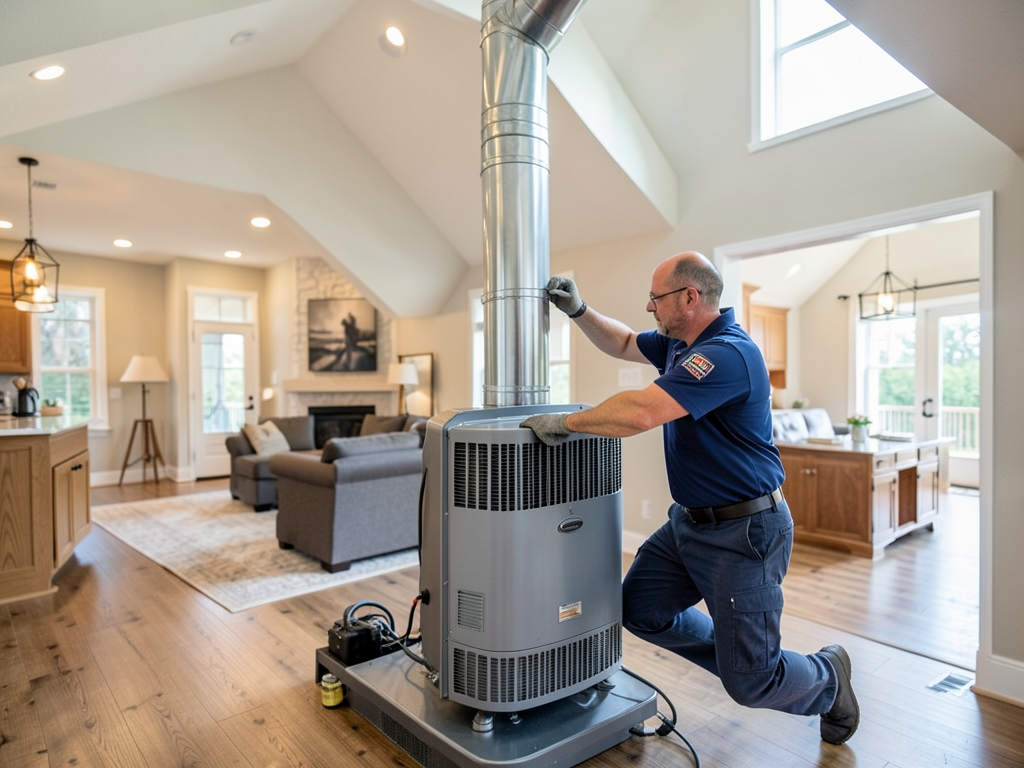
Why Your Open Concept Great Room in Powell Never Feels Quite Warm Enough
Your feet are cold but the ceiling is warm. That’s not a thermostat problem. It’s physics. In Powell’s open concept great rooms, heat rises and gets trapped near vaulted ceilings leaving the living space below uncomfortable. Standard HVAC systems weren’t built for rooms with 15-foot ceilings and massive cubic volumes. The result is uneven temperatures higher energy bills and constant thermostat battles.
The good news is you’re not stuck with cold feet. Modern HVAC technology like zoning systems radiant floor heating and high-efficiency mini-splits can solve this. The key is understanding how heat moves in large spaces and matching the right equipment to your room’s volume not just its floor area. Ductless Mini-Split Systems.
Before you blame your furnace let’s look at why your great room stays cold and what actually works to fix it.
The Science Behind Cold Feet in High Ceiling Rooms
Heat naturally rises. In a room with standard 8-foot ceilings this isn’t a big deal. But in a great room with 15 to 20-foot ceilings that rising heat can create a 10 to 15-degree difference between the floor and the ceiling. This is called thermal stratification.
Here’s what happens. Your HVAC system pushes warm air out of the vents. That air is lighter than the cooler air below so it shoots straight up to the ceiling. The thermostat mounted at eye level never senses this trapped heat so it keeps calling for more warmth. Meanwhile your feet stay cold and your energy bill climbs.. Read more about Moving Your Air Vents During a Major Kitchen Renovation in Upper Arlington.
In Powell’s climate where winter temperatures can drop below zero this problem gets worse. The greater the temperature difference between inside and outside the more pronounced stratification becomes. A standard furnace running at 120 degrees pushes even more hot air upward creating bigger temperature layers. Where to Find 24 Hour Emergency HVAC Help Anywhere in Columbus.
Why Standard HVAC Sizing Fails in Large Volume Spaces
Most HVAC contractors still size systems based on square footage. That works fine for ranch homes or two-story colonials. But great rooms aren’t just wide they’re tall. A 20×20 room with 8-foot ceilings has 3200 cubic feet. The same room with 16-foot ceilings has 6400 cubic feet. That’s double the air volume but most contractors only account for the floor area.
This is where Manual J load calculations matter. Manual J is the industry standard for HVAC sizing. It accounts for cubic volume insulation levels window placement and even ceiling height. Without it you’re guessing. And guessing leads to undersized equipment that runs constantly without ever catching up.
In Powell many newer homes were built with open floor plans but the HVAC systems were sized using old methods. The result is a system that can’t keep up with the actual heating demand.
Top Solutions for Heating High Ceiling Rooms
Fixing a cold great room isn’t about one magic fix. It’s about combining the right technologies to move heat where you need it.
Destratification Fans: The Winter Mode Secret
Destratification fans also called HVLS (high-volume low-speed) fans push the warm air trapped at the ceiling back down to the living space. Unlike regular ceiling fans these run in reverse during winter at very low speeds. They gently pull cold air up from the floor and push warm air down the walls without creating drafts.. Read more about How to Build a Winter Survival Kit for Your Columbus Heating System.
In Powell’s climate these fans can reduce heating costs by 15 to 20 percent. They work best in rooms with ceilings over 12 feet and can be installed with most smart thermostats for automatic seasonal reversal. Upgrading to a Smart Thermostat in Grandview Heights to Lower Your Electric Bill.
Radiant Floor Heating: Warmth from the Ground Up
Radiant floor heating doesn’t fight gravity. It works by warming the floor surface which then radiates heat upward. This eliminates the cold floor problem entirely. In great rooms radiant heat pairs perfectly with forced air systems. The furnace handles the bulk of the heating while the floor keeps your feet comfortable.
Hydronic radiant systems circulate warm water through tubes under the floor. Electric systems use heating cables. Both are controlled by separate thermostats so you can keep the floor warm without overheating the room. EPA guide to HVAC systems and indoor air quality.
Ductless Mini-Splits for Targeted Zone Control
Mini-split systems don’t rely on ductwork. They mount high on walls and deliver heated air directly into the space. This makes them ideal for great rooms because they can be positioned to push warm air across the ceiling and down the walls.
Modern cold-climate mini-splits from brands like Mitsubishi and Daikin can heat effectively even when outdoor temperatures drop below zero. They also offer zoning so you can keep the great room warm without overheating the rest of the house.. Read more about Adding Modern HVAC Zoning to a Historic Home in Bronzeville Without Tearing Down Walls.
High-Efficiency Heat Pumps with Cold-Climate Ratings
Heat pumps have come a long way. Today’s cold-climate models can extract heat from outdoor air even when it’s below freezing. When paired with a gas furnace in a dual-fuel setup they automatically switch to the most efficient heating method based on outdoor temperature.
For Powell homes this means lower energy bills and more consistent comfort. The heat pump handles mild cold while the gas furnace kicks in during extreme weather.
Strategic Return Air Vent Placement
Where your return vents are located affects how well your system works. Returns placed high on walls pull warm air from the ceiling creating a short circuit. Returns should be low where the cold air settles. This pulls cool air through the system and helps distribute warm air more evenly.
In great rooms with open floor plans this might mean adding additional returns or relocating existing ones. It’s a simple change that can make a big difference.
HVAC Sizing for Vaulted Ceilings
Calculating the right size for a high-ceiling room isn’t just about BTUs per square foot. You need to calculate BTUs per cubic foot. Here’s the basic formula.
- Measure Room Dimensions
Length x width x height = cubic feet
- Determine Insulation Quality
Well-insulated homes use 2-3 BTUs per cubic foot. Older homes may need 4-5 BTUs per cubic foot.
- Factor in Windows and Doors
Large glass areas add 10-15 percent to the load.
- Calculate Total BTUs
Cubic feet x BTUs per cubic foot = total heating requirement
For example a 20×20 room with 16-foot ceilings has 6400 cubic feet. With average insulation that’s about 19200 BTUs needed. A standard 60000 BTU furnace might seem oversized but in reality it’s barely keeping up once you factor in stratification and heat loss through large windows.
Cost-Benefit Analysis: Powell Energy Rates and ROI
Powell residents pay AEP Ohio rates averaging 12.5 cents per kilowatt hour. Natural gas from Columbia Gas averages $1.05 per therm. When you upgrade to high-efficiency equipment the savings depend on your current system’s efficiency.
A 15-year-old furnace might be 80 percent efficient. A new 95 percent efficient model saves 15 percent on gas. Over a typical winter that’s $200 to $400 in savings. Add a programmable thermostat and destratification fan and annual savings can reach $500 to $600.
The payback period for a complete system upgrade is typically 5 to 7 years. After that you’re saving money every month while enjoying better comfort.
When to Call a Professional Columbus HVAC Technician
Some fixes you can handle yourself. Changing thermostat batteries or reversing ceiling fan direction won’t hurt. But if your great room still feels cold after trying basic solutions it’s time to call a professional.
Warning signs that need expert attention include rooms that never reach set temperature, furnaces that run constantly, or energy bills that spike without explanation. These point to sizing issues ductwork problems or equipment failure.
A professional HVAC technician can perform a Manual J load calculation test airflow and inspect your system for hidden problems. In Powell’s climate where winter temperatures can stay below freezing for days this isn’t just about comfort. It’s about preventing frozen pipes and protecting your home.
Local Building Codes and Energy Efficiency Standards
Franklin County follows the Ohio Mechanical Code which requires HVAC systems to be sized according to Manual J standards. For homes built after 2012 this means documentation must be provided showing the system meets the calculated load.
The 2021 International Energy Conservation Code also requires minimum insulation levels for vaulted ceilings. In Powell many older homes don’t meet these standards. Adding insulation to your ceiling cavity can reduce heat loss by 30 to 40 percent.
Local utility rebates from AEP Ohio and Columbia Gas often require proof of Manual J calculations and efficiency ratings. Working with a contractor who understands these requirements saves you money and ensures code compliance.
Smart Thermostat Strategies for High Ceiling Rooms
Smart thermostats can help but only if you use them correctly. The key is remote sensors. These small devices measure temperature away from the main thermostat location. Place one near the floor in your great room and the system will heat based on actual living space temperature not ceiling temperature.
Geofencing is another useful feature. It automatically adjusts temperatures when you’re away saving energy without sacrificing comfort. In Powell’s climate where outdoor temperatures can swing 30 degrees in a day this automation pays off.
Maintenance Tips to Keep Your System Running Efficiently
Even the best HVAC system needs regular maintenance. Change filters every 90 days or more often if you have pets. Clean vents and returns to remove dust that restricts airflow. Check your furnace’s flame sensor and clean it annually to prevent shutdowns. Why Your Westerville AC Needs a Tune Up Before the Humidity Hits.
In Powell’s humid summers your AC coil can collect dirt that reduces efficiency. Schedule professional cleaning every spring before cooling season starts. This simple step can improve efficiency by 15 percent.
Energy Recovery Ventilators: Fresh Air Without Heat Loss
Tight homes need fresh air but opening windows in winter wastes energy. Energy Recovery Ventilators (ERVs) bring in fresh air while capturing heat from outgoing stale air. They transfer about 70 to 80 percent of the heat so you get ventilation without the energy penalty.
In great rooms with high ceilings ERVs help maintain consistent temperatures by reducing humidity swings. This prevents that clammy feeling that makes rooms feel colder than they are.
The Bottom Line: Comfort is a System Not a Thermostat
Your great room stays cold because heat rises and your system wasn’t designed for the volume. The solution isn’t cranking up the thermostat. It’s understanding how heat moves in large spaces and using the right combination of equipment to keep it where you need it.
In Powell’s climate this means proper sizing smart controls and strategic air movement. Whether you need a complete system upgrade or just a few targeted improvements the key is working with a contractor who understands high-ceiling heating challenges.
Frequently Asked Questions
Why does my great room feel colder than other rooms?
Heat rises and gets trapped near vaulted ceilings. Standard HVAC systems can’t effectively distribute warm air in large volume spaces. This creates temperature stratification where your feet stay cold but the ceiling is warm.
Can ceiling fans really help with heating?
Yes but only if used correctly. Run ceiling fans clockwise at low speed in winter. This pushes warm air down the walls without creating drafts. For ceilings over 12 feet consider destratification fans designed specifically for heating.
How much does it cost to fix a cold great room?
Costs vary widely. Simple fixes like adding destratification fans might cost $500 to $1000. A complete system upgrade with zoning and high-efficiency equipment typically runs $5000 to $12000. The investment pays back through energy savings within 5 to 7 years.
Do I need a bigger furnace for my great room?
Not necessarily. Many great rooms just need better air distribution. A Manual J calculation will show if your current system is properly sized. Sometimes adding zoning or improving ductwork solves the problem without replacing the furnace. Improving the Air Quality in Your Older Clintonville Home.
What’s the most energy-efficient way to heat a high ceiling room?
A combination approach works best. Use a high-efficiency heat pump or furnace for main heating, add radiant floor heating for floor comfort, and install destratification fans to circulate warm air. This reduces energy use while maintaining consistent temperatures.
Take Control of Your Comfort Today
Stop fighting with your thermostat. Stop wearing socks in your own living room. Your great room can be warm and comfortable year-round with the right HVAC solution. The first step is understanding what’s really causing the problem. For more information, visit U.S. Department of Energy heating systems guide.
Call (380) 253-3188 today to schedule your comfort audit. We’ll measure your room’s actual heating load identify problem areas and recommend solutions that fit your budget. Don’t wait until the next cold snap leaves you shivering. Pick up the phone and call (380) 253-3188 before the next storm hits. Your feet will thank you.
{
“@context”: “https://schema.org”,
“@type”: “BlogPosting”,
“headline”: “Why Your Open Concept Great Room in Powell Never Feels Quite Warm Enough”,
“description”: “Discover why high-ceiling rooms in Powell homes stay cold and how HVAC solutions like zoning and mini-splits can fix the problem. Call (380) 253-3188 for a comfort audit.”,
“wordCount”: 2159,
“datePublished”: “2026-05-27T13:06:00.000Z”,
“dateModified”: “2026-05-27T13:06:00.000Z”,
“inLanguage”: “en-US”,
“mainEntityOfPage”: {
“@type”: “WebPage”,
“@id”: “https://grandhvaccolumbus.com”
},
“publisher”: {
“@type”: “LocalBusiness”,
“name”: “Grand HVAC Columbus”,
“url”: “https://grandhvaccolumbus.com”
},
“author”: {
“@type”: “Organization”,
“name”: “Grand HVAC Columbus”,
“url”: “https://grandhvaccolumbus.com”
},
“image”: {
“@type”: “ImageObject”,
“url”: “https://grandhvaccolumbus.com/wp-content/uploads/2026/03/why-your-open-concept-great-room-in-powell-never-f-1.png”
}
}
{
“@context”: “https://schema.org”,
“@type”: “HVACBusiness”,
“name”: “Grand HVAC Columbus”,
“url”: “https://grandhvaccolumbus.com”,
“address”: {
“@type”: “PostalAddress”,
“addressLocality”: “Columbus”
},
“areaServed”: {
“@type”: “City”,
“name”: “Columbus”
}
}
{
“@context”: “https://schema.org”,
“@type”: “FAQPage”,
“mainEntity”: [
{
“@type”: “Question”,
“name”: “Why does my great room feel colder than other rooms?”,
“acceptedAnswer”: {
“@type”: “Answer”,
“text”: “Heat rises and gets trapped near vaulted ceilings. Standard HVAC systems can’t effectively distribute warm air in large volume spaces. This creates temperature stratification where your feet stay cold but the ceiling is warm.”
}
},
{
“@type”: “Question”,
“name”: “Can ceiling fans really help with heating?”,
“acceptedAnswer”: {
“@type”: “Answer”,
“text”: “Yes but only if used correctly. Run ceiling fans clockwise at low speed in winter. This pushes warm air down the walls without creating drafts. For ceilings over 12 feet consider destratification fans designed specifically for heating.”
}
},
{
“@type”: “Question”,
“name”: “How much does it cost to fix a cold great room?”,
“acceptedAnswer”: {
“@type”: “Answer”,
“text”: “Costs vary widely. Simple fixes like adding destratification fans might cost $500 to $1000. A complete system upgrade with zoning and high-efficiency equipment typically runs $5000 to $12000. The investment pays back through energy savings within 5 to 7 years.”
}
},
{
“@type”: “Question”,
“name”: “Do I need a bigger furnace for my great room?”,
“acceptedAnswer”: {
“@type”: “Answer”,
“text”: “Not necessarily. Many great rooms just need better air distribution. A Manual J calculation will show if your current system is properly sized. Sometimes adding zoning or improving ductwork solves the problem without replacing the furnace. Improving the Air Quality in Your Older Clintonville Home.”
}
},
{
“@type”: “Question”,
“name”: “What’s the most energy-efficient way to heat a high ceiling room?”,
“acceptedAnswer”: {
“@type”: “Answer”,
“text”: “A combination approach works best. Use a high-efficiency heat pump or furnace for main heating, add radiant floor heating for floor comfort, and install destratification fans to circulate warm air. This reduces energy use while maintaining consistent temperatures.”
}
}
]
}
{
“@context”: “https://schema.org”,
“@type”: “HowTo”,
“name”: “Calculating BTU Requirements”,
“step”: [
{
“@type”: “HowToStep”,
“position”: 1,
“name”: “Measure Room Dimensions”,
“text”: “Length x width x height = cubic feet”
},
{
“@type”: “HowToStep”,
“position”: 2,
“name”: “Determine Insulation Quality”,
“text”: “Well-insulated homes use 2-3 BTUs per cubic foot. Older homes may need 4-5 BTUs per cubic foot.”
},
{
“@type”: “HowToStep”,
“position”: 3,
“name”: “Factor in Windows and Doors”,
“text”: “Large glass areas add 10-15 percent to the load.”
},
{
“@type”: “HowToStep”,
“position”: 4,
“name”: “Calculate Total BTUs”,
“text”: “Cubic feet x BTUs per cubic foot = total heating requirement”
}
],
“image”: “https://grandhvaccolumbus.com/wp-content/uploads/2026/03/why-your-open-concept-great-room-in-powell-never-f-1.png”
}
{
“@context”: “https://schema.org”,
“@type”: “BreadcrumbList”,
“itemListElement”: [
{
“@type”: “ListItem”,
“position”: 1,
“name”: “Home”,
“item”: “https://grandhvaccolumbus.com”
},
{
“@type”: “ListItem”,
“position”: 2,
“name”: “Blog”,
“item”: “https://grandhvaccolumbus.com/blog”
},
{
“@type”: “ListItem”,
“position”: 3,
“name”: “Why Your Open Concept Great Room in Powell Never Feels Quite Warm Enough”
}
]
}
{
“@context”: “https://schema.org”,
“@type”: “Service”,
“serviceType”: “HVAC”,
“provider”: {
“@type”: “LocalBusiness”,
“name”: “Grand HVAC Columbus”,
“url”: “https://grandhvaccolumbus.com”
},
“areaServed”: {
“@type”: “City”,
“name”: “Columbus”
},
“description”: “Discover why high-ceiling rooms in Powell homes stay cold and how HVAC solutions like zoning and mini-splits can fix the problem. Call (380) 253-3188 for a comfort audit.”
}