




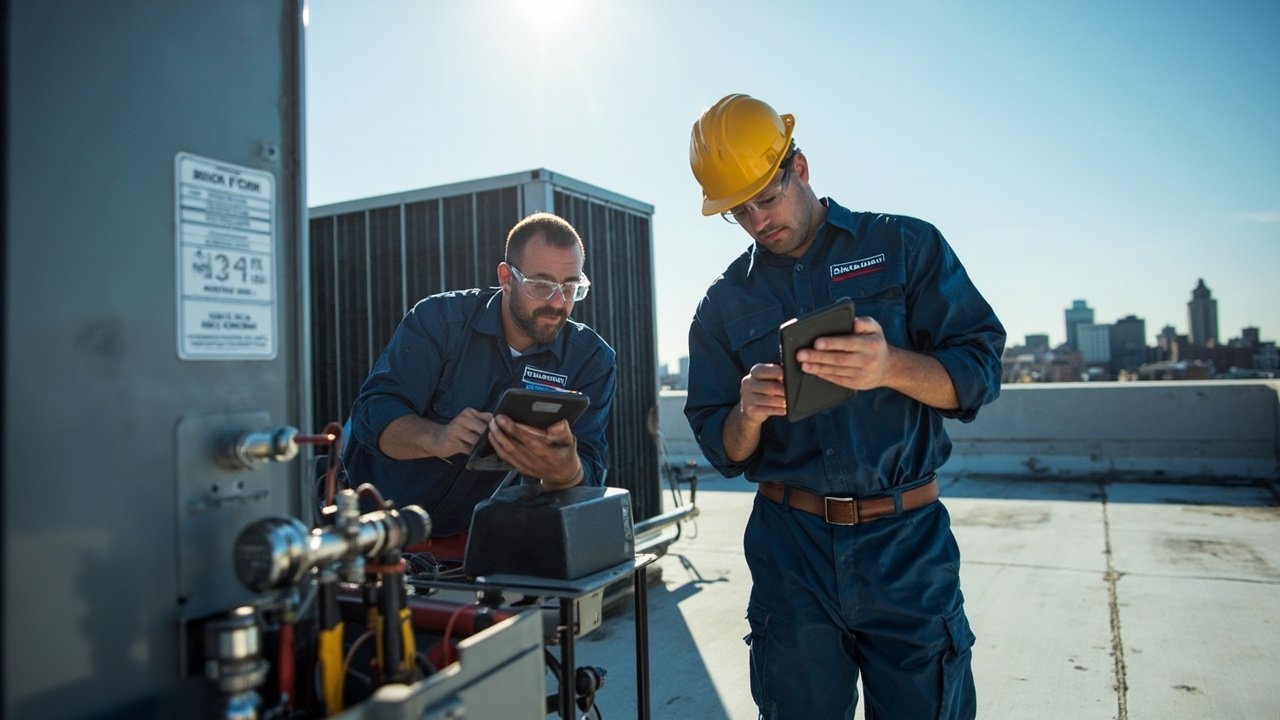
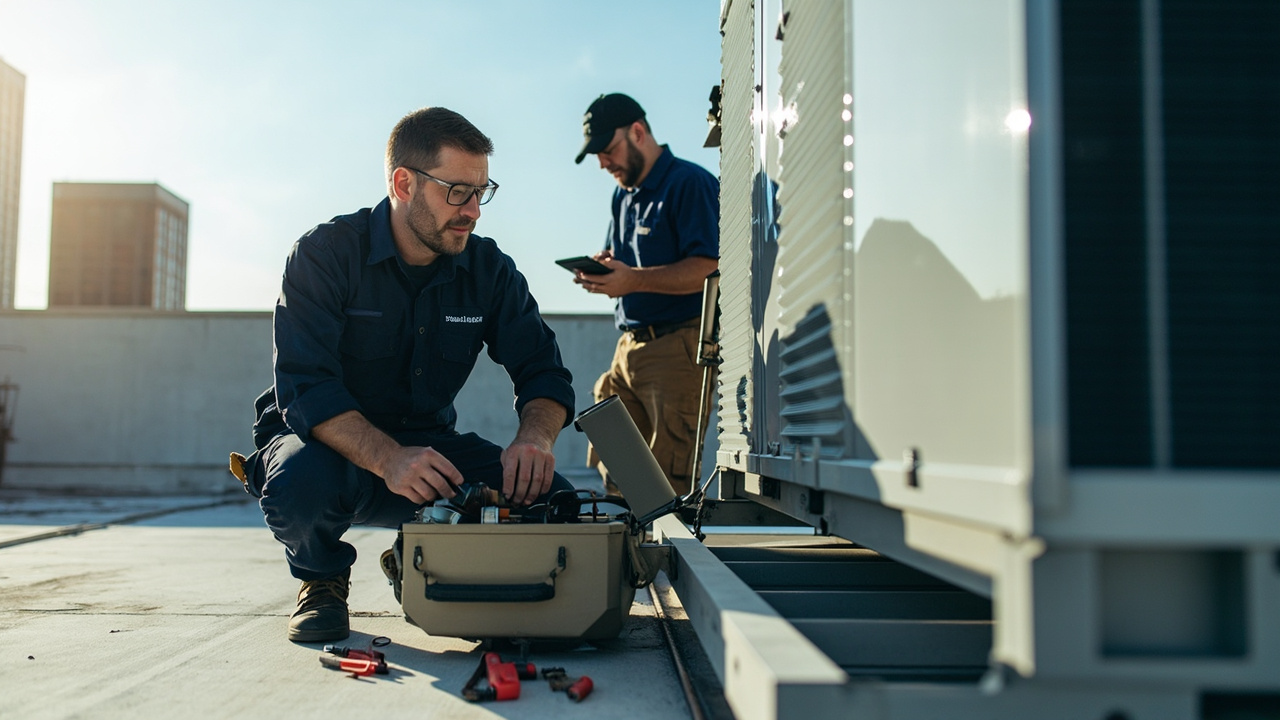
Columbus sits in ASHRAE climate zone 3A, which means mixed-humid conditions with hot summers and moderate winters. Commercial buildings must handle cooling loads that peak in July and August when outdoor temperatures reach the mid-90s with high relative humidity. Dehumidification becomes as important as sensible cooling because high indoor humidity affects occupant comfort and can damage inventory or equipment. Older commercial structures built before modern energy codes often lack adequate insulation and have single-pane windows, which increases HVAC load. Industrial facilities near the river corridors face additional humidity infiltration. Commercial HVAC companies in Columbus must design systems that provide sufficient latent cooling capacity, not just sensible cooling, and account for the building envelope limitations common in the existing commercial building stock.
Columbus mechanical contractors operate under city codes that reference the International Mechanical Code with local amendments. Permit requirements, inspection protocols, and contractor licensing standards are enforced by the City of Columbus Building Inspections Division. Commercial projects require licensed contractors, stamped engineering drawings for larger systems, and coordination with electrical and plumbing trades. Local commercial heating and cooling services maintain relationships with inspectors, understand submittal requirements, and schedule inspections to avoid project delays. Choosing local industrial HVAC contractors means working with professionals who navigate Columbus permitting processes daily and understand the expectations of local code officials. This local knowledge prevents compliance issues, reduces project risk, and ensures installations meet all regulatory requirements.