
Why Your New Build in Shawnee Hills Might Need a Humidifier Even If It Is Brand New
When you build a new home in Shawnee Hills you expect perfection. The drywall is fresh the hardwood floors gleam and the HVAC system is state-of-the-art. But here is the truth many new construction homeowners in Central Ohio learn the hard way: brand-new homes can still suffer from dangerously dry indoor air during winter months.
Central Ohio winters create a unique indoor air quality challenge. Outside air in January often holds less than 20 percent relative humidity. When that dry air enters your tightly sealed Shawnee Hills home and is heated by your furnace the indoor humidity can plummet to single digits. This is not just uncomfortable—it can damage your new investment. Improving the Air Quality in Your Older Clintonville Home.
Wood floors shrink crack and separate. Fresh drywall joints develop stress fractures. Static electricity becomes painful. And occupants often experience dry sinuses sore throats and increased susceptibility to colds and flu. The solution is not opening a window—it is adding controlled moisture through a whole-home humidifier integrated with your HVAC system. EPA Indoor Air Quality Basics.
How New Construction in Shawnee Hills Creates the Perfect Dry Air Storm
Modern building practices in Shawnee Hills actually worsen the problem. Today’s new homes are built to be energy-efficient which means they are sealed tighter than ever before. While this reduces energy bills it also traps dry winter air inside. Your high-efficiency furnace then heats that air without adding moisture creating an environment drier than the Sahara Desert.
Many Shawnee Hills builders install basic contractor-grade humidifiers as an afterthought. These units often lack the capacity to handle Central Ohio’s severe winter humidity drops. They may also be improperly sized for your home’s cubic footage or fail to integrate with modern variable-speed furnaces and heat pumps.
Water quality in Franklin County adds another layer of complexity. Hard water with high mineral content can clog humidifier pads within weeks reducing efficiency and requiring frequent maintenance. Without proper filtration these systems become expensive paperweights rather than effective humidity solutions.
Steam vs. Bypass vs. Fan-Powered: Choosing the Right Humidifier for Your Shawnee Hills Home
Not all humidifiers are created equal especially for new construction in Central Ohio. Understanding the differences helps you make the right choice for your home’s specific needs. Why Your Westerville AC Needs a Tune Up Before the Humidity Hits.
Steam humidifiers generate their own moisture using electricity. They produce 10 to 20 gallons of humidity per day regardless of your furnace operation. This makes them ideal for Shawnee Hills homes with high ceilings or open floor plans where humidity distribution is challenging. They work with any furnace type including high-efficiency models and heat pumps. Where to Find 24 Hour Emergency HVAC Help Anywhere in Columbus.
Bypass humidifiers use your furnace’s heat to evaporate water from a pad. They are more energy-efficient but only operate when your furnace runs. For Shawnee Hills’ climate where temperatures fluctuate wildly this can mean inconsistent humidity levels. They work best in smaller homes under 2500 square feet with traditional gas furnaces.
Fan-powered units sit between steam and bypass models. They have their own fan to push moisture into your ductwork even when the furnace is off. This provides more consistent humidity than bypass units but uses less electricity than steam models. They are excellent for Shawnee Hills homes with variable-speed furnaces that run at low speeds for extended periods.
The choice depends on your home’s size HVAC equipment and specific humidity challenges. A professional assessment considering your Shawnee Hills home’s cubic footage and local water quality is essential.
Protecting Your New Construction Investment: The Real Cost of Skipping Humidification
Many new homeowners in Shawnee Hills view humidifiers as optional upgrades. This is a costly misconception. The damage from low humidity can appear within the first winter and often requires expensive repairs.
Hardwood flooring is particularly vulnerable. When humidity drops below 30 percent wood loses moisture and contracts. In new homes this creates visible gaps between floorboards that can expand to quarter-inch widths. Some Shawnee Hills homeowners have discovered their beautiful new oak floors separating so severely that entire sections needed replacement.
Fresh drywall and paint also suffer. As framing lumber dries it shrinks creating stress on drywall joints. This manifests as hairline cracks that spider across ceilings and along wall corners. While minor cracking is normal excessive low humidity accelerates this process dramatically.
Beyond structural damage low humidity affects occupant health. The mucus membranes in your nose and throat require moisture to function properly. When humidity drops below 35 percent these membranes dry out reducing their ability to trap viruses and bacteria. Studies show flu virus survival rates increase significantly in dry conditions.
Static electricity provides a daily reminder of the problem. Walking across carpet and touching a light switch becomes a painful experience. Electronics are also at risk with static discharges potentially damaging sensitive components in your new smart home system. Upgrading to a Smart Thermostat in Grandview Heights to Lower Your Electric Bill.
The Smart Integration Advantage: Humidifiers and Modern HVAC Systems
Today’s new construction homes in Shawnee Hills often feature advanced HVAC systems with communicating thermostats and zoning capabilities. Your humidifier should integrate seamlessly with these technologies rather than operating as a standalone device.. Read more about What Columbus Home Buyers Should Look for During an HVAC Inspection.
Modern steam humidifiers include outdoor temperature sensors that automatically adjust output based on conditions. When it is ten degrees outside they produce more moisture than when it is thirty degrees. This prevents over-humidification that can cause window condensation and potential moisture damage.
Integration with smart thermostats allows humidity control through the same interface you use for temperature. You can monitor indoor humidity levels receive maintenance alerts and adjust settings remotely. Some systems even learn your preferences and automatically optimize for comfort and efficiency.
For homes with heat pumps the integration becomes more complex. Heat pumps operate differently than traditional furnaces often running longer at lower temperatures. Your humidifier must be sized to handle these extended run times and maintain consistent humidity levels throughout the heating season.
Proper integration also means your humidifier works with your home’s air purification system. Some advanced setups combine humidification with UV light treatment or HEPA filtration creating a comprehensive indoor air quality solution.
Installation Timing: Why Rough-In Phase Matters for New Construction
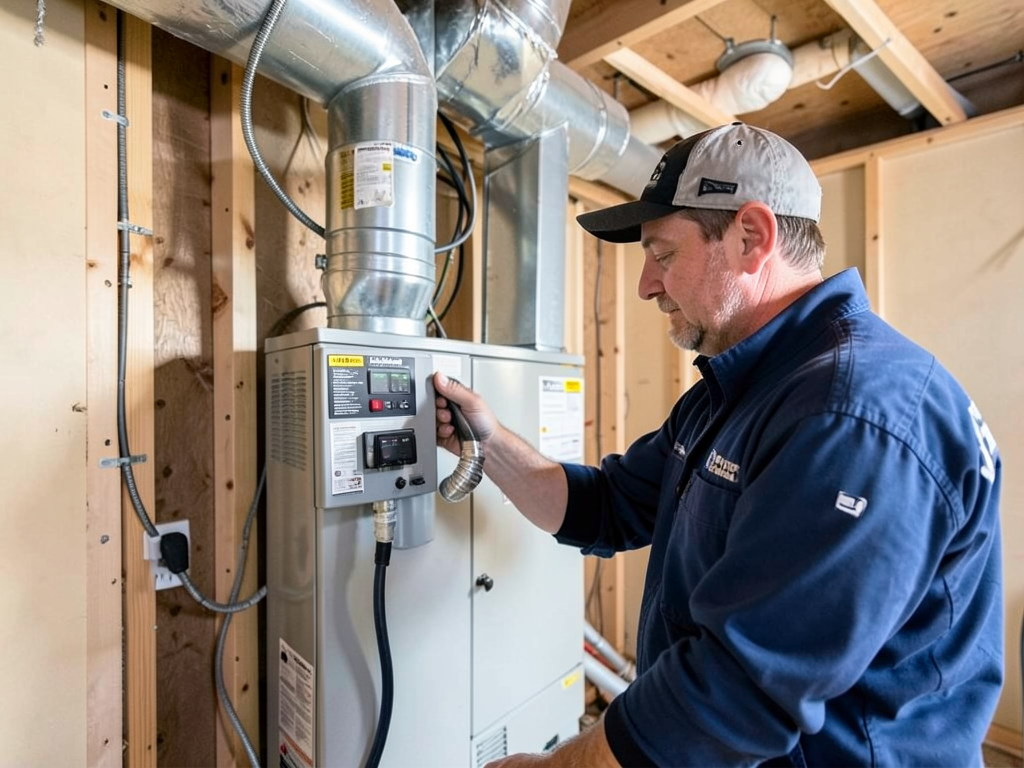
The best time to install a whole-home humidifier is during the HVAC rough-in phase before drywall goes up. This timing offers several critical advantages for Shawnee Hills new construction.
First the ductwork is fully accessible. Installing a bypass humidifier requires cutting into the supply plenum—much easier when the plenum is exposed rather than hidden behind drywall. Steam humidifiers need dedicated electrical circuits and water lines that are simpler to run during initial construction.
Second builder coordination ensures proper sizing. During rough-in your HVAC contractor can assess your home’s specific needs based on square footage ceiling height and local climate data. This prevents the common mistake of installing undersized units that cannot handle Central Ohio winters.
Third warranty protection is maximized. When your humidifier is installed by certified professionals during construction it becomes part of your HVAC system’s warranty coverage. This protects your investment and ensures proper documentation for any future service needs.
Finally early installation allows for proper testing and commissioning. Your humidifier can be calibrated tested and adjusted before you move in ensuring optimal performance from day one. This prevents the frustration of discovering humidity problems after furniture and finishes are in place.
Waiting until after construction to add humidification often means higher costs more invasive installation and potential compatibility issues with your existing HVAC setup. Troubleshooting AC Issues.
Maintenance Requirements: Keeping Your Humidifier Running at Peak Performance
A humidifier is only effective if it is properly maintained. Central Ohio’s water quality and Shawnee Hills’ specific climate create maintenance needs that differ from other regions.
Hard water is the primary enemy of humidifier efficiency. Minerals in Franklin County water supply accumulate on humidifier pads and heating elements reducing output by up to 50 percent within a single heating season. Annual or semi-annual pad replacement is essential for steam and fan-powered units.
Water panels in bypass humidifiers should be inspected monthly during peak usage and replaced annually. Scale buildup appears as white crusty deposits that restrict water flow and reduce evaporation efficiency. Some Shawnee Hills homeowners install whole-house water softeners specifically to extend humidifier pad life.
Steam humidifiers require more intensive maintenance. The heating canister accumulates mineral deposits that must be cleaned or replaced periodically. Most manufacturers recommend professional cleaning every two years to maintain efficiency and prevent premature failure.
Drain lines require attention to prevent algae growth and clogs. During shoulder seasons when humidity needs fluctuate drain lines can develop standing water that breeds bacteria. Regular flushing with a vinegar solution prevents these issues.
Control systems need periodic calibration. Humidity sensors can drift over time providing inaccurate readings. Professional testing with calibrated instruments ensures your system maintains the optimal 35 to 45 percent relative humidity range.
Local Building Codes and Permit Requirements in Franklin County
Installing a whole-home humidifier in Shawnee Hills requires compliance with Franklin County building codes and Ohio Mechanical Code requirements. Understanding these regulations prevents costly mistakes and ensures your installation passes inspection.
The Ohio Mechanical Code Section 1301.3.1 requires proper condensate drainage for all humidifiers. This means installing a dedicated drain line with an air gap to prevent backflow contamination. The drain must terminate at an approved location such as a floor drain or exterior outlet.
Electrical connections must comply with National Electrical Code Article 422.31 for fixed appliances. This typically requires a dedicated 120-volt circuit with proper grounding. For steam humidifiers the circuit must handle the higher amperage draw during operation.
Water supply connections require a shut-off valve and backflow prevention device per Ohio plumbing code. This prevents contaminated water from entering your home’s potable water supply. The device must be tested annually by certified professionals.
Permits are required for all new humidifier installations in Franklin County. The HVAC contractor must pull a mechanical permit through the Franklin County Building Department. This ensures the installation meets all safety and efficiency standards.
Some Shawnee Hills homeowners associations have additional requirements for exterior components like steam humidifier vents. Always check with your HOA before installation to avoid compliance issues.
Cost Factors: What to Expect for Humidifier Installation in Shawnee Hills
Humidifier costs vary significantly based on type home size and installation complexity. Understanding these factors helps you budget appropriately for your new construction project.
Basic bypass humidifiers start around $450 for the unit plus $300 to $500 for professional installation. These work well for smaller Shawnee Hills homes under 2500 square feet with traditional furnaces. However they may struggle during severe cold snaps when humidity demand peaks.
Fan-powered units range from $600 to $800 for the equipment with installation costs of $400 to $600. They offer better performance than bypass units and work well with modern variable-speed furnaces common in new construction.
Steam humidifiers represent the premium option at $1200 to $1800 for the unit plus $600 to $1000 for installation. They provide the most consistent humidity regardless of outdoor temperature or furnace operation. For larger Shawnee Hills homes or those with heat pumps steam units often prove most cost-effective long-term.
Additional costs include water treatment systems $300 to $600 if hard water is an issue. Smart thermostat integration adds $200 to $400 if not already included. Annual maintenance contracts typically cost $150 to $250 per year.
Energy costs vary by type. Bypass units use minimal electricity but depend on furnace operation. Fan-powered units add about $30 to $50 annually to your electric bill. Steam units can add $100 to $200 per year but provide superior performance.
Frequently Asked Questions
How do I know if my new home needs a humidifier?
If you experience static shocks dry skin or notice hardwood floor gaps during winter your home likely needs humidification. Indoor humidity below 30 percent indicates a problem. Professional testing can confirm your specific needs.
Can I install a humidifier myself to save money?
DIY installation is not recommended for whole-home humidifiers. Proper sizing electrical connections and code compliance require professional expertise. Incorrect installation can damage your HVAC system void warranties and create safety hazards.
How long does humidifier installation take?
Most installations require 2 to 4 hours for bypass or fan-powered units. Steam humidifiers may need 6 to 8 hours due to electrical and water line requirements. Installation during rough-in is faster than retrofitting into finished homes.
What humidity level should I maintain?
Optimal indoor humidity ranges from 35 to 45 percent. Below 30 percent causes problems. Above 50 percent risks condensation and mold growth. Your humidifier should automatically maintain this range based on outdoor temperature.
Will a humidifier increase my energy bills?
Properly sized humidifiers have minimal impact on energy costs. Bypass units use almost no electricity. Fan-powered units add $2 to $4 monthly. Steam units add $8 to $15 monthly but provide superior comfort that may allow lower thermostat settings.
How often should humidifier pads be replaced?
Most pads need replacement annually but hard water may require semi-annual replacement. Steam humidifier canisters need cleaning every two years. Professional maintenance ensures optimal performance and longevity.
Ready to Protect Your Shawnee Hills Home Investment?
Your new construction home in Shawnee Hills represents a significant investment. Don’t let dry winter air damage your beautiful finishes or compromise your family’s comfort. A properly sized and installed whole-home humidifier provides year-round protection for your home and health.
Professional assessment is the first step. We evaluate your home’s specific needs considering square footage ceiling height HVAC equipment and local climate conditions. This ensures you get the right solution rather than a one-size-fits-all approach.
Call (380) 253-3188 today to schedule your new construction humidifier consultation. Our NATE-certified technicians understand the unique challenges of Central Ohio winters and can recommend the perfect solution for your Shawnee Hills home.
Don’t wait until you notice problems. Protect your investment now and enjoy comfortable healthy indoor air all winter long. Your new home deserves the best protection available. For more information, visit ASHRAE Humidity Control Standards.
{
“@context”: “https://schema.org”,
“@type”: “BlogPosting”,
“headline”: “Why Your New Build in Shawnee Hills Might Need a Humidifier Even If It Is Brand New”,
“description”: “Learn why new construction in Shawnee Hills needs humidification to protect hardwood floors, drywall, and health. Local HVAC expert explains Central Ohio winter humidity drops.”,
“wordCount”: 2363,
“datePublished”: “2026-04-03T13:42:00.000Z”,
“dateModified”: “2026-04-03T13:42:00.000Z”,
“inLanguage”: “en-US”,
“mainEntityOfPage”: {
“@type”: “WebPage”,
“@id”: “https://grandhvaccolumbus.com”
},
“publisher”: {
“@type”: “LocalBusiness”,
“name”: “Grand HVAC Columbus”,
“url”: “https://grandhvaccolumbus.com”
},
“author”: {
“@type”: “Organization”,
“name”: “Grand HVAC Columbus”,
“url”: “https://grandhvaccolumbus.com”
},
“image”: {
“@type”: “ImageObject”,
“url”: “https://grandhvaccolumbus.com/wp-content/uploads/2026/03/why-your-new-build-in-shawnee-hills-might-need-a-h-1.png”
}
}
{
“@context”: “https://schema.org”,
“@type”: “HVACBusiness”,
“name”: “Grand HVAC Columbus”,
“url”: “https://grandhvaccolumbus.com”,
“address”: {
“@type”: “PostalAddress”,
“addressLocality”: “Columbus”
},
“areaServed”: {
“@type”: “City”,
“name”: “Columbus”
}
}
{
“@context”: “https://schema.org”,
“@type”: “FAQPage”,
“mainEntity”: [
{
“@type”: “Question”,
“name”: “How do I know if my new home needs a humidifier?”,
“acceptedAnswer”: {
“@type”: “Answer”,
“text”: “If you experience static shocks dry skin or notice hardwood floor gaps during winter your home likely needs humidification. Indoor humidity below 30 percent indicates a problem. Professional testing can confirm your specific needs.”
}
},
{
“@type”: “Question”,
“name”: “Can I install a humidifier myself to save money?”,
“acceptedAnswer”: {
“@type”: “Answer”,
“text”: “DIY installation is not recommended for whole-home humidifiers. Proper sizing electrical connections and code compliance require professional expertise. Incorrect installation can damage your HVAC system void warranties and create safety hazards.”
}
},
{
“@type”: “Question”,
“name”: “How long does humidifier installation take?”,
“acceptedAnswer”: {
“@type”: “Answer”,
“text”: “Most installations require 2 to 4 hours for bypass or fan-powered units. Steam humidifiers may need 6 to 8 hours due to electrical and water line requirements. Installation during rough-in is faster than retrofitting into finished homes.”
}
},
{
“@type”: “Question”,
“name”: “What humidity level should I maintain?”,
“acceptedAnswer”: {
“@type”: “Answer”,
“text”: “Optimal indoor humidity ranges from 35 to 45 percent. Below 30 percent causes problems. Above 50 percent risks condensation and mold growth. Your humidifier should automatically maintain this range based on outdoor temperature.”
}
},
{
“@type”: “Question”,
“name”: “Will a humidifier increase my energy bills?”,
“acceptedAnswer”: {
“@type”: “Answer”,
“text”: “Properly sized humidifiers have minimal impact on energy costs. Bypass units use almost no electricity. Fan-powered units add $2 to $4 monthly. Steam units add $8 to $15 monthly but provide superior comfort that may allow lower thermostat settings.”
}
},
{
“@type”: “Question”,
“name”: “How often should humidifier pads be replaced?”,
“acceptedAnswer”: {
“@type”: “Answer”,
“text”: “Most pads need replacement annually but hard water may require semi-annual replacement. Steam humidifier canisters need cleaning every two years. Professional maintenance ensures optimal performance and longevity.”
}
},
{
“@type”: “Question”,
“name”: “Ready to Protect Your Shawnee Hills Home Investment?”,
“acceptedAnswer”: {
“@type”: “Answer”,
“text”: “Your new construction home in Shawnee Hills represents a significant investment. Don’t let dry winter air damage your beautiful finishes or compromise your family’s comfort. A properly sized and installed whole-home humidifier provides year-round protection for your home and health.”
}
}
]
}
{
“@context”: “https://schema.org”,
“@type”: “BreadcrumbList”,
“itemListElement”: [
{
“@type”: “ListItem”,
“position”: 1,
“name”: “Home”,
“item”: “https://grandhvaccolumbus.com”
},
{
“@type”: “ListItem”,
“position”: 2,
“name”: “Blog”,
“item”: “https://grandhvaccolumbus.com/blog”
},
{
“@type”: “ListItem”,
“position”: 3,
“name”: “Why Your New Build in Shawnee Hills Might Need a Humidifier Even If It Is Brand New”
}
]
}
{
“@context”: “https://schema.org”,
“@type”: “Service”,
“serviceType”: “HVAC”,
“provider”: {
“@type”: “LocalBusiness”,
“name”: “Grand HVAC Columbus”,
“url”: “https://grandhvaccolumbus.com”
},
“areaServed”: {
“@type”: “City”,
“name”: “Columbus”
},
“description”: “Learn why new construction in Shawnee Hills needs humidification to protect hardwood floors, drywall, and health. Local HVAC expert explains Central Ohio winter humidity drops.”
}