
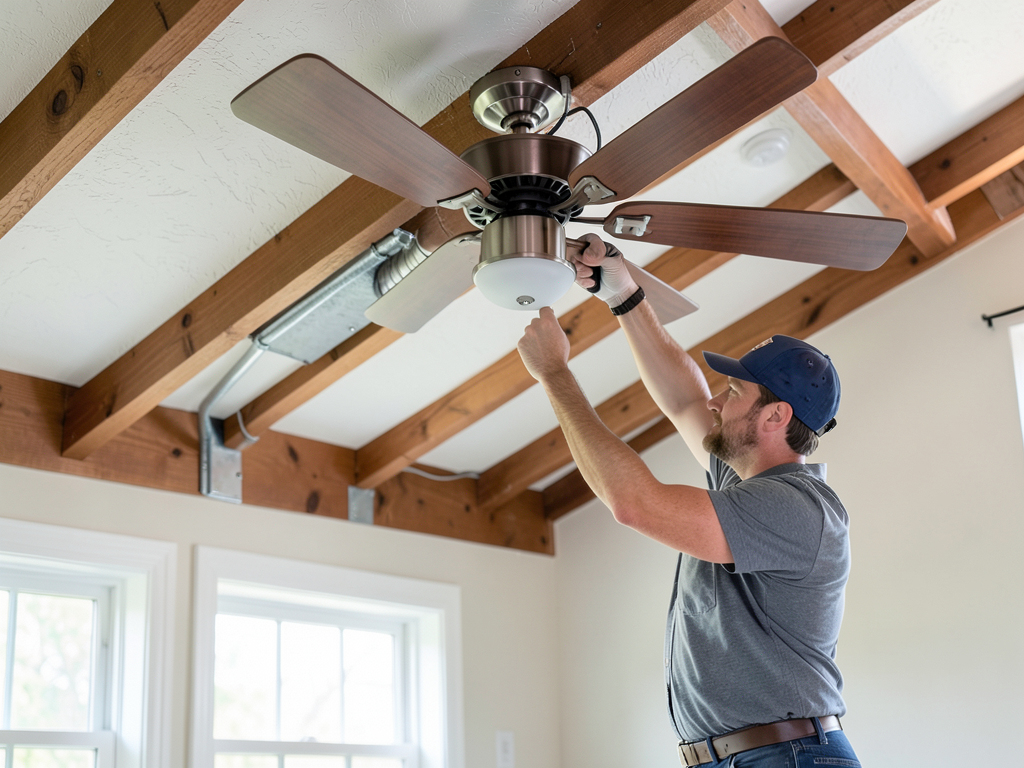
Why You Should Consider a Whole House Fan for Those Cool Fall Nights in Kilbourne
When fall arrives in Kilbourne the crisp evening air creates a perfect opportunity to cool your home naturally. Instead of running your air conditioner on those cool nights you could be drawing in fresh outdoor air through a whole house fan. These systems can reduce your cooling costs by 50-90% while improving indoor air quality and creating a more comfortable living environment. Improving the Air Quality in Your Older Clintonville Home.
Kilbourne residents experience significant temperature swings between day and night especially during fall months. A whole house fan takes advantage of these cool evening temperatures by pulling fresh air through your home and exhausting hot air through your attic. This natural cooling process works best when outdoor temperatures drop below indoor temperatures typically between 7 PM and 7 AM.
The Franklin County climate with its humid summers and cold winters makes whole house fans an excellent transitional cooling solution. Unlike traditional air conditioning which recirculates the same air these systems continuously bring in fresh outdoor air reducing indoor pollutants and creating a healthier home environment.
How Whole House Fans Work in Ohio’s Climate
Whole house fans operate by creating negative pressure that draws cool outdoor air through open windows while pushing hot indoor air through attic vents. The system requires proper attic ventilation with a ratio of one square foot of net free vent area for every 750 CFM of fan capacity. For a typical Kilbourne home with 2000 square feet of living space you would need a fan rated between 2000-3000 CFM.
The key to effective operation is timing. You want to run the fan when outdoor temperatures are cooler than indoor temperatures. In Kilbourne this typically means running the system during evening hours when temperatures drop into the 50s and 60s. The fan can cool your home’s thermal mass including walls floors and furniture which helps maintain cooler temperatures the following day.
Modern whole house fans like the QuietCool Pro Series include insulated dampers that seal the unit during winter months preventing heat loss. This feature is crucial for Ohio homes where winter heating efficiency directly impacts energy bills. The insulated damper also prevents dust and pests from entering through the fan during off seasons. QuietCool whole house fan manufacturer.
Installation Process for Kilbourne Homes
Installing a whole house fan requires careful planning to ensure optimal performance. The first step involves calculating the correct fan size based on your home’s square footage and ceiling height. For a standard 8-foot ceiling you need approximately 3-4 CFM per square foot of living space. A 2000 square foot home would require a 6000-8000 CFM fan.
Attic ventilation assessment comes next. Many Kilbourne homes built before 2000 have inadequate attic ventilation which must be upgraded before installation. This typically involves adding soffit vents or improving existing gable vents to achieve the required 1:750 ventilation ratio. Without proper ventilation the fan cannot effectively exhaust hot air creating back pressure that reduces efficiency.. Read more about How to Properly Vent a Gas Range Without Ruining the Air Pressure in Your Dennison Place Home.
The installation location matters significantly. The fan should be mounted in the ceiling of the highest occupied floor typically a hallway or open area that allows air to flow freely throughout the home. For multi-story homes in neighborhoods like Westerville or Dublin the fan placement becomes even more critical to ensure proper air circulation to all levels. Why Your Westerville AC Needs a Tune Up Before the Humidity Hits.
Professional installation typically takes 4-6 hours for a standard home. The process includes cutting an opening in the ceiling mounting the fan unit installing the insulated damper and connecting the electrical system. Most installations require a dedicated 120-volt circuit and may need a new electrical line run from your main panel.
Cost Comparison: Whole House Fan vs. Central AC
The initial investment for a whole house fan system ranges from $1200-2500 including installation. This compares favorably to central air conditioning systems which can cost $3000-7000 or more. The operating costs tell an even more compelling story. A typical whole house fan uses 200-700 watts while a central AC unit uses 3000-5000 watts.
Based on current AEP Ohio electricity rates a whole house fan costs approximately $0.02-0.05 per hour to operate compared to $0.30-0.50 per hour for central air conditioning. Over a cooling season this difference can save Kilbourne homeowners $200-400 or more depending on usage patterns.
Maintenance costs also favor whole house fans. These systems have fewer moving parts than air conditioners and typically require only annual cleaning and inspection. The bearings may need lubrication every 3-5 years and the belt should be checked annually. Compare this to central AC which requires professional maintenance twice yearly at $100-200 per visit.
Energy efficiency ratings further demonstrate the advantage. Whole house fans achieve 10-15 air changes per hour while central AC systems typically provide 2-4 air changes per hour. This higher air exchange rate means better indoor air quality and more effective cooling for Kilbourne’s humid climate.
Benefits Beyond Energy Savings
Whole house fans provide benefits that extend beyond simple energy savings. The continuous air exchange removes indoor pollutants including volatile organic compounds dust and allergens. For Kilbourne residents dealing with seasonal allergies this constant fresh air flow can significantly improve indoor air quality.. Read more about Dealing with a Neighbor’s Noisy AC Unit in the Compact Lots of Italian Village.
The cooling effect on your home’s structure is another overlooked benefit. By cooling walls floors and ceilings during evening hours your home absorbs less heat the following day. This thermal mass cooling effect can reduce daytime temperatures by 3-5 degrees even without running the fan creating a compounding energy savings effect.
Noise levels have improved dramatically with modern fan designs. Older belt-driven fans could be quite loud but current models like the QuietCool Stealth Pro operate at 50-60 decibels about the same as a normal conversation. This makes them suitable for nighttime use when cooling is most needed.
The system also provides excellent backup cooling during power outages when paired with a small generator. While a central AC unit requires 3000-5000 watts to start a whole house fan needs only 200-700 watts making it compatible with portable generators during summer storms.
Climate Considerations for Central Ohio
Ohio’s climate presents unique challenges for cooling systems. The high humidity during summer months means whole house fans work best as a supplement to rather than replacement for air conditioning. During periods of extreme heat or high humidity you should continue using your AC system while using the whole house fan during cooler evening hours.
The freeze-thaw cycles common in Central Ohio require specific design features. Modern whole house fans include freeze-protected motors and sealed bearings that prevent damage from condensation. The insulated dampers prevent warm air from escaping through the fan during winter creating an energy barrier similar to attic insulation.
Pollen counts in Franklin County peak during spring and fall which affects fan operation. Most modern systems include removable filters that can be cleaned or replaced seasonally. This filtration helps maintain indoor air quality while still allowing the cooling benefits of fresh air exchange.
The clay soil common in Central Ohio can affect home settling which may impact fan installation. Professional installers check for structural issues and may recommend additional support for the fan mounting frame especially in older homes common in historic Columbus neighborhoods.
Frequently Asked Questions
How much attic ventilation do I need for a whole house fan?
You need one square foot of net free vent area for every 750 CFM of fan capacity. For a 3000 CFM fan you need 4 square feet of attic ventilation. This typically means adding soffit vents or improving existing gable vents.
Can I install a whole house fan myself?
While DIY installation is possible it requires electrical knowledge attic ventilation assessment and proper structural support. Professional installation ensures correct sizing proper ventilation and warranty protection. Most manufacturers require professional installation for warranty coverage.
Will a whole house fan work with my existing AC system?
Yes whole house fans complement rather than replace air conditioning. Use the fan during cool evenings and mornings while running your AC during hot humid periods. This combination provides optimal comfort and energy savings throughout the cooling season.
How long do whole house fans last?
With proper maintenance whole house fans typically last 15-20 years. The motors often last longer with some units operating for 25+ years. Regular cleaning and annual inspections help maximize system lifespan.
Are whole house fans noisy?
Modern whole house fans operate at 50-60 decibels about the volume of a normal conversation. Older belt-driven models were much louder but current direct-drive designs are significantly quieter making them suitable for nighttime use.
Service Areas in Central Ohio
Grand HVAC provides whole house fan installation throughout Central Ohio including Gahanna where clay soil conditions require special mounting considerations and Canal Winchester where historic home retrofits present unique challenges. Our service area extends to New Albany Westerville and Reynoldsburg covering the entire Franklin County region. Where to Find 24 Hour Emergency HVAC Help Anywhere in Columbus.
We understand the specific building codes and permit requirements for each municipality. Franklin County residential building permits are required for whole house fan installation and our team handles all permitting requirements ensuring compliance with local regulations.
Our technicians are familiar with the architectural differences between neighborhoods from the mid-century split-levels in Gahanna to the modern open-concept homes in New Albany. This local knowledge ensures optimal fan placement and sizing for your specific home design. HVAC Gahanna.
Ready to Start Saving?
Whole house fans represent a smart investment for Kilbourne homeowners looking to reduce energy costs while improving indoor air quality. With proper installation these systems can cut your cooling costs by 50-90% while providing fresher air and better temperature control. Upgrading to a Smart Thermostat in Grandview Heights to Lower Your Electric Bill.
The initial investment pays for itself through energy savings within 2-3 years while providing 15-20 years of reliable operation. Combined with available AEP Ohio energy efficiency rebates the financial case becomes even stronger.
Don’t wait until next summer to start saving. Fall is the perfect time to install a whole house fan when cooling needs are moderate and installation schedules are more flexible. Call (380) 253-3188 today to schedule your free consultation and learn how much you could save on your cooling costs.
Our team will assess your home’s specific needs calculate the optimal fan size and provide a detailed installation plan. We handle everything from permit acquisition to final testing ensuring your system operates at peak efficiency from day one.
Pick up the phone and call (380) 253-3188 before the next heat wave hits. Your wallet and your indoor air quality will thank you. For more information, visit Energy.gov whole house fan guide.
{
“@context”: “https://schema.org”,
“@type”: “BlogPosting”,
“headline”: “Why You Should Consider a Whole House Fan for Those Cool Fall Nights in Kilbourne”,
“description”: “Learn how whole house fans can cut your cooling costs by 50-90% in Kilbourne this fall. Expert installation by Grand HVAC serving Central Ohio.”,
“wordCount”: 1789,
“datePublished”: “2026-05-03T13:52:00.000Z”,
“dateModified”: “2026-05-03T13:52:00.000Z”,
“inLanguage”: “en-US”,
“mainEntityOfPage”: {
“@type”: “WebPage”,
“@id”: “https://grandhvaccolumbus.com”
},
“publisher”: {
“@type”: “LocalBusiness”,
“name”: “Grand HVAC Columbus”,
“url”: “https://grandhvaccolumbus.com”
},
“author”: {
“@type”: “Organization”,
“name”: “Grand HVAC Columbus”,
“url”: “https://grandhvaccolumbus.com”
},
“image”: {
“@type”: “ImageObject”,
“url”: “https://grandhvaccolumbus.com/wp-content/uploads/2026/03/why-you-should-consider-a-whole-house-fan-for-thos-1.png”
}
}
{
“@context”: “https://schema.org”,
“@type”: “HVACBusiness”,
“name”: “Grand HVAC Columbus”,
“url”: “https://grandhvaccolumbus.com”,
“address”: {
“@type”: “PostalAddress”,
“addressLocality”: “Columbus”
},
“areaServed”: {
“@type”: “City”,
“name”: “Columbus”
}
}
{
“@context”: “https://schema.org”,
“@type”: “FAQPage”,
“mainEntity”: [
{
“@type”: “Question”,
“name”: “How much attic ventilation do I need for a whole house fan?”,
“acceptedAnswer”: {
“@type”: “Answer”,
“text”: “You need one square foot of net free vent area for every 750 CFM of fan capacity. For a 3000 CFM fan you need 4 square feet of attic ventilation. This typically means adding soffit vents or improving existing gable vents.”
}
},
{
“@type”: “Question”,
“name”: “Can I install a whole house fan myself?”,
“acceptedAnswer”: {
“@type”: “Answer”,
“text”: “While DIY installation is possible it requires electrical knowledge attic ventilation assessment and proper structural support. Professional installation ensures correct sizing proper ventilation and warranty protection. Most manufacturers require professional installation for warranty coverage.”
}
},
{
“@type”: “Question”,
“name”: “Will a whole house fan work with my existing AC system?”,
“acceptedAnswer”: {
“@type”: “Answer”,
“text”: “Yes whole house fans complement rather than replace air conditioning. Use the fan during cool evenings and mornings while running your AC during hot humid periods. This combination provides optimal comfort and energy savings throughout the cooling season.”
}
},
{
“@type”: “Question”,
“name”: “How long do whole house fans last?”,
“acceptedAnswer”: {
“@type”: “Answer”,
“text”: “With proper maintenance whole house fans typically last 15-20 years. The motors often last longer with some units operating for 25+ years. Regular cleaning and annual inspections help maximize system lifespan.”
}
},
{
“@type”: “Question”,
“name”: “Are whole house fans noisy?”,
“acceptedAnswer”: {
“@type”: “Answer”,
“text”: “Modern whole house fans operate at 50-60 decibels about the volume of a normal conversation. Older belt-driven models were much louder but current direct-drive designs are significantly quieter making them suitable for nighttime use.”
}
},
{
“@type”: “Question”,
“name”: “Ready to Start Saving?”,
“acceptedAnswer”: {
“@type”: “Answer”,
“text”: “Whole house fans represent a smart investment for Kilbourne homeowners looking to reduce energy costs while improving indoor air quality. With proper installation these systems can cut your cooling costs by 50-90% while providing fresher air and better temperature control. Upgrading to a Smart Thermostat in Grandview Heights to Lower Your Electric Bill.”
}
}
]
}
{
“@context”: “https://schema.org”,
“@type”: “BreadcrumbList”,
“itemListElement”: [
{
“@type”: “ListItem”,
“position”: 1,
“name”: “Home”,
“item”: “https://grandhvaccolumbus.com”
},
{
“@type”: “ListItem”,
“position”: 2,
“name”: “Blog”,
“item”: “https://grandhvaccolumbus.com/blog”
},
{
“@type”: “ListItem”,
“position”: 3,
“name”: “Why You Should Consider a Whole House Fan for Those Cool Fall Nights in Kilbourne”
}
]
}
{
“@context”: “https://schema.org”,
“@type”: “Service”,
“serviceType”: “HVAC”,
“provider”: {
“@type”: “LocalBusiness”,
“name”: “Grand HVAC Columbus”,
“url”: “https://grandhvaccolumbus.com”
},
“areaServed”: {
“@type”: “City”,
“name”: “Columbus”
},
“description”: “Learn how whole house fans can cut your cooling costs by 50-90% in Kilbourne this fall. Expert installation by Grand HVAC serving Central Ohio.”
}