
The Real Reason Your University District Rental is So Hard to Keep Cool in the Summer
If you own or manage a rental property in the University District, you already know the struggle. Every June, tenants start complaining about bedrooms that feel like saunas while the living room stays barely tolerable. The thermostat reads 72°F, but the second floor feels like 85°F. This isn’t a thermostat problem. It’s an engineering problem baked into the bones of these old Columbus homes.. Read more about Why Your Thermostat Location in Your Urbancrest Home Might be Costing You Money.
The University District sits in a unique climate zone where high humidity meets century-old construction methods. Most homes here were built before air conditioning existed, using balloon framing and lathe-and-plaster walls that trap heat like a thermos. Add in the fact that many are rental properties with absentee landlords who haven’t updated the HVAC system since the 1980s, and you have a perfect storm of discomfort every summer. Where to Find 24 Hour Emergency HVAC Help Anywhere in Columbus.
The real issue starts with the building envelope. These homes lack proper attic insulation, have single-pane windows, and often feature uninsulated ductwork running through unconditioned spaces. When outdoor temperatures hit 90°F with 70% humidity, which happens regularly in Columbus from June through September, the cooling load becomes nearly impossible for undersized or aging systems to handle.. Read more about Managing Humidity and Mold Risks for Buckeye Lake Vacation Rentals.
Let me show you what’s actually happening inside these walls and what you can do about it.
The Unique Cooling Challenges of University District Rentals
University District homes face cooling problems that newer suburbs simply don’t have. The architecture here tells the story. Most houses were built between 1900 and 1940, featuring balloon framing where wall studs run continuously from foundation to roof. This creates air channels that allow heat to rise and accumulate in upper floors.
Add Ohio’s climate to the equation. Columbus summers bring sustained humidity levels above 60%, often climbing to 80% during July and August. This moisture-laden air doesn’t just make you feel hot—it actually reduces the effectiveness of cooling systems by forcing them to remove both heat and humidity simultaneously. Ohio EPA Regulations.
Many University District rentals have original single-pane windows that leak air like a sieve. When the sun beats down on these old glass panes, they act like heat radiators, warming rooms even when the AC runs constantly. The combination of poor insulation, air leaks, and high humidity creates a cooling load that can be 30-40% higher than modern homes.
– Technical diagram showing heat flow through balloon-framed walls versus modern construction, highlighting air channels and thermal bridging points.
Why Your Current AC System Can’t Keep Up
Most University District rentals still have the original HVAC equipment or systems installed in the 1980s or 1990s. These units were sized for different conditions—lower insulation values, less severe summers, and tenants who didn’t expect bedroom temperatures to stay below 78°F.
Here’s what happens when you run an undersized system in a high-load environment. The compressor runs constantly but never reaches the thermostat setpoint. This creates several problems. First, the evaporator coil can freeze from continuous operation, reducing airflow and efficiency. Second, the system never gets a break, leading to premature compressor failure. Third, humidity levels stay high because the system doesn’t run long enough in dehumidification mode.
Many landlords don’t realize that modern AC systems have minimum runtime requirements to properly remove moisture from the air. If your system cycles on and off every few minutes, it’s actually making the problem worse by not running long enough to dehumidify.
Another common issue is ductwork problems. In these old homes, ducts often run through unconditioned attics or crawl spaces. When supply ducts leak, cooled air escapes before reaching bedrooms. When return ducts leak, hot attic air gets pulled into the system, forcing your AC to cool air that’s already 120°F.
Top 4 HVAC Solutions for University District Rentals
Solving the cooling problem requires matching the solution to your specific property constraints. Here are the four most effective approaches we’ve used in University District rentals, ranked by cost and effectiveness.
Ductless Mini-Split Systems
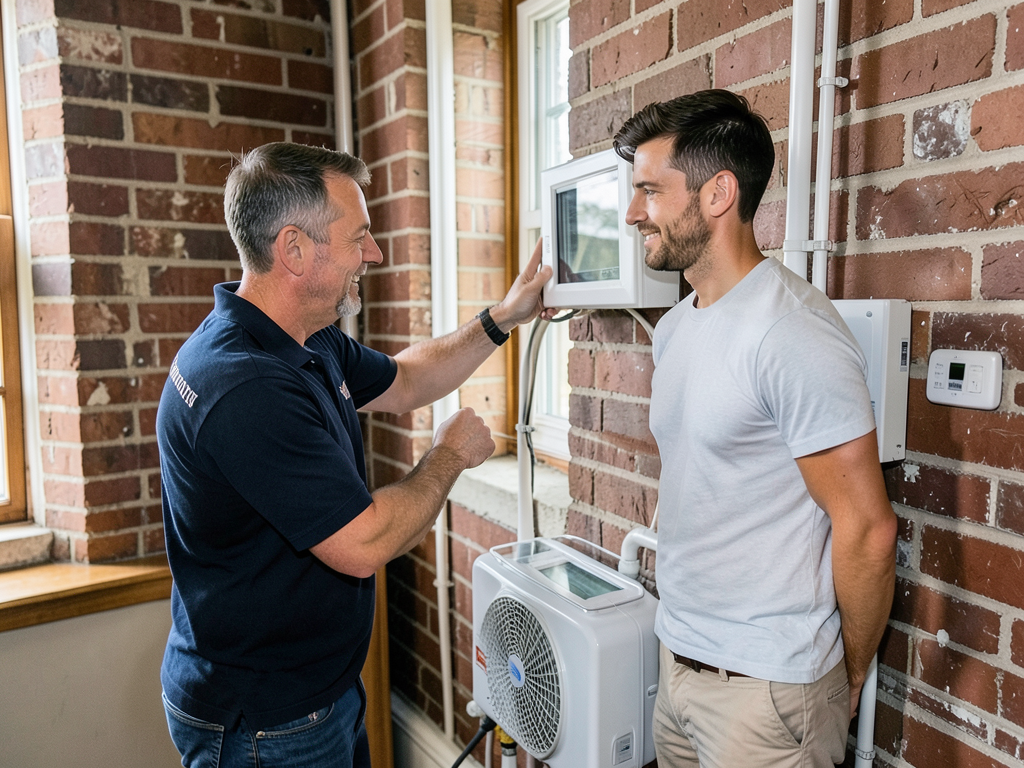
Mini-splits offer the best balance of efficiency and installation simplicity for older homes. These systems use small outdoor compressors connected to indoor wall-mounted units via refrigerant lines. No ductwork required. Ductless Mini-Split Systems.
The real advantage is zoning. You can cool only the rooms that need it, reducing overall energy consumption. A typical three-bedroom rental might need two indoor units—one for the main living area and one for the second floor bedrooms.
Installation is minimally invasive. We run refrigerant lines through existing wall cavities or along exterior walls with protective covers. Most installations complete in one day, and tenants can use the system immediately.
High-Velocity HVAC Systems
When you need whole-house cooling but can’t modify existing walls, high-velocity systems provide a solution. These use small, flexible ducts—about 2 inches in diameter—that snake through wall cavities, floor joists, or attic spaces.
The key advantage is the high air velocity. These systems deliver cooled air at 2,000 feet per minute, creating a mixing effect that eliminates hot spots. The small ducts can be routed through existing construction without major demolition.
High-velocity systems cost more upfront but provide better whole-house comfort than window units or portable ACs. They also integrate with existing heating systems if you want year-round climate control.
Modern Window and Portable Units (When They Make Sense)
Window units aren’t just for dorms anymore. Modern Energy Star-rated window ACs have improved dramatically in efficiency and noise reduction. For landlords on tight budgets, they can provide immediate relief while you plan for permanent solutions.
The key is selecting the right size. A 10,000 BTU unit cools about 450 square feet in Columbus conditions. But here’s the catch—Ohio’s high humidity means you often need the next size up to handle the latent load.
Portable units seem convenient but rarely provide adequate cooling for University District homes. Most have exhaust hoses that leak hot air back into the room, and their compressors aren’t powerful enough for the high cooling loads these old homes experience.
Heat Pump Technology for Year-Round Efficiency
Heat pumps have evolved significantly and now work effectively in Ohio’s climate. Modern cold-climate heat pumps maintain efficiency down to 0°F, making them viable alternatives to traditional AC systems.
The advantage for landlords is dual functionality. One system provides both heating and cooling, eliminating the need for separate furnaces and AC units. This reduces maintenance costs and improves tenant satisfaction with consistent indoor temperatures year-round. EPA Energy Saver Guide.
Heat pumps also qualify for federal tax credits under the Inflation Reduction Act, potentially offsetting 30% of installation costs for rental properties.
Navigating Columbus Building Codes and Historic District Rules
Before you install any cooling system in the University District, you need to understand local regulations. The City of Columbus requires permits for most HVAC installations, and historic districts have additional restrictions.
The University District overlaps with several historic areas where exterior modifications need approval from the Columbus Historic Resources Commission. This includes placement of outdoor condenser units, which can’t be visible from public streets in some neighborhoods.
According to the Ohio Mechanical Code, all new HVAC installations must meet current efficiency standards. This means your new system needs at least a 14 SEER2 rating, and many mini-split systems exceed 20 SEER2. Why Your Westerville AC Needs a Tune Up Before the Humidity Hits.
Electrical upgrades often accompany HVAC installations. Many University District homes have 60-amp electrical service that can’t support modern cooling systems. The National Electrical Code requires dedicated circuits for HVAC equipment, and many older homes need service upgrades to 100 or 200 amps.
Permitting typically takes 3-5 business days in Franklin County. The process includes plan review to ensure compliance with mechanical codes, energy efficiency standards, and historic preservation guidelines where applicable. The Honest Guide to Replacing Your Upper Arlington Furnace This Winter.
ROI for Landlords: Energy Efficiency and Tenant Retention
Investing in better cooling systems isn’t just about tenant comfort—it’s about protecting your investment. Properties with inadequate cooling typically see higher vacancy rates, especially during summer months when students search for housing.
Data from local property management companies shows that rentals with central air or high-efficiency cooling systems command 8-12% higher rents compared to similar properties without adequate cooling. In the University District, this translates to $100-200 more per month for a typical three-bedroom house.
Energy efficiency improvements also reduce operating costs. A modern 16 SEER2 system uses 30-40% less electricity than a 10 SEER system from the 1990s. For a typical rental where cooling accounts for 60% of summer electric bills, this can mean $50-75 monthly savings during peak season.
Tenant retention improves significantly with better climate control. Students and young professionals expect reliable cooling in 2026. Properties that struggle with temperature control during heat waves often face complaints, negative reviews, and early lease terminations.
Property values also increase with HVAC upgrades. Appraisers consider mechanical systems when valuing rental properties, and modern, efficient systems can add $5,000-10,000 to a home’s assessed value in the University District market.
Local Incentives and Rebates for Columbus Property Owners
Columbus area landlords can access several programs to offset HVAC upgrade costs. AEP Ohio offers rebates for high-efficiency cooling systems, with amounts varying based on SEER2 ratings and system type.
Current AEP Ohio rebates include $300-500 for central air conditioners meeting minimum efficiency standards, and up to $1,000 for systems exceeding 18 SEER2. Mini-split systems with inverter technology often qualify for the highest rebate tiers.
The federal government provides tax credits through the Inflation Reduction Act for rental property improvements. Qualifying high-efficiency HVAC systems installed in 2026 can receive a 30% tax credit on the equipment cost, up to $600 for AC systems and $2,000 for heat pumps.
Columbia Gas of Ohio offers rebates for customers who upgrade to high-efficiency heating and cooling systems. While primarily focused on natural gas equipment, they sometimes provide incentives for heat pump installations that reduce overall energy consumption.
Local utility companies also offer free energy audits for rental properties. These audits identify specific efficiency improvements and often include discounted installation services through approved contractors.
Making the Right Choice for Your Property
The best cooling solution depends on your specific property, budget, and tenant expectations. Here’s how to narrow down your options.
If you’re planning to hold the property long-term and want maximum tenant satisfaction, a ductless mini-split system typically provides the best return on investment. The installation is quick, the operating costs are low, and tenants appreciate the individual room control.
For properties where whole-house cooling is essential and you can accommodate the installation requirements, a high-velocity system offers superior comfort without major structural modifications. These work especially well in homes with plaster walls where traditional ductwork would be prohibitively expensive to install.
If budget constraints are your primary concern and you need immediate relief, modern window units can bridge the gap while you save for permanent solutions. Focus on Energy Star-rated models with programmable thermostats and proper sizing for each room.
Heat pumps make sense when you’re also dealing with heating issues or when you want a single system for year-round climate control. The higher upfront cost is offset by energy savings and potential tax credits. Troubleshooting AC Issues.
Before making any decision, have a qualified HVAC contractor perform a cooling load calculation specific to your property. This analysis considers insulation levels, window area, orientation, and local climate data to determine exactly how much cooling capacity you need.
Frequently Asked Questions
How much does it cost to install central air in a University District rental?
Installation costs vary based on home configuration and system type. A basic central air system with existing ductwork typically costs $4,000-7,000. High-velocity systems without ductwork range from $8,000-12,000. Ductless mini-splits cost $3,500-6,000 for a typical three-bedroom configuration.
Can I install AC in a historic University District home without violating preservation rules?
Yes, but you need approval for exterior modifications. Most historic commissions allow modern HVAC if the outdoor units are placed where they’re not visible from public streets. Mini-splits are often preferred because they require minimal exterior modifications.
How long does a typical AC installation take in these old homes?
Most installations complete in one to three days. Mini-splits often finish in a single day. High-velocity systems take 2-3 days due to the complexity of running small ducts through existing construction. Central air with new ductwork can take up to a week.
What SEER rating should I look for in a rental property AC system?
Minimum code compliance requires 14 SEER2, but we recommend 16 SEER2 or higher for rental properties. The additional efficiency reduces operating costs and improves tenant satisfaction. In Ohio’s climate, the energy savings typically offset the higher upfront cost within 3-5 years.
Should I upgrade electrical service when installing new AC?
If your home has 60-amp service, you’ll likely need an upgrade to support modern cooling systems. Most new AC units require 240-volt circuits, and older electrical panels can’t accommodate the additional load. A 100-amp or 200-amp service upgrade costs $1,500-3,000 but is essential for safety and code compliance.
Take Action Before the Next Heat Wave Hits
The University District cooling season is getting longer and more intense every year. What used to be a three-month problem now stretches from May through October, with more days above 90°F than ever before.
Don’t wait until tenants are threatening to break their leases or until your old system fails completely. A proactive approach saves money, reduces emergency repair costs, and keeps your rental occupied and profitable.
We’ve helped dozens of University District landlords solve their cooling problems with solutions tailored to each property’s unique constraints. Whether you need a quick window unit installation or a complete HVAC system retrofit, we understand the specific challenges these old Columbus homes present.
Call (380) 253-3188 today to schedule your cooling assessment. We’ll evaluate your property, explain your options, and provide a detailed proposal with no high-pressure sales tactics. Our goal is to find the right solution for your budget and your tenants’ comfort needs.
Pick up the phone and call (380) 253-3188 before the next heat wave hits. Your tenants will thank you, and your investment will be protected for years to come.
{
“@context”: “https://schema.org”,
“@type”: “BlogPosting”,
“headline”: “The Real Reason Your University District Rental is So Hard to Keep Cool in the Summer”,
“description”: “Why University District rentals struggle with cooling. Learn about old construction, humidity, and solutions from Columbus HVAC experts. Call (380) 253-3188 today.”,
“wordCount”: 2367,
“datePublished”: “2026-03-26T14:19:00.000Z”,
“dateModified”: “2026-03-26T14:19:00.000Z”,
“inLanguage”: “en-US”,
“mainEntityOfPage”: {
“@type”: “WebPage”,
“@id”: “https://grandhvaccolumbus.com”
},
“publisher”: {
“@type”: “LocalBusiness”,
“name”: “Grand HVAC Columbus”,
“url”: “https://grandhvaccolumbus.com”
},
“author”: {
“@type”: “Organization”,
“name”: “Grand HVAC Columbus”,
“url”: “https://grandhvaccolumbus.com”
},
“image”: {
“@type”: “ImageObject”,
“url”: “https://grandhvaccolumbus.com/wp-content/uploads/2026/03/the-real-reason-your-university-district-rental-is-1.png”
}
}
{
“@context”: “https://schema.org”,
“@type”: “HVACBusiness”,
“name”: “Grand HVAC Columbus”,
“url”: “https://grandhvaccolumbus.com”,
“address”: {
“@type”: “PostalAddress”,
“addressLocality”: “Columbus”
},
“areaServed”: {
“@type”: “City”,
“name”: “Columbus”
}
}
{
“@context”: “https://schema.org”,
“@type”: “FAQPage”,
“mainEntity”: [
{
“@type”: “Question”,
“name”: “How much does it cost to install central air in a University District rental?”,
“acceptedAnswer”: {
“@type”: “Answer”,
“text”: “Installation costs vary based on home configuration and system type. A basic central air system with existing ductwork typically costs $4,000-7,000. High-velocity systems without ductwork range from $8,000-12,000. Ductless mini-splits cost $3,500-6,000 for a typical three-bedroom configuration.”
}
},
{
“@type”: “Question”,
“name”: “Can I install AC in a historic University District home without violating preservation rules?”,
“acceptedAnswer”: {
“@type”: “Answer”,
“text”: “Yes, but you need approval for exterior modifications. Most historic commissions allow modern HVAC if the outdoor units are placed where they’re not visible from public streets. Mini-splits are often preferred because they require minimal exterior modifications.”
}
},
{
“@type”: “Question”,
“name”: “How long does a typical AC installation take in these old homes?”,
“acceptedAnswer”: {
“@type”: “Answer”,
“text”: “Most installations complete in one to three days. Mini-splits often finish in a single day. High-velocity systems take 2-3 days due to the complexity of running small ducts through existing construction. Central air with new ductwork can take up to a week.”
}
},
{
“@type”: “Question”,
“name”: “What SEER rating should I look for in a rental property AC system?”,
“acceptedAnswer”: {
“@type”: “Answer”,
“text”: “Minimum code compliance requires 14 SEER2, but we recommend 16 SEER2 or higher for rental properties. The additional efficiency reduces operating costs and improves tenant satisfaction. In Ohio’s climate, the energy savings typically offset the higher upfront cost within 3-5 years.”
}
},
{
“@type”: “Question”,
“name”: “Should I upgrade electrical service when installing new AC?”,
“acceptedAnswer”: {
“@type”: “Answer”,
“text”: “If your home has 60-amp service, you’ll likely need an upgrade to support modern cooling systems. Most new AC units require 240-volt circuits, and older electrical panels can’t accommodate the additional load. A 100-amp or 200-amp service upgrade costs $1,500-3,000 but is essential for safety and code compliance.”
}
}
]
}
{
“@context”: “https://schema.org”,
“@type”: “BreadcrumbList”,
“itemListElement”: [
{
“@type”: “ListItem”,
“position”: 1,
“name”: “Home”,
“item”: “https://grandhvaccolumbus.com”
},
{
“@type”: “ListItem”,
“position”: 2,
“name”: “Blog”,
“item”: “https://grandhvaccolumbus.com/blog”
},
{
“@type”: “ListItem”,
“position”: 3,
“name”: “The Real Reason Your University District Rental is So Hard to Keep Cool in the Summer”
}
]
}
{
“@context”: “https://schema.org”,
“@type”: “Service”,
“serviceType”: “HVAC”,
“provider”: {
“@type”: “LocalBusiness”,
“name”: “Grand HVAC Columbus”,
“url”: “https://grandhvaccolumbus.com”
},
“areaServed”: {
“@type”: “City”,
“name”: “Columbus”
},
“description”: “Why University District rentals struggle with cooling. Learn about old construction, humidity, and solutions from Columbus HVAC experts. Call (380) 253-3188 today.”
}