
What to Do When Your Basement HVAC Unit Floods After a Columbus Rainstorm
A heavy rainstorm hits Columbus and your basement floods. The first thing you need to know is that standing water near your HVAC system creates serious safety hazards. Gas leaks, electrical shock, and mold growth can all develop within hours. This guide walks you through exactly what to do before we arrive, how we assess the damage, and when repair makes sense versus full replacement. EPA Indoor Air Quality.
Columbus homes near the Scioto River or in older neighborhoods with clay soil face higher flood risks. Water saturates the ground quickly during intense storms, overwhelming sump pumps and seeping into basements. If your furnace or air handler sits on the floor, it may already be submerged. The clock starts ticking the moment water touches electrical components.
Immediate Safety Steps: What to Do Before We Arrive
Before you do anything else, shut off the power at your main electrical panel. Do not enter standing water to reach the panel—if water is already above the electrical outlets, stay out of the basement entirely. Call AEP Ohio at (800) 672-2231 to report the outage if you cannot safely access your breaker box.
Next, shut off the gas supply if you have a gas furnace. The shutoff valve is typically located within six feet of the unit. Turn the valve handle perpendicular to the pipe to stop the flow. If you smell gas or hear hissing, evacuate immediately and call Columbia Gas at (614) 444-6688 from outside the home.
Document the damage with photos and videos for your insurance claim. Capture the water level, the affected HVAC equipment, and any visible corrosion or water lines on walls. This evidence speeds up the claims process with your Ohio homeowners insurance provider.. Read more about Does Homeowners Insurance Cover Your AC Unit if It Gets Damaged in a Columbus Storm?.
Place
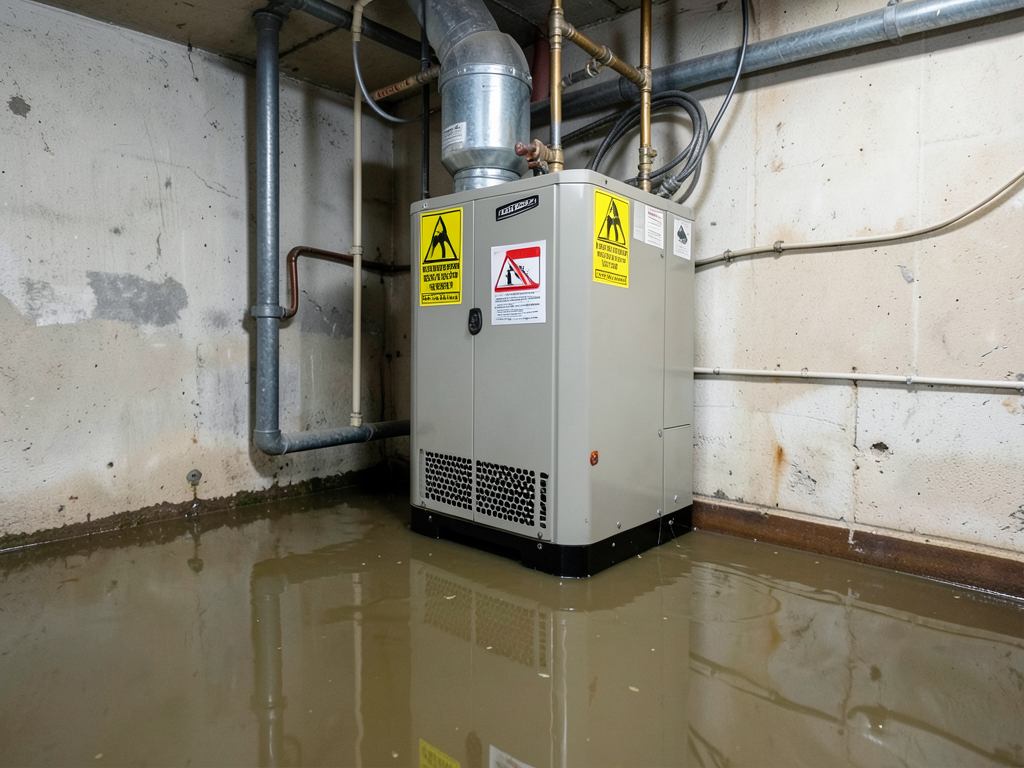
showing a flooded basement with water up to the HVAC unit base, with safety warning signs visible.
Our Comprehensive Flood Damage Assessment Process
When our NATE-certified technicians arrive, we follow a systematic inspection protocol based on EPA and Ohio Mechanical Code requirements. First, we test for electrical continuity using a multimeter to identify shorted circuits in the control board and thermostat wiring. Water exposure causes immediate oxidation on copper traces, leading to intermittent failures.. Read more about The Relationship Between Your HVAC System and Radon Levels in Your Delaware County Home.
We remove the front panel and inspect the heat exchanger for rust and cracks. Even minor corrosion weakens the metal, creating a carbon monoxide leak risk. The inducer motor bearings often fail after submersion because water displaces the grease inside. We spin the motor shaft by hand—if it feels gritty or sticks, replacement is mandatory.
The blower wheel collects mud and debris during flooding. We remove it and check the balance—unbalanced wheels cause vibration that damages the entire system. For air conditioners, we examine the condenser coil fins for clogging with silt. Bent fins reduce efficiency by up to 30 percent.
We use a moisture meter on the insulation surrounding the ductwork. Wet fiberglass loses its insulating properties and becomes a mold breeding ground. If the reading exceeds 15 percent moisture content, we recommend full replacement to prevent microbial growth inside your ventilation system.
Place
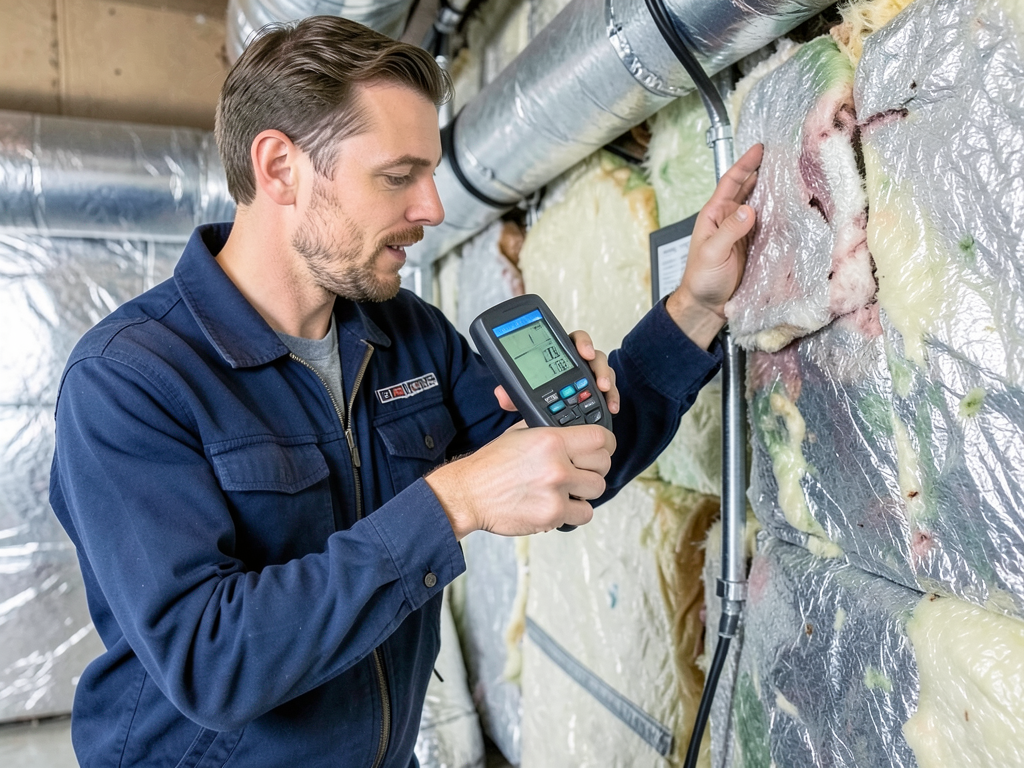
showing a technician using a moisture meter on HVAC insulation with a digital readout visible.
Repair vs. Replace: Navigating the 50% Rule
Ohio follows the National Flood Insurance Program guideline that if water submerges electrical components or the gas valve, replacement is often safer than repair. Water conducts electricity and creates short circuits that can cause fires when power is restored. Even if the unit powers on, hidden damage to the heat exchanger or control board makes it a safety liability. The Honest Guide to Replacing Your Upper Arlington Furnace This Winter.
For furnaces, if the gas valve shows any sign of corrosion, we replace the entire unit. A sticking valve can cause delayed ignition, leading to explosions. The same applies to the inducer motor—if bearings feel rough or the shaft wobbles, the motor will fail within weeks, leaving you without heat during a Columbus winter.
Air conditioners face different considerations. The condenser coil can often be cleaned and tested, but if the compressor was submerged, internal damage usually makes replacement more cost-effective. Compressors contain oil that mixes with water, destroying lubrication and causing catastrophic failure.
We apply the 50% rule: if repair costs exceed half the price of a new unit, replacement makes financial sense. New equipment also comes with a warranty and higher efficiency, reducing your energy bills immediately.
Place showing side-by-side photos of a corroded gas valve versus a new replacement unit.
Columbus-Specific Flood Regulations and Insurance
Franklin County requires permits for any HVAC replacement after water damage. The Ohio Department of Commerce Mechanical Contractor License ensures technicians follow state safety standards. We handle all permitting and inspections, so you don’t face delays or code violations.
Columbus sits in FEMA Zone X, meaning standard homeowners insurance covers most flood damage, but you need documentation of the mechanical equipment’s pre-flood condition. Keep receipts and maintenance records handy—they prove the age and value of your system for accurate claim settlements. FEMA Flood Insurance.
Some Columbus neighborhoods near the Olentangy River experience flash flooding that overwhelms municipal drainage. If your home is in a repetitive loss area, consider installing a battery backup for your sump pump. This prevents future HVAC damage when power fails during storms.
AEP Ohio offers rebates for high-efficiency furnace replacements, which can offset replacement costs. We help you navigate these programs to maximize your investment protection.
Frequently Asked Questions
How long can my flooded HVAC unit sit before damage becomes irreversible?
Corrosion begins within 24 to 48 hours of water exposure. The longer components stay wet, the more likely you’ll face complete system failure. Call for emergency service immediately after flooding. Where to Find 24 Hour Emergency HVAC Help Anywhere in Columbus.
Will my homeowners insurance cover the replacement cost?
Most Ohio homeowners policies cover sudden water damage from storms, but they exclude gradual seepage or lack of maintenance. Document everything and file your claim promptly for the best coverage outcome.
Can I just dry out the unit and turn it back on?
No. Water causes internal damage that isn’t visible. Running a wet system risks electrical fires, gas leaks, and carbon monoxide poisoning. Professional inspection is mandatory before restoring power.
How much does emergency HVAC flood repair cost in Columbus?
Emergency service calls start around $150 to $300, with repair costs varying based on damage extent. Replacement units range from $3,000 to $8,000 depending on size and efficiency. We provide upfront quotes before any work begins.
Don’t Wait Until the Next Storm
Standing water near your HVAC system creates immediate safety hazards. Gas leaks, electrical shock, and mold growth can all develop within hours. The longer you wait, the more expensive the damage becomes.
Call (380) 253-3188 today to schedule your inspection. Our NATE-certified technicians arrive within two hours for emergency service anywhere in the Columbus metro area. We’ll assess the damage, provide a clear repair or replacement recommendation, and handle all insurance documentation.
Pick up the phone and call (380) 253-3188 before the next storm hits. Your family’s safety and comfort depend on it.
{
“@context”: “https://schema.org”,
“@type”: “BlogPosting”,
“headline”: “What to Do When Your Basement HVAC Unit Floods After a Columbus Rainstorm”,
“description”: “Flooded basement HVAC unit in Columbus? Learn immediate safety steps, damage assessment, and when to repair vs. replace. Call (380) 253-3188 for 24/7 emergency service.”,
“wordCount”: 1193,
“datePublished”: “2026-05-14T12:06:00.000Z”,
“dateModified”: “2026-05-14T12:06:00.000Z”,
“inLanguage”: “en-US”,
“mainEntityOfPage”: {
“@type”: “WebPage”,
“@id”: “https://grandhvaccolumbus.com”
},
“publisher”: {
“@type”: “LocalBusiness”,
“name”: “Grand HVAC Columbus”,
“url”: “https://grandhvaccolumbus.com”
},
“author”: {
“@type”: “Organization”,
“name”: “Grand HVAC Columbus”,
“url”: “https://grandhvaccolumbus.com”
},
“image”: {
“@type”: “ImageObject”,
“url”: “https://grandhvaccolumbus.com/wp-content/uploads/2026/03/what-to-do-when-your-basement-hvac-unit-floods-aft-1.png”
}
}
{
“@context”: “https://schema.org”,
“@type”: “HVACBusiness”,
“name”: “Grand HVAC Columbus”,
“url”: “https://grandhvaccolumbus.com”,
“address”: {
“@type”: “PostalAddress”,
“addressLocality”: “Columbus”
},
“areaServed”: {
“@type”: “City”,
“name”: “Columbus”
}
}
{
“@context”: “https://schema.org”,
“@type”: “FAQPage”,
“mainEntity”: [
{
“@type”: “Question”,
“name”: “How long can my flooded HVAC unit sit before damage becomes irreversible?”,
“acceptedAnswer”: {
“@type”: “Answer”,
“text”: “Corrosion begins within 24 to 48 hours of water exposure. The longer components stay wet, the more likely you’ll face complete system failure. Call for emergency service immediately after flooding. Where to Find 24 Hour Emergency HVAC Help Anywhere in Columbus.”
}
},
{
“@type”: “Question”,
“name”: “Will my homeowners insurance cover the replacement cost?”,
“acceptedAnswer”: {
“@type”: “Answer”,
“text”: “Most Ohio homeowners policies cover sudden water damage from storms, but they exclude gradual seepage or lack of maintenance. Document everything and file your claim promptly for the best coverage outcome.”
}
},
{
“@type”: “Question”,
“name”: “How much does emergency HVAC flood repair cost in Columbus?”,
“acceptedAnswer”: {
“@type”: “Answer”,
“text”: “Emergency service calls start around $150 to $300, with repair costs varying based on damage extent. Replacement units range from $3,000 to $8,000 depending on size and efficiency. We provide upfront quotes before any work begins.”
}
}
]
}
{
“@context”: “https://schema.org”,
“@type”: “BreadcrumbList”,
“itemListElement”: [
{
“@type”: “ListItem”,
“position”: 1,
“name”: “Home”,
“item”: “https://grandhvaccolumbus.com”
},
{
“@type”: “ListItem”,
“position”: 2,
“name”: “Blog”,
“item”: “https://grandhvaccolumbus.com/blog”
},
{
“@type”: “ListItem”,
“position”: 3,
“name”: “What to Do When Your Basement HVAC Unit Floods After a Columbus Rainstorm”
}
]
}
{
“@context”: “https://schema.org”,
“@type”: “Service”,
“serviceType”: “HVAC”,
“provider”: {
“@type”: “LocalBusiness”,
“name”: “Grand HVAC Columbus”,
“url”: “https://grandhvaccolumbus.com”
},
“areaServed”: {
“@type”: “City”,
“name”: “Columbus”
},
“description”: “Flooded basement HVAC unit in Columbus? Learn immediate safety steps, damage assessment, and when to repair vs. replace. Call (380) 253-3188 for 24/7 emergency service.”
}