
Why Cottonwood Season is a Total Nightmare for Your Westerville Air Conditioner
Those fluffy white seeds floating through Westerville neighborhoods in late May and June are more than just a seasonal nuisance. They are actively destroying your air conditioner’s efficiency and can lead to complete system failure. When cottonwood seeds accumulate on your outdoor condenser unit they create a dense mat that blocks airflow and causes your compressor to overheat. This isn’t just a minor inconvenience. It is a serious mechanical problem that affects thousands of homeowners across Central Ohio each year. Ohio Mechanical Code Section 1302.1.
The Cottonwood Problem in Central Ohio
Cottonwood trees (Populus deltoides) thrive along the Scioto River and Olentangy River corridors creating dense populations throughout Franklin County. Westerville sits in the heart of this cottonwood zone with mature trees lining many residential streets and park areas. The trees release their seeds during a specific 2-3 week window typically between May 20th and June 15th depending on spring temperatures and rainfall patterns. This timing coincides perfectly with when homeowners first start relying on their air conditioning systems for summer cooling. Why Your Westerville AC Needs a Tune Up Before the Humidity Hits.
The problem is not the individual seeds but their collective behavior. Each seed carries a tuft of cotton-like fibers that allows it to drift on the wind. When these seeds land on your condenser unit they do not simply blow away. They interlock and create a felt-like mat that can completely cover the coil surface. This mat acts like a blanket trapping heat and preventing the system from rejecting the heat it removes from your home.. Read more about Does Homeowners Insurance Cover Your AC Unit if It Gets Damaged in a Columbus Storm?.
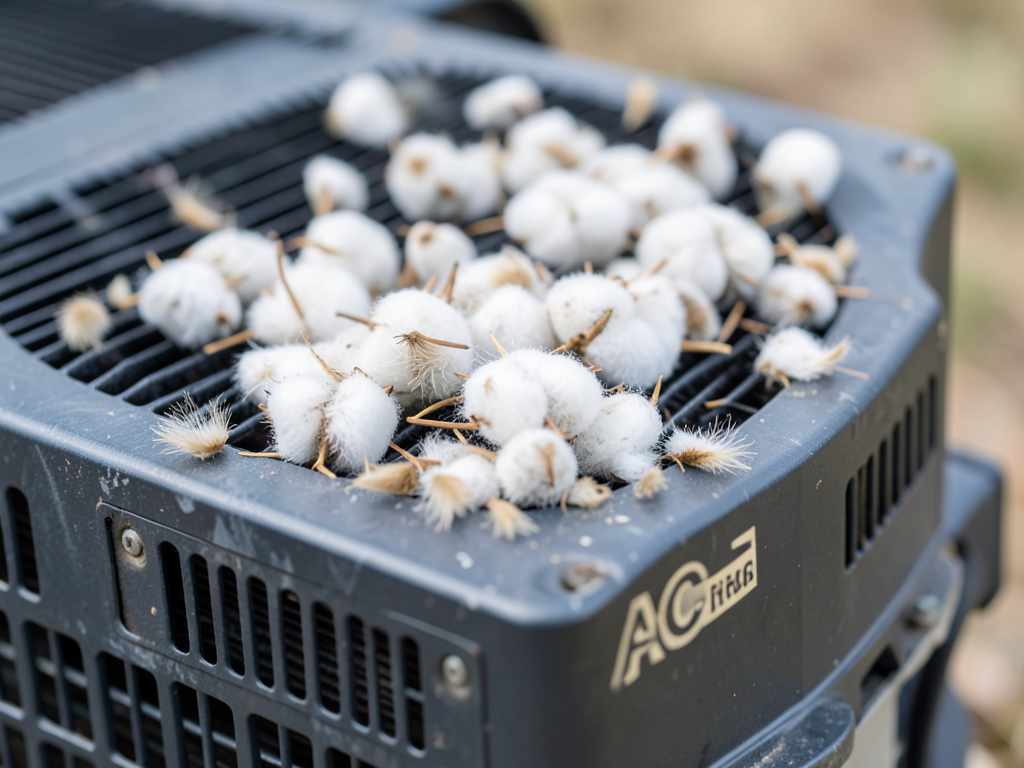
Image Description: Close-up photo showing cottonwood seeds matted on an AC condenser coil with visible airflow blockage and heat buildup around the compressor.
How Cottonwood Seeds Destroy AC Efficiency
Your air conditioner works by moving heat from inside your home to the outside air. The condenser coil is the critical component that releases this heat. When cottonwood seeds block the coil surface the system cannot reject heat effectively. This forces the compressor to work harder and longer which creates several problems.
First the head pressure in the refrigerant system increases dramatically. Under normal conditions head pressure might be 250-300 PSI. With a clogged coil it can exceed 400 PSI. This puts extreme stress on the compressor motor and can cause it to overheat and fail. The EPA’s Section 608 regulations require proper refrigerant handling because high pressures can cause leaks and environmental damage. EPA Section 608 regulations.
Second the system runs much longer cycles trying to reach the thermostat setpoint. What should be a 15-minute cooling cycle becomes a 30-minute marathon. This increased runtime directly translates to higher energy bills. Studies show that a cottonwood-clogged unit can lose up to 30% of its efficiency during peak season.
Third the accumulated seeds trap moisture against the coil surface. In Ohio’s humid climate this creates the perfect environment for mold and algae growth which further degrades performance and can cause unpleasant odors when the system runs.
Step-by-Step: How to Safely Clean Your AC Condenser
Cleaning your condenser unit is not difficult but it requires proper technique to avoid damaging the delicate coil fins. Here is the exact process that Grand HVAC technicians use:
- Power Down the System
Locate the disconnect switch near the condenser unit. Flip it to the OFF position. This prevents the fan from starting while you are working on the unit.
- Remove Large Debris
Carefully remove any sticks leaves or large cottonwood clumps by hand. Wear gloves as the seeds can be irritating to skin.
- Low-Pressure Rinse
Using a garden hose with a spray nozzle set to medium pressure rinse the coil from the top down. Never use a pressure washer as the high pressure can bend the aluminum fins and permanently damage the coil.
- Coil Cleaner Application
Apply a foaming coil cleaner specifically designed for HVAC use. Let it sit for 5-10 minutes to break down the organic material and oils trapped in the cottonwood mat.
- Final Rinse
Rinse thoroughly from multiple angles ensuring all cleaner and debris is washed away. The water should run clear from the bottom of the unit.
- Check the Surrounding Area
Remove any cottonwood seeds from the ground within a 3-foot radius of the unit to prevent immediate re-clogging.
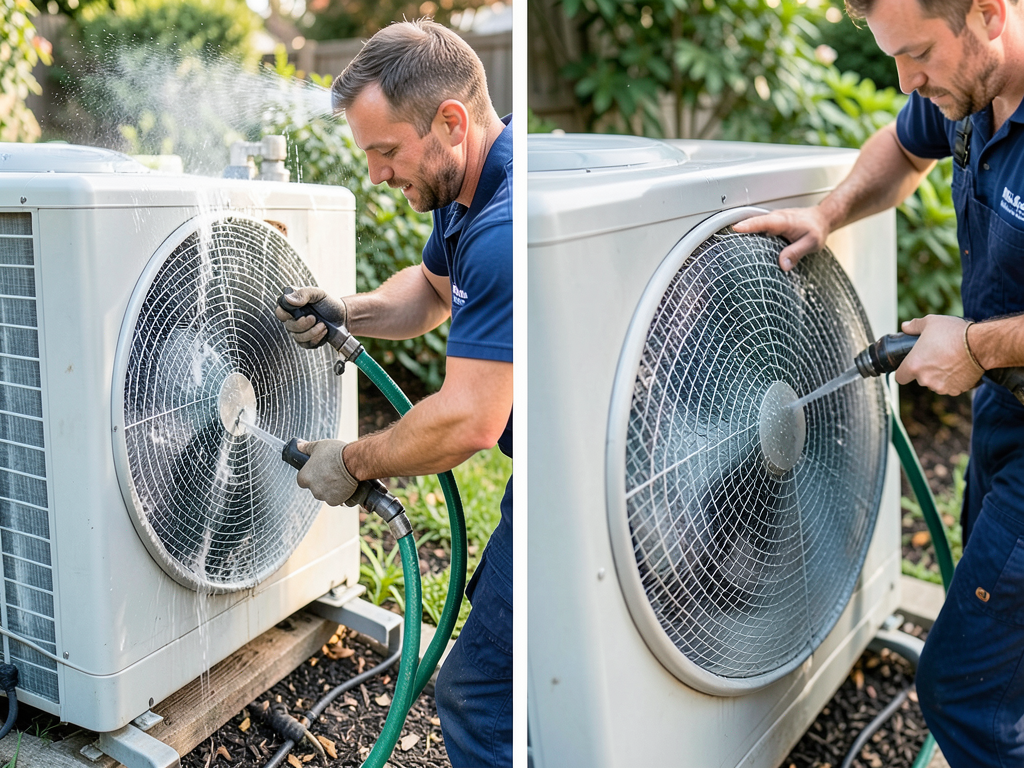
Image Description: Technician using a garden hose to rinse an AC condenser coil showing proper technique and the before/after difference in coil appearance.
The Danger of ‘Matting’
Cottonwood seeds are uniquely problematic compared to other airborne debris like dust or grass clippings. The key difference is their ability to create a dense mat. When cottonwood seeds accumulate they interlock their cotton fibers creating a felt-like barrier that is remarkably effective at blocking airflow.
This matting effect is why cottonwood is worse than simple dust buildup. A dusty coil can still allow some airflow around the particles. A cottonwood mat creates a solid barrier. The seeds also have a waxy coating that makes them resistant to water alone. This is why simple hosing is not always effective and why a proper coil cleaner is necessary.
The matting also creates a perfect environment for other debris to become trapped. Once the initial seed layer forms it catches leaves twigs and other materials creating an even thicker obstruction. This compounding effect is why a unit that seems fine one week can be completely blocked the next.
Professional vs. DIY: When to Call a Columbus HVAC Tech
Many homeowners successfully clean their own units during cottonwood season. However there are specific warning signs that indicate you need professional service:
- The system runs constantly but never cools the house below 75-80 degrees
- You hear the compressor making loud humming or clicking sounds
- The copper refrigerant lines are hot to the touch (they should feel warm but not burning)
- You notice ice forming on the refrigerant lines or inside the unit
- The system trips the circuit breaker when it tries to start
These symptoms indicate potential compressor damage or refrigerant issues that require specialized tools and EPA certification to repair. Continuing to run a damaged system can turn a simple cleaning job into a $2,000+ compressor replacement. Troubleshooting AC Issues.
Professional cleaning also includes inspection of electrical connections checking refrigerant levels and testing capacitor performance. These checks can identify problems before they cause system failure during the hottest days of summer when emergency service calls cost 50-75% more. Where to Find 24 Hour Emergency HVAC Help Anywhere in Columbus.
Prevention Technology: Protecting Your Investment
Several products can help prevent cottonwood buildup on your condenser unit. Mesh screens specifically designed for AC units can block seeds while allowing airflow. These screens typically cost $50-100 and install in minutes. However they require regular cleaning themselves as seeds will accumulate on the screen surface.
Commercial coil coatings create a hydrophobic surface that repels seeds and makes cleaning easier. These professional applications cost $150-300 but can last for multiple seasons. The coating fills in the microscopic gaps between coil fins making it harder for seeds to lodge in place.
Some homeowners install temporary covers during peak cottonwood season. While this seems logical it can actually trap heat and moisture if not done correctly. Any cover must allow for ventilation and should only be used during the brief seed release period.
Impact on Indoor Air Quality and Energy Bills
A clogged condenser does not just affect outdoor equipment. It impacts your entire home environment. When the system cannot reject heat efficiently it runs longer cycles. Longer cycles mean more air circulation through your home’s ductwork. This increased airflow can stir up dust and allergens that have settled in the ducts.
The extended run times also mean your air filter is processing more air than normal. In Ohio’s humid climate this means more moisture is being cycled through the system. If your indoor coil develops condensation from the extra runtime it can become a breeding ground for mold spores that then circulate through your home.
Energy bills tell the real story. A system operating at 70% efficiency due to cottonwood blockage can increase your cooling costs by 25-40%. For a typical Westerville home this means an extra $50-80 per month during peak summer months. Over a 4-month cooling season that is $200-320 wasted on an easily preventable problem.
Local Impact: Westerville’s Unique Vulnerability
Westerville’s tree canopy includes a higher percentage of mature cottonwoods than many surrounding suburbs. The city’s older neighborhoods developed along Big Walnut Creek where cottonwoods naturally thrive in the moist soil conditions. Homes in the 43081 zip code particularly those near parks and greenways face the highest exposure to cottonwood seeds.
The city’s recent infrastructure projects including the Westerville bike trail expansion have actually increased cottonwood density in some areas. The trail follows natural waterways where cottonwoods were planted for erosion control. This means more seeds blowing onto residential air conditioning units each spring.
Westerville’s combination of mature trees humid summers and older HVAC systems creates a perfect storm for cottonwood-related failures. Many homes in the area still use 10-15 year old units that are more vulnerable to airflow restrictions than newer high-efficiency models.
Commercial Building Codes and EPA Requirements
The Ohio Mechanical Code Section 1302.1 requires proper clearance around outdoor HVAC equipment for maintenance access. For residential units this means at least 3 feet of clearance on all sides. During cottonwood season this clearance becomes even more critical as seeds accumulate on the ground around the unit.. Read more about Five HVAC Maintenance Tasks You Can Safely Do Yourself (And Three You Definitely Should Not).
The EPA’s Section 608 Clean Air Act regulations require certification for anyone handling refrigerants. This is why DIY repairs involving refrigerant lines or compressor replacement are illegal for homeowners. Even cleaning a severely clogged unit can sometimes require opening service ports which violates these regulations if done without proper certification.. Read more about Managing Severe Seasonal Allergies with Your HVAC System in the Highbanks Area.
Franklin County building permits require HVAC contractors to follow specific installation guidelines that include proper unit elevation and drainage. These requirements help prevent water accumulation around the base of the unit which can trap seeds and create the perfect environment for corrosion and electrical problems. The Honest Guide to Replacing Your Upper Arlington Furnace This Winter.
Frequently Asked Questions
How often should I clean my AC during cottonwood season?
Check your unit weekly during peak season May 20th through June 15th. If you see visible seed accumulation clean it immediately. Some homes may need cleaning every 3-4 days during peak release.
Can cottonwood seeds damage my AC permanently?
Yes. If seeds are allowed to mat and trap moisture they can cause corrosion of the coil fins and electrical connections. Severe clogging can cause compressor overheating and complete system failure requiring expensive replacement.
Is it safe to use a pressure washer on my AC coil?
No. Pressure washers can bend the delicate aluminum fins and damage the coil beyond repair. Always use a garden hose with moderate pressure or hire a professional with proper coil cleaning equipment.
How much does professional cleaning cost in Westerville?
Professional cleaning during cottonwood season typically costs $125-200 depending on the severity of buildup and whether any additional maintenance is needed. Emergency calls during heat waves cost significantly more.
Will a cottonwood screen void my AC warranty?
Most manufacturers allow protective screens as long as they do not restrict airflow. However always check your specific warranty terms. Improper installation of any aftermarket product could potentially void coverage.
Take Action Before Your AC Fails
Cottonwood season is not going away. In fact with Westerville’s mature tree canopy and the increasing frequency of warm springs the problem is likely to get worse. The good news is that with proper maintenance and awareness you can prevent most cottonwood-related AC failures.
Start by checking your unit today. If you see white fluff or notice reduced cooling performance do not wait for complete failure. A simple cleaning now costs far less than emergency service during a July heat wave. Remember that most AC problems start small and become expensive emergencies when ignored.
Call (380) 253-3188 today to schedule your inspection. Our NATE-certified technicians can clean your system properly check for any developing problems and recommend prevention strategies specific to your home’s location and tree exposure. Do not let cottonwood season ruin your summer comfort.
Pick up the phone and call (380) 253-3188 before the next storm hits. Your air conditioner protects your family from Ohio’s brutal summer heat. Make sure it is ready for the challenge.
You may also find this helpful. Protecting Your Furnace from Construction Dust During the Major Infrastructure Projects in Downtown Columbus.
You may also find this helpful. A Tenant Guide to Getting Your Landlord to Fix Your Broken AC in the Northland Area.
{
“@context”: “https://schema.org”,
“@type”: “BlogPosting”,
“headline”: “Why Cottonwood Season is a Total Nightmare for Your Westerville Air Conditioner”,
“description”: “Cottonwood fluff clogs Westerville AC units causing overheating and breakdowns. Learn how to protect your system during Ohio’s fluff season.”,
“wordCount”: 2068,
“datePublished”: “2026-05-12T11:39:00.000Z”,
“dateModified”: “2026-05-12T11:39:00.000Z”,
“inLanguage”: “en-US”,
“mainEntityOfPage”: {
“@type”: “WebPage”,
“@id”: “https://grandhvaccolumbus.com”
},
“publisher”: {
“@type”: “LocalBusiness”,
“name”: “Grand HVAC Columbus”,
“url”: “https://grandhvaccolumbus.com”
},
“author”: {
“@type”: “Organization”,
“name”: “Grand HVAC Columbus”,
“url”: “https://grandhvaccolumbus.com”
},
“image”: {
“@type”: “ImageObject”,
“url”: “https://grandhvaccolumbus.com/wp-content/uploads/2026/03/why-cottonwood-season-is-a-total-nightmare-for-you-1.png”
}
}
{
“@context”: “https://schema.org”,
“@type”: “HVACBusiness”,
“name”: “Grand HVAC Columbus”,
“url”: “https://grandhvaccolumbus.com”,
“address”: {
“@type”: “PostalAddress”,
“addressLocality”: “Columbus”
},
“areaServed”: {
“@type”: “City”,
“name”: “Columbus”
}
}
{
“@context”: “https://schema.org”,
“@type”: “FAQPage”,
“mainEntity”: [
{
“@type”: “Question”,
“name”: “How often should I clean my AC during cottonwood season?”,
“acceptedAnswer”: {
“@type”: “Answer”,
“text”: “Check your unit weekly during peak season May 20th through June 15th. If you see visible seed accumulation clean it immediately. Some homes may need cleaning every 3-4 days during peak release.”
}
},
{
“@type”: “Question”,
“name”: “Can cottonwood seeds damage my AC permanently?”,
“acceptedAnswer”: {
“@type”: “Answer”,
“text”: “Yes. If seeds are allowed to mat and trap moisture they can cause corrosion of the coil fins and electrical connections. Severe clogging can cause compressor overheating and complete system failure requiring expensive replacement.”
}
},
{
“@type”: “Question”,
“name”: “Is it safe to use a pressure washer on my AC coil?”,
“acceptedAnswer”: {
“@type”: “Answer”,
“text”: “No. Pressure washers can bend the delicate aluminum fins and damage the coil beyond repair. Always use a garden hose with moderate pressure or hire a professional with proper coil cleaning equipment.”
}
},
{
“@type”: “Question”,
“name”: “How much does professional cleaning cost in Westerville?”,
“acceptedAnswer”: {
“@type”: “Answer”,
“text”: “Professional cleaning during cottonwood season typically costs $125-200 depending on the severity of buildup and whether any additional maintenance is needed. Emergency calls during heat waves cost significantly more.”
}
},
{
“@type”: “Question”,
“name”: “Will a cottonwood screen void my AC warranty?”,
“acceptedAnswer”: {
“@type”: “Answer”,
“text”: “Most manufacturers allow protective screens as long as they do not restrict airflow. However always check your specific warranty terms. Improper installation of any aftermarket product could potentially void coverage.”
}
}
]
}
{
“@context”: “https://schema.org”,
“@type”: “HowTo”,
“name”: “How to Clean Your AC Condenser”,
“step”: [
{
“@type”: “HowToStep”,
“position”: 1,
“name”: “Power Down the System”,
“text”: “Locate the disconnect switch near the condenser unit. Flip it to the OFF position. This prevents the fan from starting while you are working on the unit.”
},
{
“@type”: “HowToStep”,
“position”: 2,
“name”: “Remove Large Debris”,
“text”: “Carefully remove any sticks leaves or large cottonwood clumps by hand. Wear gloves as the seeds can be irritating to skin.”
},
{
“@type”: “HowToStep”,
“position”: 3,
“name”: “Low-Pressure Rinse”,
“text”: “Using a garden hose with a spray nozzle set to medium pressure rinse the coil from the top down. Never use a pressure washer as the high pressure can bend the aluminum fins and permanently damage the coil.”
},
{
“@type”: “HowToStep”,
“position”: 4,
“name”: “Coil Cleaner Application”,
“text”: “Apply a foaming coil cleaner specifically designed for HVAC use. Let it sit for 5-10 minutes to break down the organic material and oils trapped in the cottonwood mat.”
},
{
“@type”: “HowToStep”,
“position”: 5,
“name”: “Final Rinse”,
“text”: “Rinse thoroughly from multiple angles ensuring all cleaner and debris is washed away. The water should run clear from the bottom of the unit.”
},
{
“@type”: “HowToStep”,
“position”: 6,
“name”: “Check the Surrounding Area”,
“text”: “Remove any cottonwood seeds from the ground within a 3-foot radius of the unit to prevent immediate re-clogging.”
}
],
“image”: “https://grandhvaccolumbus.com/wp-content/uploads/2026/03/why-cottonwood-season-is-a-total-nightmare-for-you-1.png”
}
{
“@context”: “https://schema.org”,
“@type”: “BreadcrumbList”,
“itemListElement”: [
{
“@type”: “ListItem”,
“position”: 1,
“name”: “Home”,
“item”: “https://grandhvaccolumbus.com”
},
{
“@type”: “ListItem”,
“position”: 2,
“name”: “Blog”,
“item”: “https://grandhvaccolumbus.com/blog”
},
{
“@type”: “ListItem”,
“position”: 3,
“name”: “Why Cottonwood Season is a Total Nightmare for Your Westerville Air Conditioner”
}
]
}
{
“@context”: “https://schema.org”,
“@type”: “Service”,
“serviceType”: “HVAC”,
“provider”: {
“@type”: “LocalBusiness”,
“name”: “Grand HVAC Columbus”,
“url”: “https://grandhvaccolumbus.com”
},
“areaServed”: {
“@type”: “City”,
“name”: “Columbus”
},
“description”: “Cottonwood fluff clogs Westerville AC units causing overheating and breakdowns. Learn how to protect your system during Ohio’s fluff season.”
}